 Editorial NexoScience
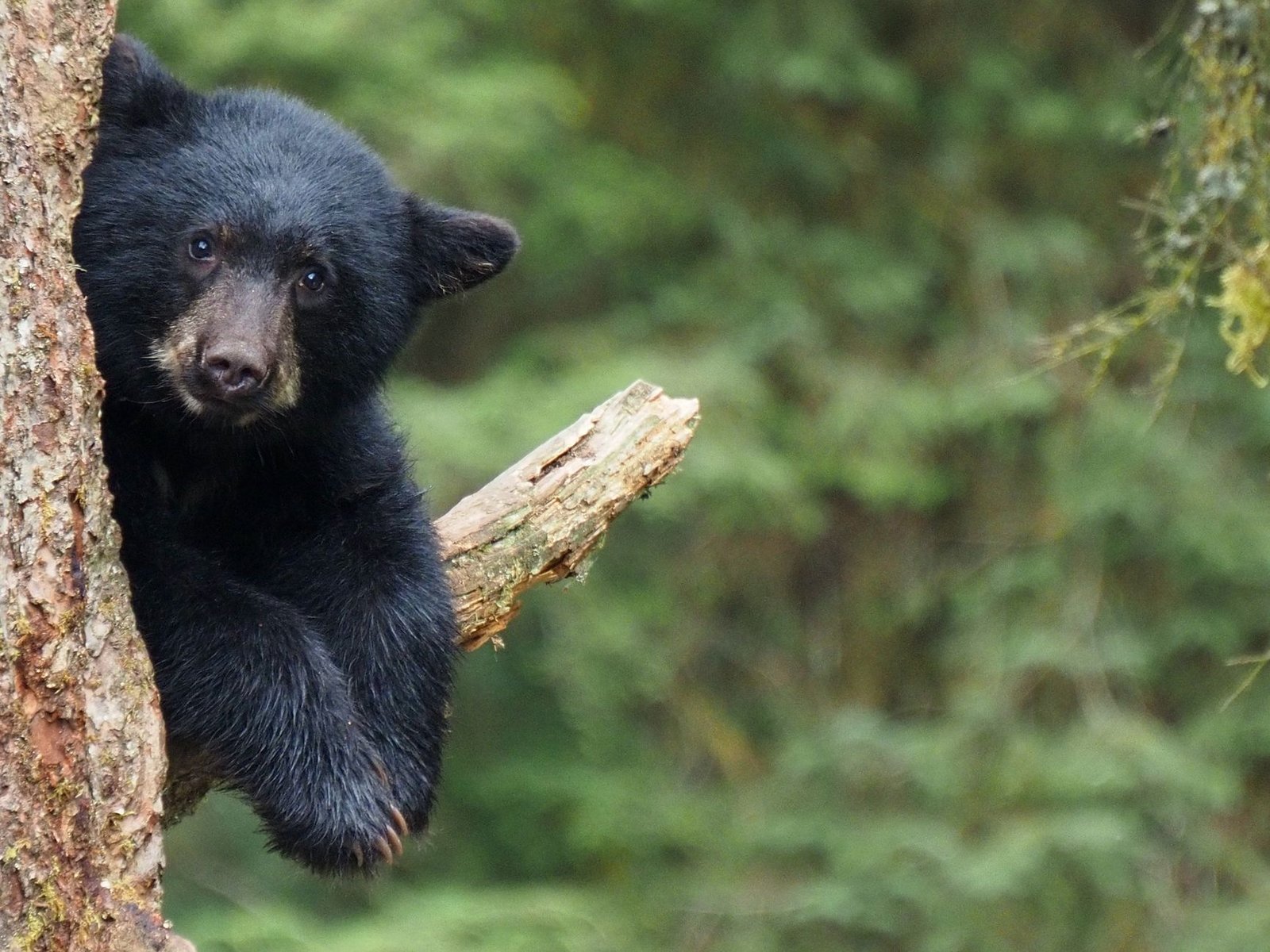
On Feb. 9, 1984, two biologists were following the tracks of a lone coyote through Riding Mountain National Park, in southwestern Manitoba, when the trail crossed a far busier one. Wolves had passed that way within the last two days. Less than 200 meters (about 660 feet) along the wolf trail lay the skull of a small black bear, a front leg still joined to its shoulder blade, and a ring of bloody snow scattered with hair. The bear’s winter den was a few steps away.
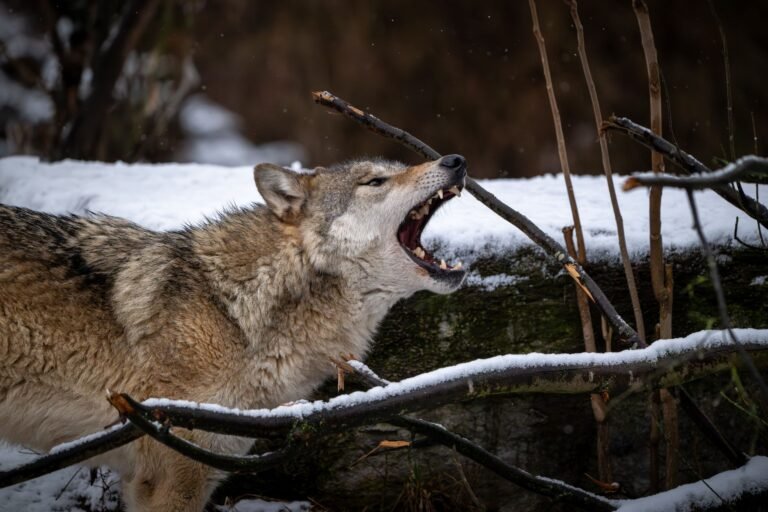
So, do wolves kill black bears? They do, and sometimes they go after them in the den, in the middle of winter. That season, Paul Paquet and Ludwig Carbyn documented three black bears (Ursus americanus) killed and eaten by gray wolves (Canis lupus) at or near their dens in western Manitoba. The same researchers were careful to add that it probably doesn’t happen often.
A short note with a long reach. Paquet, then at the University of Alberta’s zoology department, and Carbyn, of the Canadian Wildlife Service, published their account in 1986 in The Canadian Field-Naturalist. Two of the kills turned up in Riding Mountain National Park while the pair tracked wolves on foot. The third was about 50 kilometers (31 miles) north, in the Duck Mountain Provincial Forest, where a trapper came across it and Manitoba’s Department of Natural Resources passed on the report.
Wolves vs. black bear: what the tracks showed
The first den was barely a den. It was a hollow less than half a meter (about 20 inches) deep, roofed on one side by a leaning spruce and probably closed off with brush and dry grass, judging by the plant litter strewn around it. The bear’s remains lay less than 3 meters (10 feet) from the opening. The blood on the snow suggested it was killed inside and dragged out, but the wolves had trampled the ground so badly that nobody could be sure. The bear was about two years old. The pack in that area had at least ten members, seven adults and three pups, although how many took part is unknown.
The second bear put up more of a fight. Eight days later, the team found another dead bear about 2 kilometers (1.2 miles) from an elk the wolves had recently killed. This one was an adult of about 11 years, and its den was deeper, about 1.5 meters (5 feet), tucked between two stumps and a tangle of fallen trees. Tracks and blood told the story in order. The wolves started digging before the bear came out. Sprayed blood covered the entrance, so the bear was already hurt when it left. It made it about 12 meters (40 feet) before it went down, and the wolves dragged it a few more steps.
Only two wolves did it. The pack had three members, yet the snow held tracks from just two at the kill. The researchers backtracked the trail for 4 kilometers (about 2.5 miles) and found no sign of the third. Then the skull gave up a surprise. At some point, someone had shot this bear in the face. The bullet went in below the left eye socket, passed through the roof of the mouth and came out through the jaw. Since bear hunting is common around the park in the fall, the authors suspect the bear was wounded before it settled in for the winter. How much that slowed it down, they couldn’t say.
The third den had three holes in it. In the Duck Mountains, during the first week of February, a trapper saw five wolves near a bear carcass and went to look. The den was shallow, built against a stump and a fallen tree and lined with dry plants. The wolves had dug three holes into the chamber. Tracks suggested the bear came out and moved about 15 meters (50 feet) before it was caught. The trapper judged from the skull that it was young, “not more than three years.” Everything except the head and shoulders had been eaten.
How wolves find a hibernating bear in its den
A sleeping bear is easy to smell. Black bears spend the winter curled up in dens like these, and the authors argued that wolves should have little trouble locating them except in the harshest weather. Their comparison came from the Arctic. Domestic dogs working upwind can pick out a ringed seal’s lair under the snow from up to 1,500 meters away, nearly a mile, and the researchers assumed wolves can do just as well. In other words, a den is a hiding place for a bear’s body, not for its scent.
The bears’ ages came from their teeth. The team aged the two Riding Mountain bears by counting growth layers in the tooth root, the cementum, which builds up a new band each year, much like the rings in a tree trunk. That’s how a small, ragged skull could be pinned at about two years and the shot bear at about eleven.
Thin snow may have opened the door. Honestly, the authors didn’t claim to know why it all happened that winter. They floated one idea. Snow in the area usually piles up to about 54 centimeters (21 inches) over the year, but at the kill sites it averaged only about 30 centimeters (12 inches), a bit more than half. Less snow over a den means less insulation and less of a barrier to dig through. But since wolves can smell bears anyway, thin snow alone doesn’t explain why several kills showed up in one year and none in the others.
How often wolves kill and eat black bears
Bears barely register on the wolves’ menu. The strongest evidence that this is rare comes from wolf droppings. Researchers had collected more than 2,000 wolf scats in Riding Mountain National Park between 1975 and 1984, and not one held bear remains. Do wolves eat bears, then? When they kill one, yes, and in these cases they ate most of the carcass. But in this park, where elk are on hand, bear is an odd exception, not a habit. No wolf kill of a black bear had been recorded there or in the Duck Mountains before.
Other forests had seen it, too. The Manitoba cases joined a short list. Lynn Rogers and L. David Mech had described wolves in northeastern Minnesota killing a denning female black bear and her newborn cubs, in a 1981 paper in the Journal of Mammalogy. Brian Horejsi and colleagues reported wolves killing a female black bear in northern Alberta in 1984. And in northern Manitoba, Malcolm Ramsay and Ian Stirling had recorded wolves killing polar bear cubs. Each of these was a chance find, which is how rare predator behavior usually surfaces, much as camera traps happened to catch a clouded tiger cat that turned out to be a new species.
Nobody actually saw a kill. That’s the main limit of the note, and the authors said so: in every case they deduced from circumstantial evidence that wolves did it. The scenes were read from tracks, blood patterns and drag marks, sometimes on ground the animals had churned up. One bear’s age was a trapper’s guess, its skull was never recovered, and no one determined the sex of two of the bears. One of the three had an old gunshot wound, so it may have been weaker than a typical bear. Three cases from one winter can show that the behavior exists. They can’t say how common it is or what sets it off.
The open question is the calendar. Why several kills in one winter and none in the years of scat collecting before it? The thin-snow idea is the authors’ best guess, and it is testable. Matching wolf kills at bear dens against snow depth over many winters would tell whether a lean snow year really leaves bears more exposed, or whether something else was going on in the packs that February.
The study at a glance
- Journal: The Canadian Field-Naturalist, 1986
- Type of study: Field observations from tracking wolves on foot in winter
- Sample: Three black bears found dead at or near their dens in western Manitoba in February 1984
- Main finding: Wolves dug into or caught all three bears at their winter dens, killed them and ate most of each carcass.
- Limits: No kill was witnessed, and over 2,000 wolf scats from the same park held no bear remains, so it is likely rare.
Source: Paquet, P. C., & Carbyn, L. N. (1986). “Wolves, Canis lupus, killing denning Black Bears, Ursus americanus, in the Riding Mountain National Park area.” The Canadian Field-Naturalist, 100(3), 371-372. https://doi.org/10.5962/p.355652