 Editorial NexoScience
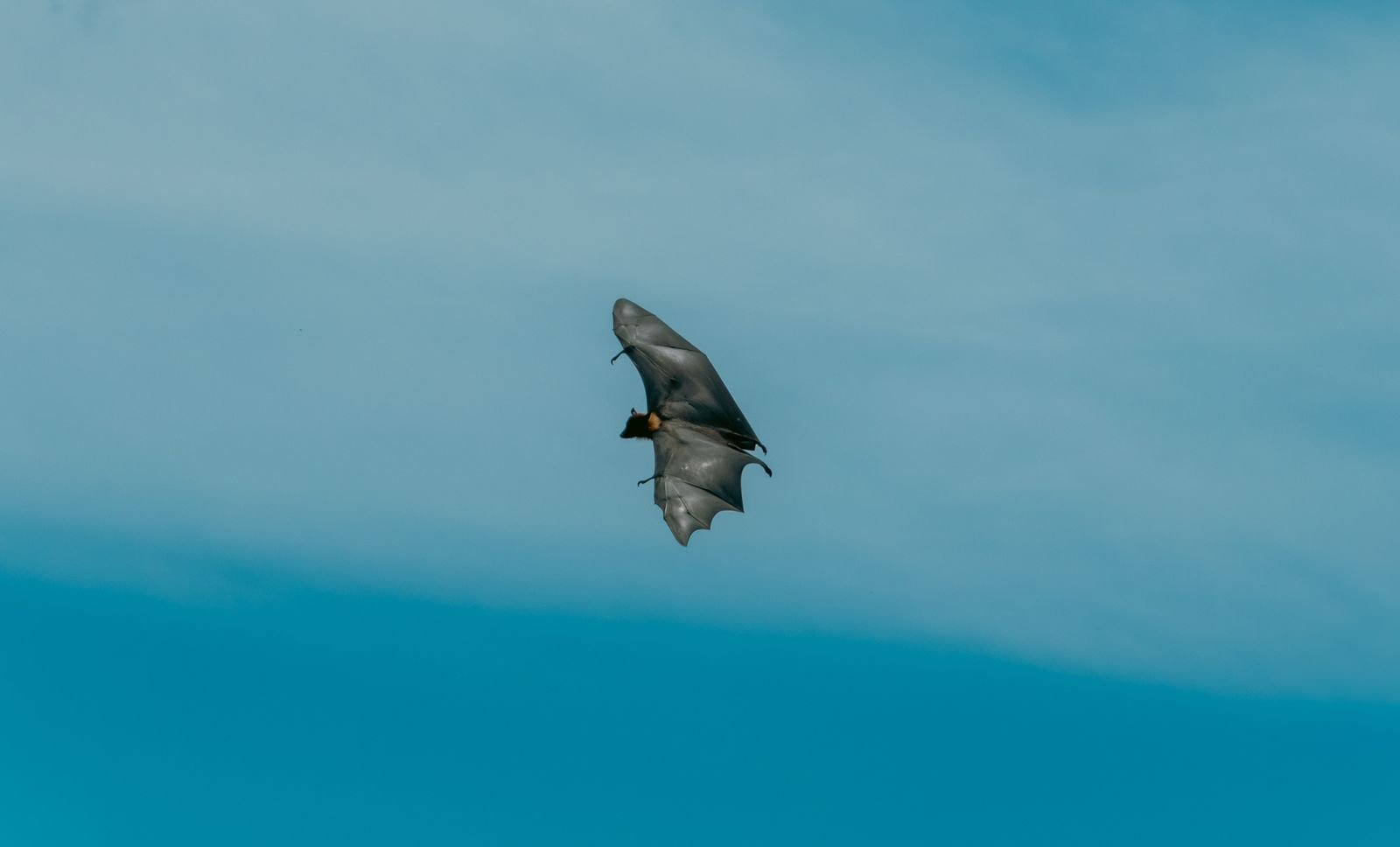
The oldest bat skeletons ever dug up are a strange kind of disappointment. They are about 52 to 56 million years old, they come from Asia, North America, Europe and Australia, and they already look like bats. They had wings built for powered flight and, in many cases, the ear bones of animals that hunt by echolocation. Whatever came before them, the half-finished bat that would show where the group began, has never turned up.
So scientists tried to work out bats origin and evolution from their genes instead, and kept landing in different places: North America, Africa, Asia. A study published Sept. 23 in the journal Nature now gives a clearer answer. Bats, and with them powered flight, most likely originated in Europe in the late Paleocene, more than 57 million years ago. The analysis gave Europe a 99.2% posterior probability, a measure of how strongly the model favors one answer over the rest.
This is the biggest bat family tree ever built. The work comes from Bat1K, an international project that aims to read the genome of every living bat species. In this first phase, the team produced 42 new high-quality genomes and combined them with 62 existing ones, for 103 species in total. That covers all 21 families of bats alive today, including oddballs such as the bumblebee bat (Craseonycteris thonglongyai) of Thailand and Myanmar, often called the smallest mammal on Earth, and the sucker-footed bat (Myzopoda aurita) of Madagascar.
Why bats originated in Europe, according to the new tree
Genes alone couldn’t settle it. Bats are hard to place on a map for an obvious reason: they fly. A group of animals that can cross seas and mountains spreads fast and far, and the trail back to its starting point gets smudged. The fossil record doesn’t help much either. Outside a narrow window around 56 to 52 million years ago, bat fossils are rare and mostly broken teeth or bits of bone. The researchers wrote that “a substantial proportion” of bat history is estimated to be missing from the rocks.
The fix was to put fossils and DNA in the same tree. The team scored 699 physical traits, such as features of teeth, skulls and limbs, for 65 species. Forty-four of those were fossil bats, all older than the last ice ages, and the rest were living species picked to match the genomes. After weeding out traits that were redundant or unreliable, they merged the anatomy with 10,000 slowly changing stretches of DNA from each living species. A method called total evidence dating then let the fossils sit in the tree as real branches, each with its own age, instead of serving only as rough date markers.
Here’s the thing about that choice. When fossils are part of the tree, extinct bats can tell you where their relatives lived. A European fossil near the base of the tree pulls the starting point toward Europe in a way living species never could, because living bats now live almost everywhere. The model also allowed for drifting continents and for how far a bat could plausibly fly at each point in time.
How bats spread around the world from a Europe and Africa hub
From Europe, the first move was south. The descendants of that first European bat most probably spread into Africa. From a shared Europe and Africa base, bats then pushed out several separate times into the Americas, Asia and Australia. All of this happened fast. The four big groups of modern bats split apart within a short span in the early Eocene, around a sudden burst of global warming about 56 million years ago known as the Paleocene-Eocene Thermal Maximum.
Some routes surprised the team. One major group of bats, the one that today includes vampire bats and many fruit-eaters of the American tropics, reached North America from Europe about 54 million years ago. The timing fits a land route across the North Atlantic, not a crossing through the far north by way of Beringia, as had been suggested. These bats then reached South America sometime between 51 and 44 million years ago. The model firmly rejected the idea that they island-hopped across the Atlantic from Africa. If you’ve followed how DNA can trace the roads a species took, this is the same logic stretched over tens of millions of years.
When echolocation and flight evolved in bats
Echolocation is older than modern bats. A fossil called Vielasia, about 50 million years old and found in southern France, landed inside the oldest branch of the tree, a group of extinct bats the authors call Eochiroptera. Vielasia shows signs of the throat-based echolocation that most living bats use. Its spot in the tree suggests that this way of “seeing” with sound came before living bat families split up, rather than evolving again and again later. Support for that placement was medium, at 68%. Together with an early start for flight, the authors see a close link between the two skills right at the root of the bat line.
The tree also fixes some old mistakes. The sucker-footed bat of Madagascar, long a misfit, now sits as the earliest branch of a worldwide group that includes the common bats of backyards and barns. And when the team checked the family tree gene by gene, they found why earlier studies went wrong. Only 22% of protein-coding genes backed the sucker-footed bat’s new position, and many others pointed elsewhere. Different parts of the genome tell different stories, partly because ancient bat lineages swapped genes as they diverged. Read only one part, and you can end up with the wrong tree.
Bats evolved faster than anyone had counted. With fossils in the model, the team could estimate how often new species appeared and old ones died out. Their speciation rate was about three times higher than earlier single-rate estimates, and the extinction rate nine times higher. Bats, in other words, have churned through species at a pace past studies missed. The genomes also pointed to 26 chromosomes in the ancestral bat, and modern bat genomes mostly changed by fusing those chromosomes together rather than breaking them apart.
The European origin is a strong probability, not a fossil in hand. No one has found the first bat, and the biogeography still rests on a fossil record the authors themselves describe as sparse and fragmented. Some branches of the new tree have weak support, one as low as 31%, and the starting region for one of the two main bat suborders couldn’t be pinned down at all, probably because its lineages appeared so quickly. A single lucky fossil from somewhere else could still shift the picture. Honestly, that’s the nature of this kind of question.
The resource is built to be used. With more than 1,500 species, bats make up over a fifth of all living mammals, and some live eight to ten times longer than you’d expect for their size, with few signs of aging or cancer. A trustworthy family tree is the starting point for working out how those traits evolved, and the next phase of Bat1K aims to keep adding species until every living bat has its genome read.
The study at a glance
- Journal: Nature, September 2026
- Type of study: Family tree built from whole bat genomes combined with physical traits of living and fossil bats
- Sample: Genomes of 103 bat species from all 21 living families, plus 44 fossil bat species
- Main finding: Bats most likely originated in Europe in the late Paleocene, then spread through a Europe and Africa hub to the rest of the world.
- Limits: The earliest bat fossils are still missing, so the origin is a strong statistical inference, not a direct find.
Source: Ariadna E. Morales, Yan Liang, William R. Thomas, Evgeny V. Leushkin, Francisco X. Castellanos, Denis M. Larkin and colleagues, “Reference genomes and fossils revise bat family phylogeny and biogeography,” Nature (2026). DOI: 10.1038/s41586-026-11007-3