 Editorial NexoScience
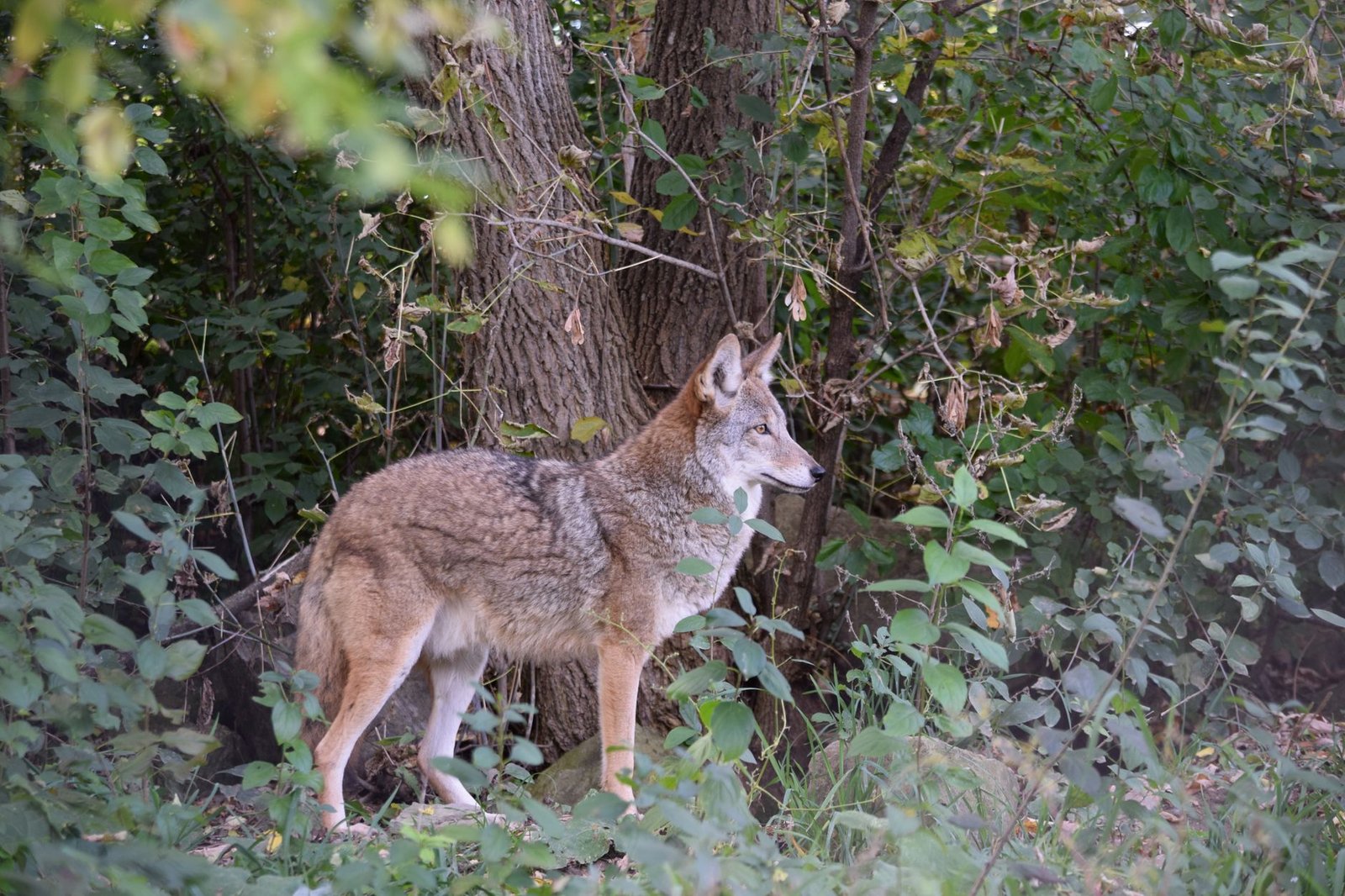
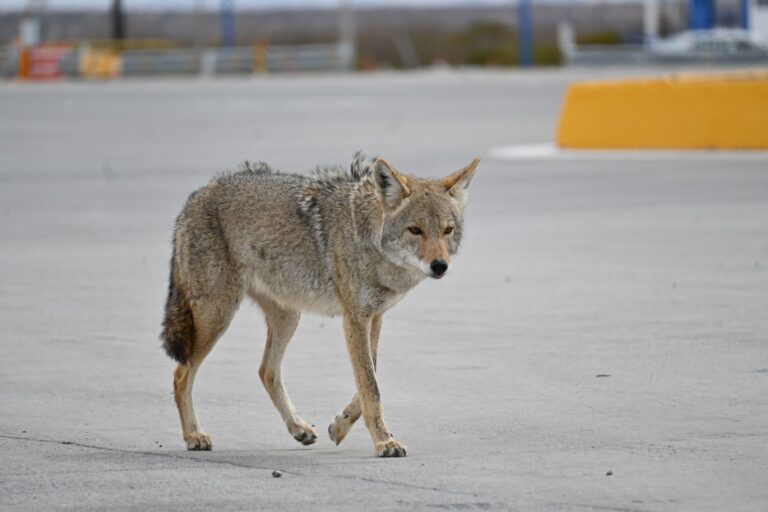
Until the 1980s, nobody in the Carolinas had reported a coyote. A century ago the animal lived only in the West and the middle of the continent. Today it trots through every state in the lower 48 and every Canadian province, and it got to the Atlantic by two separate roads.
That long trip should have left a mark on the eastern coyote’s DNA. Animals that spread into new land usually lose genetic variety, because each new wave starts from a few pioneers. A genetic survey of 394 coyotes found something else. Coyotes on both eastern fronts kept roughly as much variety as those back home in the West, and in the Southeast they had a little more. The likeliest reason is interbreeding with wolves and dogs along the way. The same survey flagged 12 spots in the genome that shifted the same way on both roads, three of them near genes tied to exploring new places in mice.
A Princeton lab read coyotes from coast to coast. The work was led by Elizabeth Heppenheimer, then a researcher in the Department of Ecology and Evolutionary Biology at Princeton University, with senior author Bridgett vonHoldt and scientists from Georgia, Ontario, Idaho, North Carolina and the U.S. Fish and Wildlife Service. It was published in December 2018 in the journal Ecology and Evolution. Blood and tissue came from state wildlife programs, museums, hunters and trappers.
How coyotes got to the East Coast
The northern road ran through the Great Lakes. The eastward spread of the coyote (Canis latrans) began in the early 20th century. In the north, coyotes moved across the Great Lakes region of the United States and Canada and pushed into New England, New York and Pennsylvania. The southern road was slower. It ran roughly through Louisiana, Alabama and Georgia, which is why coyotes reached the Carolinas so late. The two roads also cross very different country, from cold northern forest to the warm lowlands of the Gulf Coast.
The DNA drew the same map. The team read about 23,000 single-letter variable spots in each animal’s genome, known as SNPs (short for single nucleotide polymorphisms). It let the data sort the animals with no labels. The coyotes fell into three clean groups: one for the old western range, one for the Northeast and one for the Southeast. The main pattern in the data lined up almost perfectly with longitude.
Pennsylvania sits where the two roads meet. Coyotes in Pennsylvania made up the largest single sample in the study, 37 animals, more than any other state or province. They belong to the northeastern group. Yet animals from Pennsylvania, Virginia, Kentucky and North Carolina often carried a mix of northern and southern ancestry. The authors read that as a zone of fresh contact, where coyotes from the two fronts have met again after a century apart.
Eastern coyotes and their wolf ancestry
The wolf question is older than this study. Earlier research had already found that coyotes in the Northeast mated with the last eastern wolves (Canis lycaon) and gray wolves (Canis lupus) they met on the way. In the Southeast, they crossed with red wolves (Canis rufus), which now survive in the wild only in a recovery area in North Carolina. Several studies had also caught eastern coyotes breeding with domestic dogs. A pioneer on thin ground takes whatever mate it can find.
The diversity didn’t drain away. Theory says a population that spreads by serial founders should lose variety at every hop, like a game of telephone that drops words each time it passes on. Bank voles and a damselfly studied on their own expansion fronts did just that. Eastern coyotes did not. A common measure of genetic variety, called heterozygosity, was about the same in the West and the Northeast, and slightly higher in the Southeast. The pattern held across the genome.
The rare alleles tell a quieter story. Honestly, the expansion did leave a scar, just not where the theory looked first. Rare gene variants, the ones found in only a few animals, were most common in the old western range. The western coyotes carried 5,799 variants found in no other region, against 3,578 in the Southeast and 3,018 in the Northeast. Think of a family that moves across the country. It packs the sofa and the beds, but the odd heirloom stays behind. The researchers pointed out that rare variants are the better sign of a bottleneck after an expansion.
Hybrids are the likeliest refill. So why didn’t the overall variety fall? The authors judged heavy gene flow the likeliest cause: wanderers from the West, or interbreeding with wolves and dogs. If hybrids are the cause, the higher numbers in the Southeast suggest that crossing has been most common there, a front that has drawn far less attention than the wolf mixing up north. Small, closed groups tend to go the other way, which is part of why wildlife is quietly losing its genetic diversity in many places.
Eastern coyote genetics and the genes for exploring
Two roads made a natural replay. Spotting genes that helped an animal spread is tricky. At the edge of an expansion, a gene variant can ride a wave of luck to high numbers, a process called “allele surfing”, even if it does nothing useful. Here’s where the two roads help. A lucky surf is unlikely to happen twice, in the same direction, on two separate routes through two different landscapes. It’s like two juries in different towns reaching the same verdict.
Twelve spots passed both tests. The team ran two different statistical methods to find spots in the genome that changed between the western range and each front. Only 12 of the roughly 23,000 SNPs stood out in both methods and on both roads. In every case, the change went the same way in the Northeast and the Southeast. At one spot, near a gene called WDR17, the rarer version vanished on both fronts.
Three genes point toward wanderlust. Three of the 12 sit in or near genes that lab studies have tied to how mice explore. Mice missing one working copy of CACNA1C moved in fewer bursts, scanned their surroundings less and froze more. Mice lacking ALK did better at spotting a new object in their cage. Mice lacking EPHA6 struggled with learning and spatial memory. All three traits fit an animal that has to find its way through unknown country, the kind of skill a coyote needs to cross half a continent.
One variant showed up out of nowhere. A spot near the gene ZDHHC16 had only one version in the western coyotes sampled. In the East, a second version turned up in about one in eight northeastern coyotes and about one in four southeastern ones. It may have been too rare to catch in the West, arisen as a new mutation, or come in from a wolf or a dog. The data can’t tell which.
What the coyote study can’t show
The authors urged extreme caution. None of the 12 variants sits inside the part of a gene that codes for a protein. The link to exploring rests entirely on mouse studies, and nobody knows whether those gene functions hold in coyotes. The team also collected no behavior data. It is not known whether eastern coyotes explore more than western ones, let alone whether that tracks their genes.
Deer are the other suspect. Both eastern fronts are rich in deer, so the shared changes could reflect a shared environment rather than the act of spreading. The authors thought this less likely, since diets vary a lot among eastern coyotes and deer are eaten in the West too. Some unmeasured factor can’t be ruled out. The study also had no coyote samples from before 1900, so the “western” group stands in for the ancestors rather than being them.
The next step is the genes themselves. The researchers want to read the full coding sequences of these genes in coyotes, and to sample red wolves, eastern wolves, gray wolves and dogs side by side with them. That’s how they hope to learn how much of the eastern coyote is borrowed, and whether the borrowing helped it reach the Atlantic.
The study at a glance
- Journal: Ecology and Evolution, December 2018
- Type of study: Genome-wide DNA survey comparing coyotes from the old western range with two eastern expansion fronts
- Sample: 394 coyotes from 28 U.S. states and Canadian provinces, read at 22,935 genetic markers
- Main finding: Eastern coyotes kept about as much genetic variety as western ones, likely thanks to hybridization, and 12 markers shifted the same way on both fronts, three near genes linked to exploring in mice.
- Limits: No behavior data, no protein-coding variants, and the gene functions come only from mouse studies.
Source: Heppenheimer, E., Brzeski, K. E., Hinton, J. W., Patterson, B. R., Rutledge, L. Y., DeCandia, A. L., Wheeldon, T., Fain, S. R., Hohenlohe, P. A., Kays, R., White, B. N., Chamberlain, M. J., & vonHoldt, B. M. (2018). “High genomic diversity and candidate genes under selection associated with range expansion in eastern coyote (Canis latrans) populations.” Ecology and Evolution, 8(24), 12641-12655. https://doi.org/10.1002/ece3.4688