 Editorial NexoScience
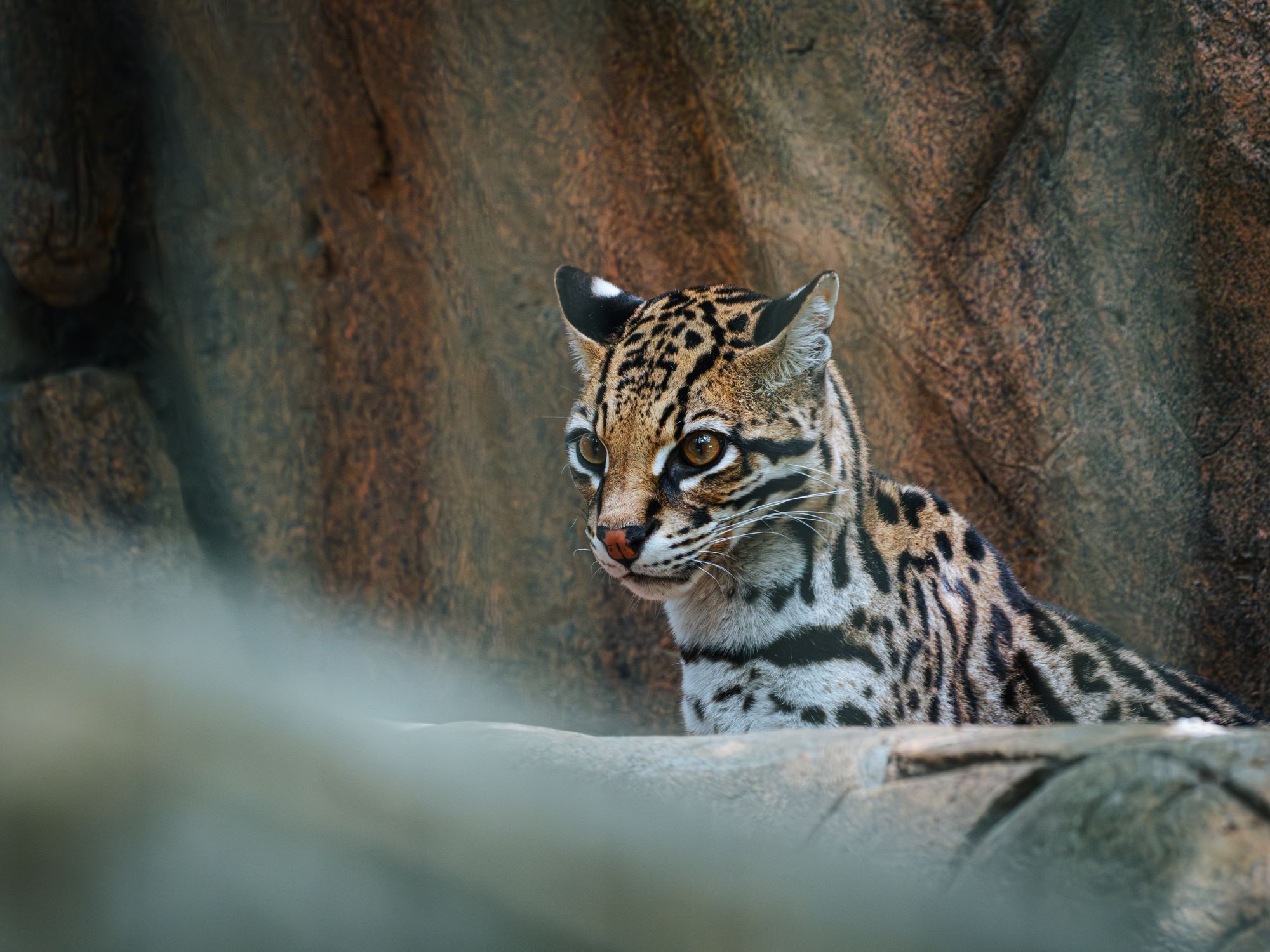
For well over a century, the clouded tiger cat existed for science mostly as a flat, dry skin. Museum drawers held pelts and skulls from the Andes, filed under the same name as spotted cats from the dry scrub of northeastern Brazil, thousands of miles away. Almost nobody had a good look at the living animal. Then camera traps began catching it at night in the cloud forests, and the pictures didn’t match the label.
That mismatch is now settled on paper. A team led by Tadeu Gomes de Oliveira, writing in 2024 in the journal Scientific Reports, argues that the clouded tiger cat (Leopardus pardinoides) is a new species, not a subspecies of the northern tiger cat (Leopardus tigrinus). It lives in the misty mountain forests from Costa Rica and Panama down the Andes to northwest Argentina. With it, the tiger cat group goes from two recognized species to three, and the newcomer is the most different of the lot.
Tiger cats are easy to mix up. They’re small, spotted wild cats, about the size of a house cat, and to an untrained eye one looks much like the next. For decades they were lumped into a single species. Then genetic work split them into a northern and a southern species. But the northern one was an odd package. Its Andean and Brazilian members lived in opposite kinds of places, rainy cloud forest on one side and the hot, semi-arid Caatinga scrub on the other. Genetic studies had also found that they sat on two completely separate family lines. “Same species” was starting to look like a filing error.
How camera traps split the tiger cat species complex
Thousands of photos did the heavy lifting. The team gathered 1,439 checked records of tiger cats from across Central and South America. Only about one in eight came from museum specimens. The rest came from living animals, mostly camera trap photos, plus a few roadkills. For Ecuador alone, the lead author went through more than 600 pictures of clouded tiger cats, about 80 separate sightings, sometimes with the same cat caught in five to seven poses. That’s how you learn the shape of an animal that had only been known from flattened skins. No cat was trapped or handled for the work, the authors note.
Then the cats were sorted by where they live. For each record, the researchers pulled 25 environmental measures, such as temperature, rainfall, elevation, tree cover and how rugged the ground is. A method called principal component analysis, which boils many variables down to a few main axes so groups can be compared, did the sorting. Three clusters fell out cleanly. Cats from the Andean cloud forests formed one. Those from the savannas of Brazil and the Guiana Shield formed a second. Those from Brazil’s Atlantic Forest formed a third. The Central American cats, long called oncilla, sat entirely inside the Andean group, so the team folded both into one species.
Here’s the thing: the genes already agreed. Earlier genomic work had put the Andean and Costa Rican cats on one branch, which split from the ancestors of the other tiger cats about 2.45 million years ago. The savanna and Atlantic Forest species parted much later, around 1.52 million years ago. So this isn’t a hair-splitting call. It’s the oldest split in the group, which may explain why the clouded cat looks the most different. Spotting a cryptic species, an animal that looks like its neighbors but is genetically apart, is the same puzzle that revealed the world’s largest hummingbird hiding an unnamed species.
The clouded tiger cat’s size, coat and cloud forest home
A clouded tiger cat is a small cat with a big tail. It weighs about 5 pounds (2.27 kilograms) on average, and its head and body run about 19 inches (48.5 centimeters). The tail adds roughly 11 inches (29 cm), about 60% of its body length. Most of the clouded cats measured, around 71%, had a long tail like a margay’s, a tree-climbing cousin. Only about 31% of Atlantic Forest tiger cats did. Its ears are short and round, its head looks a lot like a margay’s, and its fur is dense, soft and a rich reddish, orange or grayish yellow.
The spots give it its name. The clouded tiger cat wears irregular rosettes, medium to large, boldly marked and often merging into cloudy blotches. The savanna tiger cat has small dots or open rosettes on a yellowish coat. The Atlantic Forest tiger cat carries many large, round rosettes that rarely run together. There’s a quieter difference too. Female clouded tiger cats have only one pair of teats, while the other two species have two.
It lives high and wet. Clouded tiger cats turn up mostly above about 4,900 feet (1,500 meters), and the bulk of the records sit between 6,600 and 9,800 feet (2,000 and 3,000 m). One came from as high as 13,000 feet (3,960 m). Their forests average about 59 degrees Fahrenheit (15 degrees Celsius) over the year, get very heavy rain and have about 90% tree cover. The other two species are lowland cats, with typical elevations below 2,000 feet (600 m). The savanna tiger cat lives where the year averages about 77 F (25 C) and the canopy is only about 10 feet (3 m) tall. Same-sized cats, in other words, splitting a continent by climate.
Ocelots may set the lower limit. The ocelot (Leopardus pardalis) is the region’s dominant midsize hunter, and it kills or crowds out smaller cats. The authors call this the “ocelot effect.” High in the cloud forest, ocelots are scarce, and earlier work found they had no effect on clouded tiger cats there. Lower down, where ocelots get more common, the picture changed. The researchers suspect this pressure keeps the clouded tiger cat above roughly 4,900 feet. It’s speculation, not a measurement, since their model couldn’t include ocelots as a variable.
Tiger cat species in South America and their shrinking range
The three species now split the map neatly. The clouded tiger cat runs along 11 mountain ecoregions, from Costa Rica’s Talamanca range through Colombia, Ecuador, Peru and Bolivia to northwest Argentina. Lowland rainforest cuts it off from the others. The savanna tiger cat (L. tigrinus) lives in Brazil’s Cerrado savannas and Caatinga scrub and in the savannas of the Guiana Shield. The Atlantic Forest tiger cat (Leopardus guttulus) is tied to the Atlantic Forest of southern Brazil, eastern Paraguay and northeast Argentina. Colombia holds about 40% of the clouded tiger cat’s range, and Costa Rica holds more than 60% of the range of its Central American population.
Half the habitat is already gone. By the team’s reconstruction, the clouded tiger cat once had about 318,000 square miles (825,000 square kilometers) of suitable land. Today it has about half that. The other two species lost even more, up to about two thirds of their historic range. Added together, the three tiger cats have lost an area slightly smaller than India. And the authors stress that these cats are scarce even where they still live.
Its conservation status hasn’t caught up. In the 2016 Red List assessment, the clouded tiger cat was rated vulnerable only as part of the northern tiger cat. Rated on its own, with half its range gone and Andean cloud forests still being cleared, it should be a high priority for review, the authors argue. Protecting it is also harder than it sounds. It spans several countries, including areas of guerrilla conflict, and all three tiger cats are less likely to be found near human homes. The savanna tiger cat carries an extra warning sign: very low genetic variety, the kind of quiet decline seen in wildlife losing its genetic diversity around the world.
Where the evidence still runs thin
The data have gaps, and the authors say so. The range models rely on presence-only records, which reflect where people happened to look as much as where cats live. The Bolivian Yungas forests and the Guiana Shield, both hard to reach, are thinly sampled. The ocelot effect couldn’t be modeled. The historic ranges are estimates drawn from ecoregion borders, not old surveys. And while the paper leans on earlier genetic studies, its own evidence is ecological and physical. Body measurements came from 104 specimens, and only 21 of them were clouded tiger cats. Whether the Guiana Shield cats truly belong with the Brazilian savanna species still needs genetic confirmation.
Bolivia had another surprise waiting. That thinly sampled corner mattered. In 2026, a genomic study led by Jonas Lescroart and published in the journal Current Biology sequenced whole genomes of tiger cats from eight countries. It backed the clouded tiger cat as a species and named a fifth tiger cat, Leopardus tilcayo, from the Yungas cloud forests of Bolivia, an animal once filed under the northern tiger cat. Honestly, it’s a fitting sequel. The 2024 paper had flagged the Bolivian Yungas as one of the places its data barely reached.
The next step is a closer look. The authors call for separate Red List assessments for each species and for surveys in the rugged, barely explored ranges of the Darién gap between Panama and Colombia. Their model predicts good habitat there, but no clouded tiger cat has been recorded yet. Their last line is blunt: the “Red Alert” is on.
Source: de Oliveira, T. G., Fox-Rosales, L. A., Ramírez-Fernández, J. D., Cepeda-Duque, J. C., Zug, R., Sánchez-Lalinde, C., et al. “Ecological modeling, biogeography, and phenotypic analyses setting the tiger cats’ hyperdimensional niches reveal a new species.” Scientific Reports (2024). DOI: 10.1038/s41598-024-52379-8