 Editorial NexoScience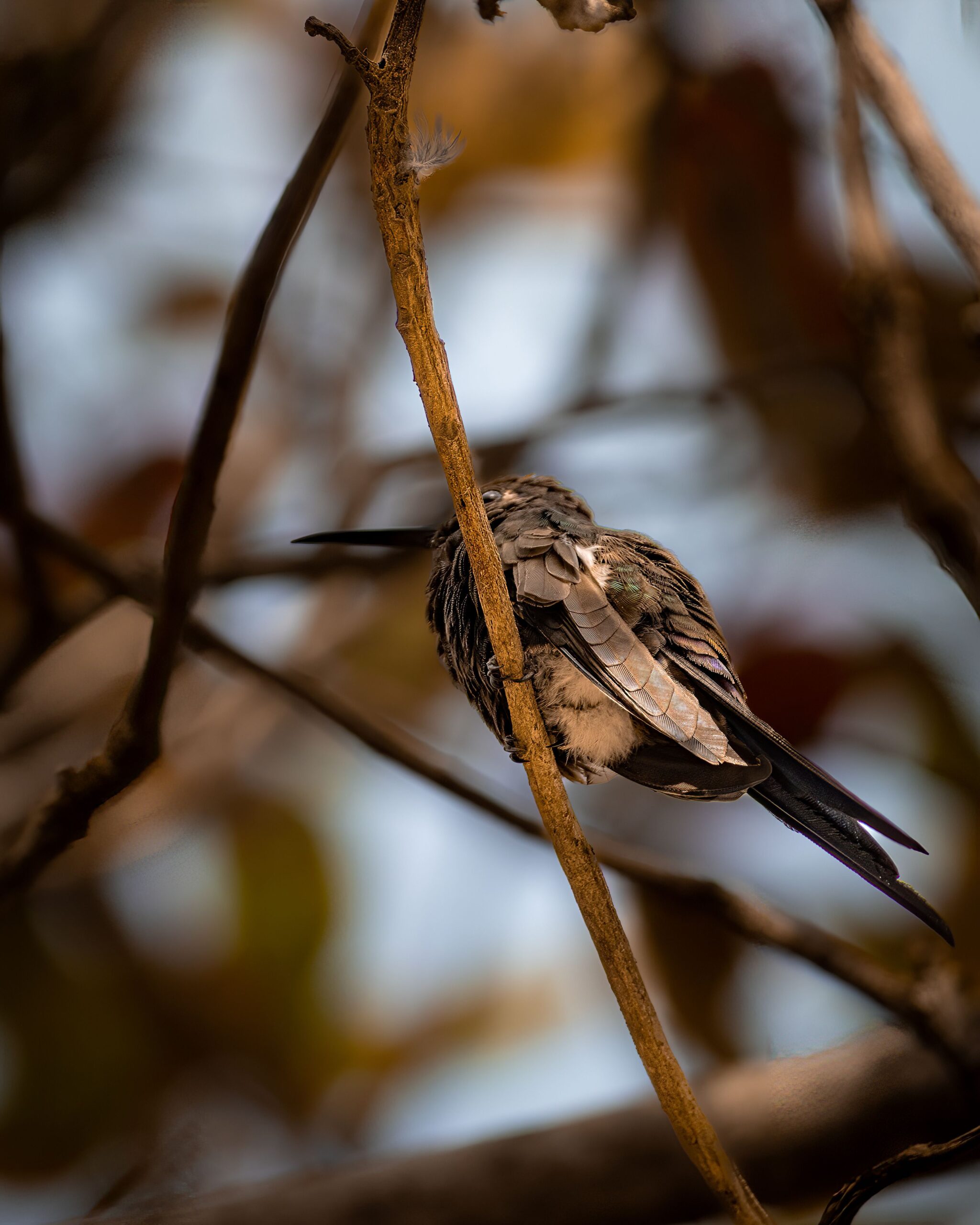
In 1834, Charles Darwin stood on the Chilean coast and watched giant hummingbirds arrive with the spring, coming, as he put it, from the parched deserts of the north. He was witnessing one of the most extreme migrations ever recorded in a hummingbird, and he had no way of knowing it. He also had no way of knowing that the birds passing in front of him were not one species but two, separated by millions of years of independent evolution and wearing almost exactly the same feathers.
The giant hummingbird was already the strangest member of its family. Of the 363 hummingbird species known to science, it is the most phylogenetically distinct, sitting alone on its own evolutionary branch for roughly 14 million years. It weighs between 17 and 31 grams, about double the next largest hummingbird, and it occupies the widest range of climates of any species in the group, from sea level scrub to high Andean plateaus. That climatic breadth was the puzzle researchers set out to explain, using satellite transmitters, geolocators, blood physiology and whole genome sequencing.
The tracking data revealed a journey nobody had ever mapped. Eight birds tagged in Chile flew loop migrations of 5,457 to 8,335 kilometers round trip, averaging 6,578 kilometers, north along the Andes through Argentina, Bolivia and Peru, reaching their non breeding grounds in Peru between May and July. The spring return across the Atacama Desert took roughly 30 days and was timed to the flowering of columnar cacti along the route. For nearly two centuries the destination had remained unknown, simply because the technology to track a bird that light did not exist.
The way these birds gain altitude looks uncannily like human mountaineering. The migration involves an elevational shift of more than 4,100 meters, and the birds do not climb it in one push. They ascend in bursts, then stop for several days at intermediate elevations before climbing again, the same staged strategy alpinists use to acclimatize. Their blood follows suit. Hemoglobin concentration rises by 2.7 grams per deciliter and hematocrit by 7.1 percentage points during the ascent, approaching the profile of birds that live permanently at high altitude and, in the case of hematocrit, even overshooting it. That overcompensation may be one of the physiological costs of a migratory life.
The genomes told a story the plumage had been hiding. The team sequenced whole genomes from 36 individuals and gathered genetic data from 101 birds in total. Instead of one variable species, they found two reproductively isolated lineages that diverged 2.1 to 3.4 million years ago, in the late Pliocene, alongside the major uplift of the Central Andean Plateau. Genome wide FST reached 0.61, a level of differentiation that implies a very long stretch of near total reproductive isolation. Among 101 sampled birds there was exactly one clear hybrid, even though the two species share territory for part of the year.
Outward appearance simply stopped evolving. Across 361 physical specimens, the differences came down to subtle variation in bill, wing, tail and tarsus length plus throat coloration, and statistical models could assign a bird to the correct species only about 80 percent of the time from external measurements alone. Internally the divergence is clearer. High elevation resident birds carry roughly 23 percent more lung mass than migrants at low elevation, and both species share a hemoglobin variant otherwise found only in hummingbirds that live permanently at extreme altitude, a genetic legacy the migratory birds still carry even while breeding at sea level.
Correcting the record meant undoing an error made a century and a half ago. A supposed subspecies named “peruviana” had been described from specimens collected in Peru during the non breeding season, precisely when both lineages overlap there. Sequencing those original type specimens showed the series mixed three northern birds with one southern bird, and museum collections worldwide had been applying the name to mixtures ever since. The authors declare it a nomen dubium, an invalid name.
The new species is named after the runners of the Inca Empire. Patagona chaski takes its name from the Quechua word for messenger, honoring the chaski relay runners renowned for endurance across steep mountain terrain, the same terrain the bird occupies and pollinates. The holotype comes from Cusco, Peru, at 4,030 meters, with 37 additional paratypes. The species lives year round, without migrating, across the Andes of Ecuador, Peru, Bolivia and northernmost Chile and Argentina, between roughly 1,800 and 4,300 meters. It is, on average, slightly larger than its southern relative, which makes it the largest hummingbird on the planet.
The famously broad climatic niche was never real. It was the sum of two niches belonging to two different birds, one that evolved an extreme elevational migration and one that stayed on the mountain. That a conspicuous, record holding species could remain undescribed for two hundred years is a reminder of how completely stasis in appearance can mask deep biological divergence.
Source: Williamson, J.L. et al., “Extreme elevational migration spurred cryptic speciation in giant hummingbirds,” published in Proceedings of the National Academy of Sciences (2024). DOI: 10.1073/pnas.2313599121.