 Editorial NexoScience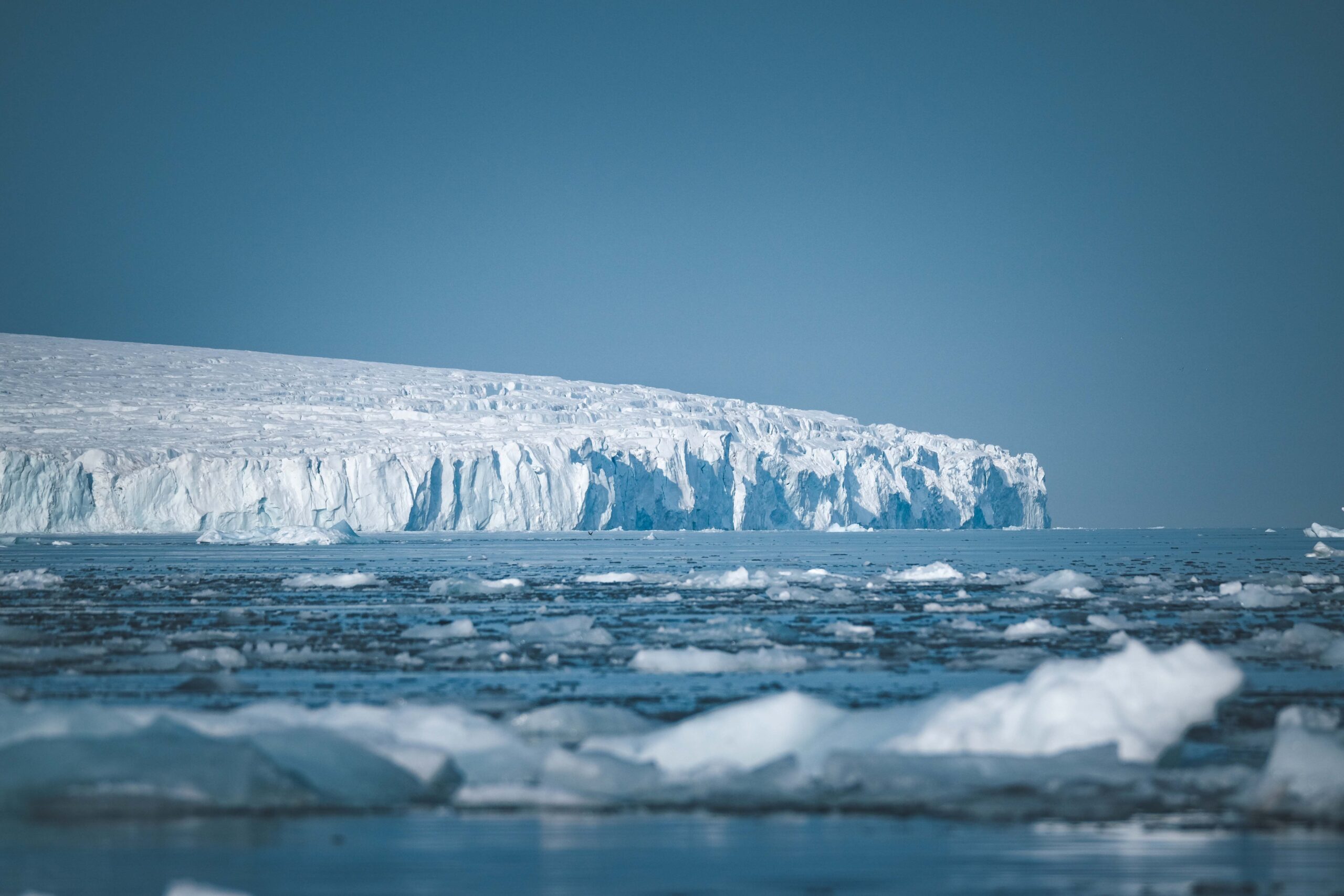
In the dead of the Antarctic winter, in front of the Filchner-Ronne Ice Shelf, a floating slab of ice roughly the size of Spain, the wind does something violent to the sea. Cold, heavy air pours downhill off the ice sheet and shoves the newly formed sea ice offshore as fast as it can freeze, tearing open patches of dark water that promptly freeze again. Every round of freezing squeezes salt out of the ice and into the seawater below, which grows so cold and so briny that it slumps off the edge of the continental shelf and pours into the abyss.
That plunging brine is the headwater of Antarctic Bottom Water, the dense, near-freezing layer that fills the deepest floor of the world’s oceans and holds close to a third of all the water in the global ocean. It is running short. Ship measurements repeated across the Weddell Sea, the ice-choked bay south of the Atlantic that supplies up to half of all the bottom water made around Antarctica, show that its coldest and densest variety has lost about 30% of its volume since 1992, researchers reported June 12, 2023, in the journal Nature Climate Change. The cause is not the one climate scientists had assumed.
Wind, not meltwater, is starving the deep ocean. The prevailing explanation, the one endorsed in the most recent Intergovernmental Panel on Climate Change assessment, is that freshwater running off a melting Antarctic Ice Sheet dilutes the surface, makes the water too buoyant to sink, and shuts the process down. In the Weddell Sea, the study found, that is not what happened. The Filchner-Ronne Ice Shelf has stayed shielded by a moat of cold, dense shelf water, and there is no observational evidence that warm water has intruded underneath it to accelerate melting. Something else had to be throttling the supply.
The evidence comes from three lines drawn across the Weddell Sea. Since the late 1980s, research ships have repeatedly sailed the same three routes, lowering instruments that record temperature and salinity from the surface to the seafloor. Each route has been reoccupied between nine and fourteen times, making them the best sampled stretches of ocean anywhere near Antarctica. Mapping how much of each section was filled by water dense enough to qualify as bottom water gave the team a three-decade time lapse of a water mass no satellite can see. The trend was down along every line.
The missing link is the sea ice itself. Satellite records over the same period show that winter sea ice in front of the Ronne Ice Shelf and over Berkner Bank has become more concentrated, not less, because the wind is no longer clearing it away. That sounds like good news and is exactly the opposite. The coastal polynyas, patches of open water kept ice-free inside the winter pack by offshore wind, are the factories where new ice forms and rejects its salt. With the ice sitting still instead of being blown out to sea, freezing has slowed by roughly 40% from 1992 to 2020, which the researchers calculated is by itself enough to produce the 20% to 30% loss of bottom water the ships have measured.
A slow rhythm in the tropical Pacific is tugging on those Antarctic winds. The wind shift traces back to a deepening low pressure system over the Amundsen Sea, which in turn responds to sea surface temperatures thousands of miles north through a chain of atmospheric waves. The relevant pacemaker is the Interdecadal Pacific Oscillation, a seesaw in tropical Pacific temperatures so slow that a person might live through only three or four of its swings, and it flipped from its positive to its negative phase in the early 1990s, right when the Weddell Sea winds began to turn. Nothing about that requires greenhouse gases. It is natural variability, reaching from the equator to the bottom of the Atlantic.
The abyss is warming mainly because the cold water underneath it has drained away. The deep Weddell Sea, below roughly 6,600 feet (2,000 meters), has been warming several times faster than the ocean average, a signal that has puzzled oceanographers. Most of it, the analysis found, is not new heat at all. As the coldest bottom layer thins, the boundaries between water masses sag downward and warmer, saltier water settles into depths it did not previously reach. A thermometer at a fixed depth registers that as warming.
The chain of cause and effect is not fully nailed down, and the authors say so. This is an observational study, built on repeated measurements rather than a controlled experiment, so it establishes a consistent sequence rather than proof of cause. The Pacific link is the loosest joint: only about 24% of the wind trend could be recovered from the Interdecadal Pacific Oscillation, rising to no more than about 30% when the belt of westerly winds circling Antarctica is added, and the reconstruction explains less than a tenth of the wind’s year-to-year swings. Most of the trend remains unattributed. The researchers also noted that connecting sea ice to bottom water on short timescales is difficult without long-term monitoring of currents beneath the ice, that their volume estimate probably marks an upper bound on the loss, and that the estimate for the densest class carries an uncertainty larger than the number itself. A model capable of confirming the whole chain, ocean and sea ice and ice shelf together, does not yet exist. Building one, the study authors wrote, is the next job.
What happens next may hinge on a coin the Pacific has not finished flipping. If the oscillation is doing most of the work, it will eventually swing back, and the winds could return. But the direction of the recent trend matches what coupled climate models produce under high greenhouse gas emissions, which means the shrinkage may continue whichever way natural variability turns. What is now clear is that the world’s largest reservoir of cold water, and with it the abyssal ocean’s ability to lock away heat and carbon for centuries, can be regulated by how hard the wind blows across a few hundred miles of Antarctic coastline in the dark of winter.
Source: Zhou, S., Meijers, A. J. S., Meredith, M. P., Abrahamsen, E. P., Holland, P. R., Silvano, A., Sallee, J.-B., and Osterhus, S. “Slowdown of Antarctic Bottom Water export driven by climatic wind and sea-ice changes.” Nature Climate Change, vol. 13, pages 701 to 709 (2023). DOI: 10.1038/s41558-023-01695-4