 Editorial NexoScience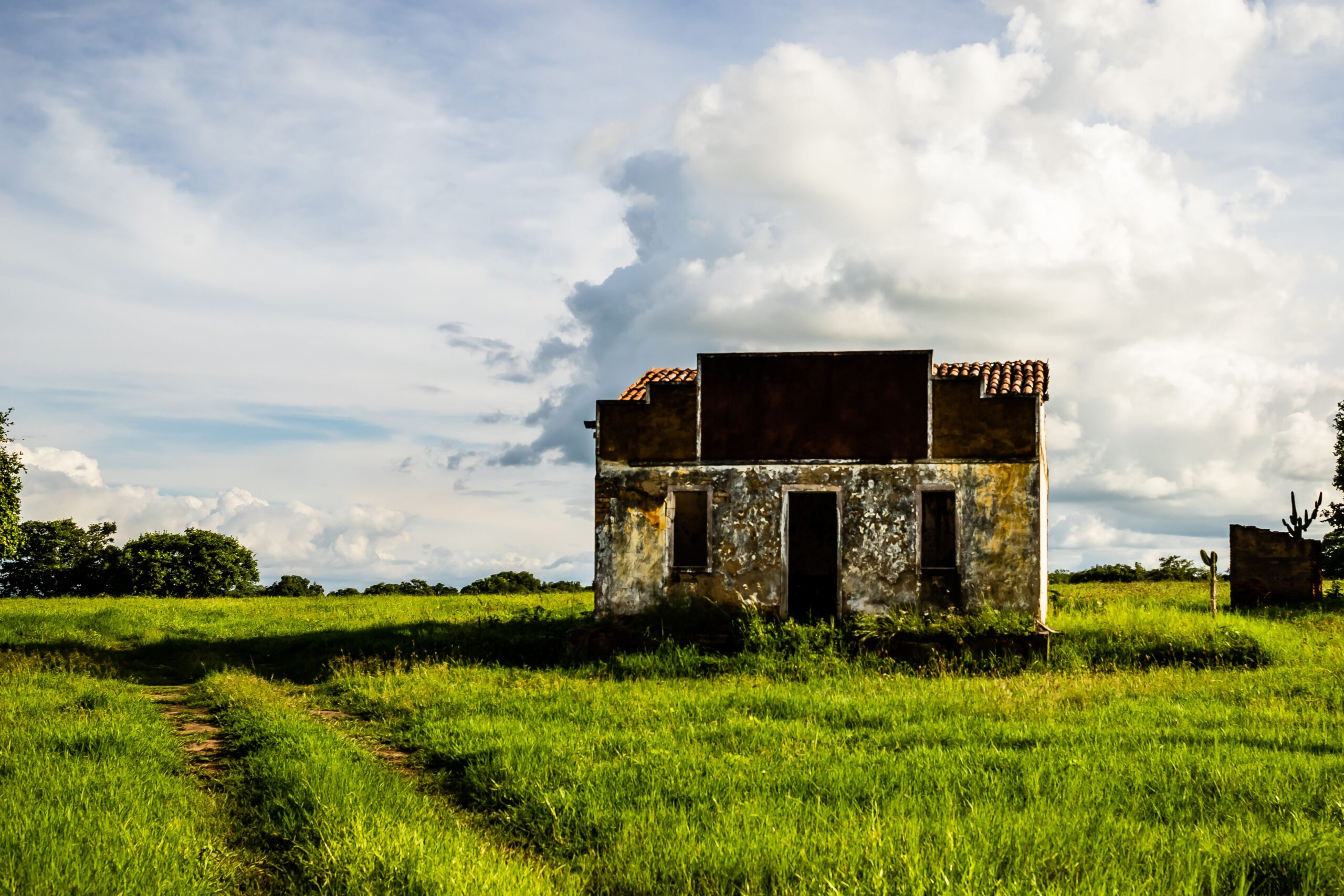
Walking away from a field is not the same thing as restoring it. When farming stops in Europe, something almost always grows back. But a review of case studies from across the continent found that the most common outcome is not a designed restoration at all. It is whatever happens to grow when nobody intervenes, and the ecological value of that result ranges from rich new habitat to ground taken over by non-native species. The work was published Nov. 3, 2021, in the journal Land Use Policy, led by Catherine Fayet of the International Union for Conservation of Nature’s Europe Regional Office and the Institute for Environmental Studies at VU University Amsterdam.
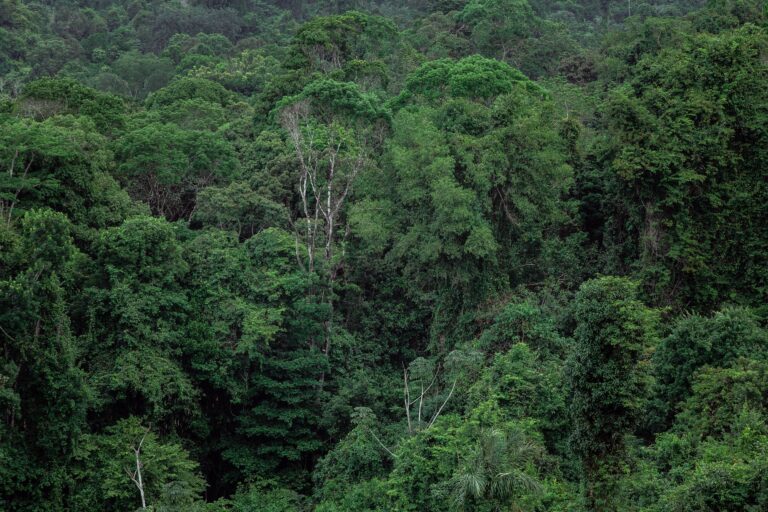
The numbers point one way and then complicate themselves. Of the 135 documented post-abandonment cases the team catalogued across 24 European countries, tracked on average about four decades after farming stopped, 85% ended in some form of revegetation, while only 13% returned to any kind of agriculture. Nearly two thirds of all recorded outcomes fell into a single category the authors call a semi-natural landscape, meaning vegetation that came back on its own through secondary succession, the slow process by which grasses, scrub and eventually trees recolonise ground that used to be ploughed or grazed.
The absence of management turned out to be the strongest force acting on the land. It was the single most frequently recorded driver in the whole review, and it splits the story cleanly in two. In the trajectories that drifted into a semi-natural landscape, nobody managing the land accounted for 54% of the drivers logged. In every other outcome the researchers examined, from planted forests to revived multifunctional countryside, that same absence accounted for 3%. Those alternative outcomes ran on institutions and money instead: restoration programmes, afforestation subsidies, protected area rules, land tenure arrangements and market demand for timber.
An unmanaged field behaves like a room with the door left open. What moves in depends almost entirely on what happens to be in the neighbourhood, and on what the ground itself allows. Semi-natural outcomes clustered on steep slopes, poor or degraded soils, and plots close to existing forest that could seed them. Land that went back into intensive cultivation was the mirror image: fertile, flat enough for machinery, easy to reach and close to a market. Biophysical conditions did not choose the trajectory, but they decided which trajectories were even available.
The quality of that spontaneous comeback varies enormously. The authors are explicit that succession can amount to genuine restoration on degraded land at almost no cost, and that it can just as easily produce vegetation dominated by invasive or non-native species, depending on local conditions. The ten specialists interviewed for the study divided along the same line. Some described natural succession as an effective, cheap route to species-rich ecosystems. Others, particularly those working in Eastern Europe, warned that allowing high nature value grasslands to scrub over means losing biodiversity rather than gaining it. In dry Mediterranean regions, uncontrolled vegetation build-up also feeds wildfire risk.
None of this comes from a controlled experiment, and the map is uneven. This is a structured review of published case studies backed by expert interviews, so the driver counts show which factors were reported alongside which outcomes, not which factors caused them. The evidence is also geographically lopsided: more than a third of the cases came from Spain alone, with Italy the next most represented, which tilts the whole picture towards the Mediterranean. The categories are broad, too, since “management” covers everything from mechanical tree planting to simply never showing up. The authors acknowledged that their framework does not capture how long a plot had been abandoned, a variable that drives the cost of doing anything with it later, and that their search terms probably missed afforestation cases outside Iberia and underrepresented projects aimed at cultural heritage.
The policy reading is that the default outcome still needs a decision behind it. Abandoned farmland is one of the few sources of free land in a crowded continent, and it sits directly in the path of the EU Biodiversity Strategy for 2030 and the bloc’s plan to plant billions of additional trees this decade. But the review found that in every case where something other than unmanaged succession happened, institutional factors were involved. Deviating from the default required a programme, a subsidy or a rule. Climate change is expected to push more European farmland out of production, and the authors flag it as a driver that has barely been studied in this context. That leaves the real question of the review wide open. It is not whether abandoned land will grow something back, but whether anyone will decide what.
Source: Fayet CMJ, Reilly KH, Van Ham C, Verburg PH. “What is the future of abandoned agricultural lands? A systematic review of alternative trajectories in Europe.” Land Use Policy, 2022;112:105833. DOI: 10.1016/j.landusepol.2021.105833. Open access under a Creative Commons Attribution 4.0 International licence (CC BY 4.0).