 Editorial NexoScience
Some bills keep arriving long after you’ve closed the account. Climate change works a lot like that, and a new study puts a date on the final statement. It’s far away. Carbon dioxide released by the world’s biggest oil, gas, coal and cement producers between 1854 and 2024 will still be warming the planet in the year 2500, no matter which path the rest of the world takes from here.
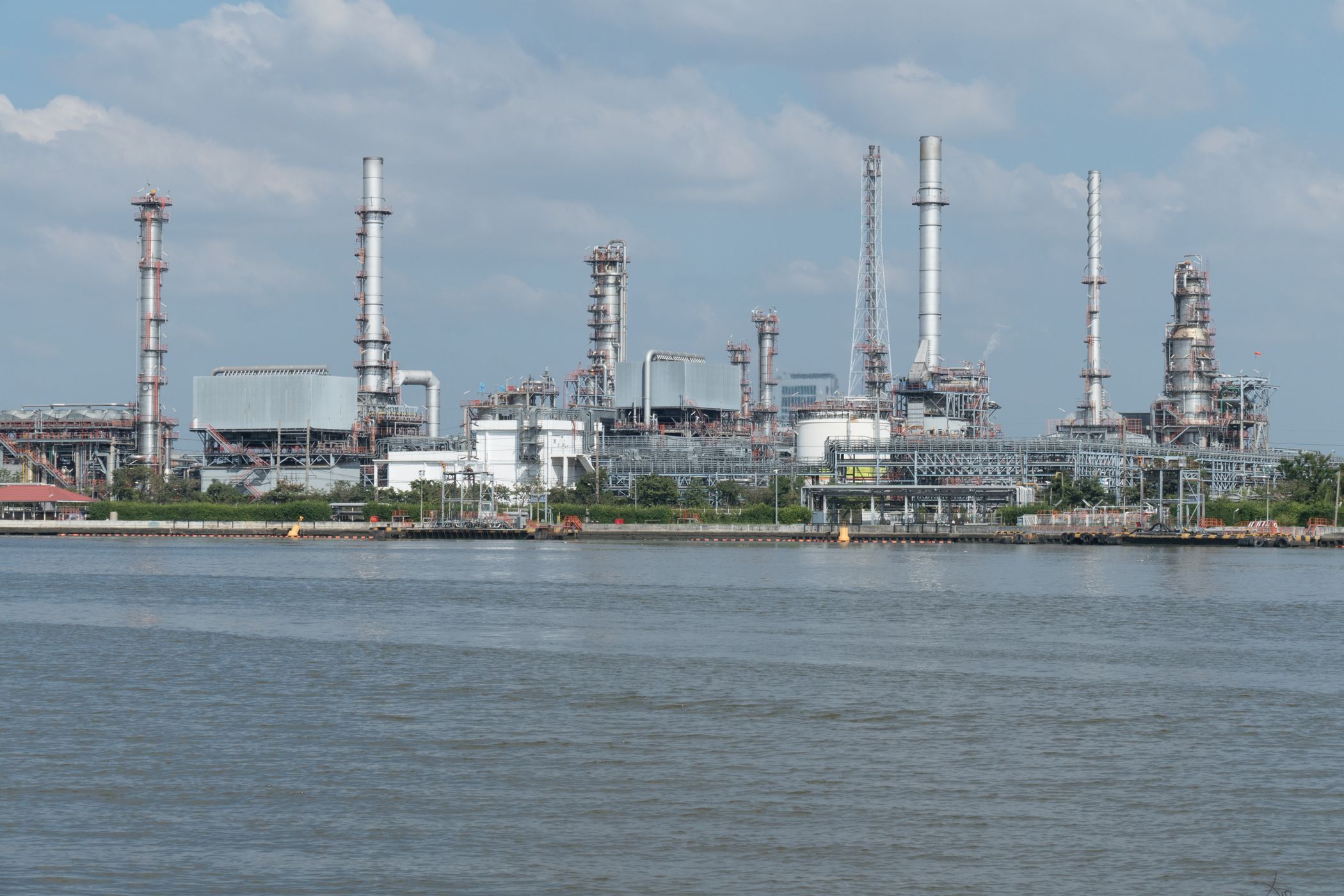
The companies in question are the “Carbon Majors,” the 178 largest fossil fuel and cement producers tracked in a database compiled by InfluenceMap. Together, the emissions tied to their products add up to about 1.25 trillion tons of carbon dioxide (CO2). That pile of carbon sits at the center of a question courts are now being asked to answer: who is responsible for climate change, and for how long? The study, published Wednesday (Sept. 23) in the journal PLOS Climate, argues that the carbon majors’ climate accountability stretches across centuries, and that the bill can be worked out in advance.
“We know that fossil fuel emissions have caused a lot of warming, and we’re seeing the impacts of that, but the question is: How long does that warming last into the future?” Dargan Frierson, an associate professor of atmospheric and climate science at the University of Washington and lead author of the study, said in a statement.
The researchers ran history forward, then erased it. Frierson and co-author Lauren Henrie, a former University of Washington student of environmental science and resource management, used FaIR (the Finite Amplitude Impulse Response model), a simplified climate model that tracks how gases build up in the air and how much heat they trap. They ran it all the way to 2500. Then they ran it again in a world where the Carbon Majors’ historical emissions never happened. The gap between the two runs is the warming those companies own.
They repeated the exercise under four possible futures, known as shared socioeconomic pathways (SSPs). These are the standard scenarios climate scientists use to sketch where the world is headed. They range from SSP1-2.6, where humanity cuts emissions hard, to SSP5-8.5, where fossil fuel use keeps climbing for decades. Each scenario was run many times with slightly different settings, to capture how uncertain we still are about the way the climate responds.
About half of that carbon is still in the air. By 2025, the Carbon Majors’ emissions had added roughly 80 parts per million (ppm) of CO2 to the atmosphere. That’s 48% of everything they emitted. Oceans, forests and soils swallowed the other 52%. For scale, the air held about 280 ppm of CO2 before the industrial era, so these 178 companies alone have pushed it up by more than a quarter.
And CO2 doesn’t clear out on its own schedule the way smoke does. A large share of any pulse of it lingers for centuries, because the slow processes that pull it back into rock and deep ocean work on geological time. The warming it causes follows the same stubborn curve. In the model, heating from the Carbon Majors’ past emissions peaked around 2024, at a little over 1.1 degrees Fahrenheit (0.6 degrees Celsius) in the median result. Then it barely lets go.
In the lowest-emissions future, those same historical emissions still add about 0.8 F (0.45 C) of warming in 2500. That’s 68% of the warming they had already caused by 2025. Put simply, more than two-thirds of today’s damage is still on the books nearly five centuries from now.
A cleaner future makes the old carbon count for more. Here’s the thing that runs against intuition. You’d expect the legacy of past emissions to hit hardest in the dirtiest future. For CO2 levels themselves, that’s right. In a high-emissions world, warmer oceans and stressed land take up less carbon, so more of the companies’ old CO2 hangs around, and the model results spread wider. But the temperature effect runs the other way. Under SSP5-8.5, the Carbon Majors’ legacy warming is about 0.56 F (0.31 C) in 2500. That’s only 49% of their 2025 contribution, and a sliver, around 5%, of the total warming that world would carry by then.
CO2 has diminishing returns. Let me explain why. The heat-trapping power of CO2 grows with the logarithm of its concentration, a mathematician’s way of saying each extra molecule matters a little less than the one before it. Think of stirring sugar into coffee. One spoonful in a bitter black cup changes the taste a lot. The same spoonful dropped into a cup that already holds six barely registers.
In a low-emissions world, the Carbon Majors’ leftover CO2 sits in a relatively unsweetened atmosphere, so each ton does more warming. In a high-emissions world, it’s one more spoonful in a syrupy mess. That, the authors wrote, is the main reason the historical share of warming is larger in the greener scenario even though the extra CO2 is smaller. Cutting emissions from here on shrinks the total warming a great deal. It does nothing to erase the part history already wrote. If anything, it makes that part stand out.
Methane tells a shorter story. Not all of the companies’ pollution lingers. Methane, the main ingredient of natural gas, traps far more heat per molecule than CO2, but it survives in the air for only about a decade. So the methane tied to the Carbon Majors climbs, peaks and fades. In most scenarios, the model even shows it dipping slightly below zero after about 2080. That doesn’t cancel anything out. The authors found that the companies’ historical emissions keep affecting CO2, methane, ozone and water vapor high in the stratosphere, and that their combined radiative forcing, the extra energy they hold in the climate system, stays positive the whole way to 2500.
The liability doesn’t hinge on what we do next. That’s the finding with legal teeth. Lawsuits around the world are trying to hold fossil fuel producers to account for heat waves, floods and fires, leaning on “attribution science,” the field that links specific damage to specific causes and emitters. Most of that work looks backward. This study looks forward, and finds the number holds steady whichever future we pick.
“The amount of warming is calculable and relatively independent of future emissions,” Frierson said. “If there are legal decisions about accountability, the responsibility is not just now, it will continue for many many years into the future.”
He also framed the result as a warning about oil and coal that haven’t been dug up yet. “Future fossil fuel production will exacerbate climate disasters for many decades to come, so new legal battles about who is accountable should be expected for many years,” he said.
The numbers are a floor, not a ceiling. The authors acknowledged several limits. FaIR is a reduced-complexity model, not a full Earth system model that simulates oceans, ice and vegetation in fine detail. That’s what makes it fast enough to run thousands of futures out to 2500, but speed comes from simplifying. The researchers also noted that the two highest-emissions scenarios, SSP3-7.0 and SSP5-8.5, push the model outside the range where its settings are well tuned, so those results carry extra uncertainty. And the study counts only emissions up to 2024. The Carbon Majors kept producing after that, so their real legacy is bigger than the one calculated here. The authors describe their estimate as a lower limit.
Then there’s the caveat that comes with any projection. None of this future warming has happened yet. Attribution of a past heat wave can be checked against thermometer records; attribution for the year 2500 can only be checked against physics. What the study offers isn’t a precise forecast of temperatures five centuries out. It’s a result that holds up across every scenario tested: the old carbon keeps heating.
For Frierson, the practical message is short. “We expect continued warming of the climate until we stop fossil fuel emissions,” he said. “The only stable future is one with no fossil fuels burned at all.” The harder question now belongs to courts and companies alike: how to settle a debt that will still be coming due long after everyone reading this is gone.
Source: Dargan M. W. Frierson and Lauren A. Henrie, “Centuries of global heating from Carbon Majors: Dependence on future emissions pathways,” PLOS Climate, published Sept. 23, 2026. DOI: 10.1371/journal.pclm.0001036. Open access under a CC-BY license.