 Editorial NexoScience
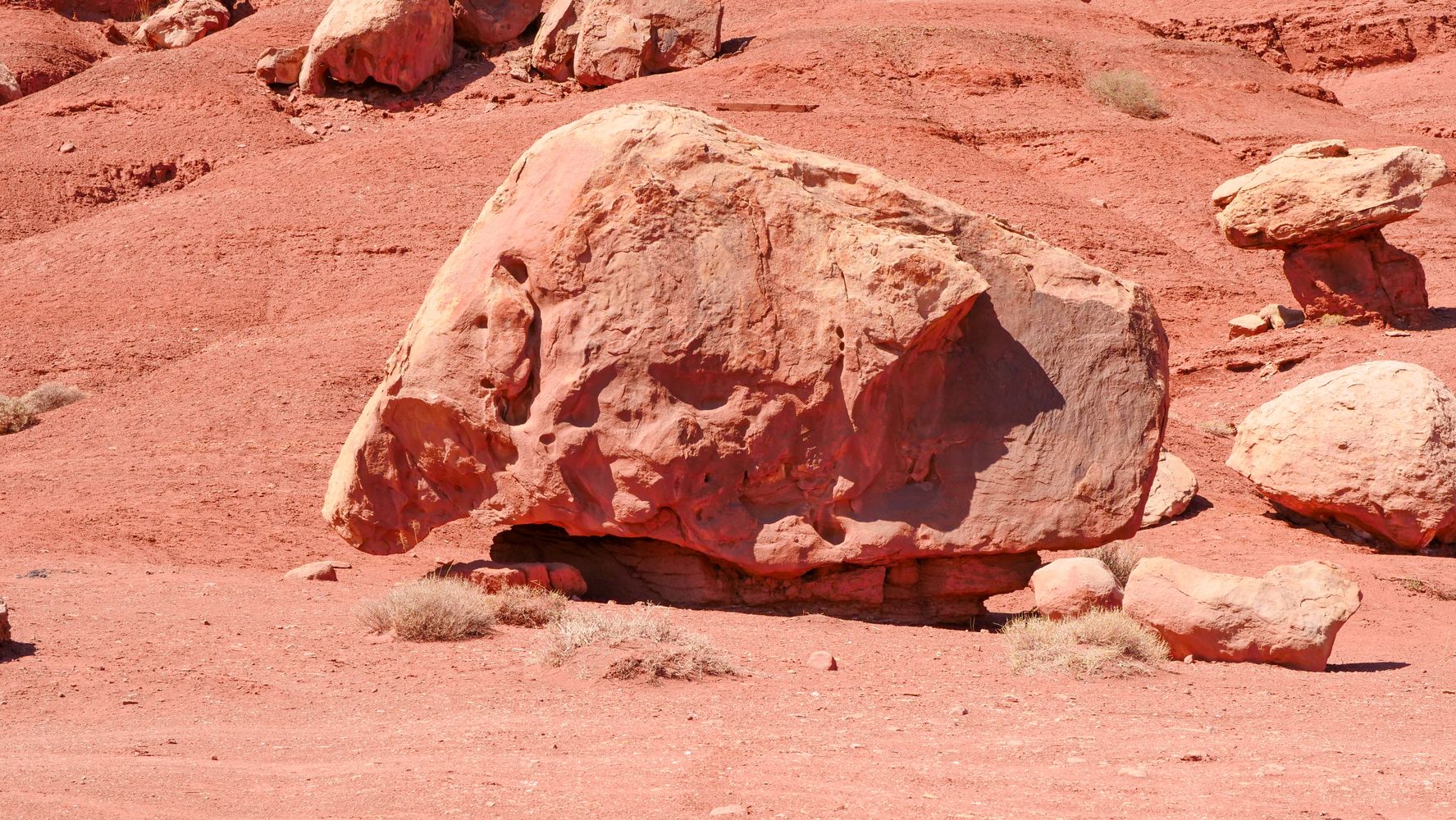
Long before Perseverance touched down in February 2021, mission planners had already circled a thin strip of rock on the inner edge of Jezero crater. From orbit, it carried a strong chemical signal of carbonate, a family of minerals that on Earth often forms in shallow lakes and seas. And it sat right where the shoreline of an ancient lake ought to be. If those carbonates had settled out of lake water along a Martian beach, this was one of the best places on the planet to look for preserved traces of ancient life.
The rocks told a messier story. The strip, informally called the Margin unit, didn’t begin as beach sand. It began as a slowly cooled, olivine-rich igneous rock, and water came back to alter it at least three separate times, researchers reported in September in the journal Communications Earth & Environment. Candice Bedford, a research scientist at Purdue University and the study’s lead author, and her colleagues pieced that history together from more than 185 bedrock targets analyzed by the rover’s SuperCam instrument. The upshot: Jezero crater’s record of water on Mars is more tangled than the view from orbit suggested. Bedford described the spot in a statement as “a sort of crossroads for aqueous systems.”
Jezero sits in carbonate country. The crater is about 28 miles (45 kilometers) wide and lies on the northwestern edge of Isidis, an impact basin roughly 750 miles (1,200 km) across. The surrounding region, near Nili Fossae, holds one of the most widespread exposures of olivine and carbonate anywhere on Mars. Olivine is a green, magnesium- and iron-rich mineral common in volcanic rock, and it reacts readily with water. The Margin unit is a narrow band where orbiters picked up especially strong carbonate signals, close to the valley where a river once poured into the lake. Perseverance worked through it in four sections, named East, West, North and High Margin, between mission days 911 and 1280.
A laser did most of the reading. SuperCam sits high on the rover’s mast and fires a laser at rocks 7 to 21 feet (2 to 6.5 meters) away. Each pulse turns a speck of rock, about as wide as four or five human hairs, into a glowing plasma, and the light from that plasma reveals which elements are inside. Because the spot is about the size of a single mineral grain, each shot reads one mineral rather than a blend. So the team handed the measurements to a clustering algorithm, a type of machine learning that groups similar data without being told what to look for. It sorted them into eight chemical families, including olivine, iron-magnesium carbonate, silica and a dusty surface coating. The researchers also measured at least 150 grains per target in SuperCam’s close-up images to classify the rock textures.
Up high, the rock barely got wet. In the High Margin, the grains fit together like pieces of a tight jigsaw, with only thin material between them. That texture points to olivine crystals that grew and piled up as a body of magma cooled slowly underground, much as sugar crystals collect at the bottom of a pot of syrup left to cool. The rock closely resembles the Séitah formation on the crater floor, which formed the same way. Carbonate barely shows up here. The olivine also changes chemistry from the High Margin to the East Margin, with less magnesium downslope, a pattern the authors say fits a layered intrusion that crystallized from its edges inward. The rover’s ground-penetrating radar had already spotted thick layers tilting toward the center of the basin.
Down near the old waterline, everything changed. The East and West Margin lie below what orbital studies identify as the lake’s second terrace level, the shoreline left after the lake drained partway through a breach in the crater rim. There, the rock is laced with raised ridges, its olivine grains are cracked and silica fills the gaps between them. Some outcrops near the Western fan, the old river delta, also show layering, cross-bedding and grain sizes that overlap with river-laid sediments, hints that lake waves may have shuffled the rock locally. Let me explain why the authors stay cautious on that point. Layering and grading can also form inside a magma body as crystals settle, and chromite grains from the East, West and High Margin keep distinct chemical fingerprints. Any reworking, they wrote, must have been very local.
First came carbon-rich groundwater. The earliest episode involved neutral-to-alkaline water loaded with carbon dioxide, seeping through fractures in the bedrock. It turned olivine into carbonate and eventually filled the cracks with it. The filled fractures ended up harder than the rock around them, so when wind and time wore the surface down, they were left standing as ridges. More than half of the laser readings on those ridges fell into the carbonate families, against almost none in the silica ones. Their carbonate also carries the same iron-to-magnesium balance as the olivine, a sign it was made from the local rock itself.
Then the water’s chemistry flipped. Silica and carbonate sit on opposite ends of a seesaw. Warmer, more alkaline water holds more silica, while water rich in carbon dioxide favors dissolved carbonate, and the reverse is true for each. When a fluid cools, evaporates or loses its carbon dioxide, silica drops out. In the Margin unit, cooler and more acidic water dissolved part of the carbonate, stripped out magnesium, opened new pore space and deposited silica in it. The silica-rich cluster shows up only in the East and West Margin, below that second shoreline. That’s the strongest hint of the lake’s hand. Eleni Ravanis, a planetary scientist at the University of Hawaii at Manoa and a coauthor, put it simply in a statement: “we see more of that silica in rocks that sat below the water line.”
Last, hot water left a vein of fluorite. At a spot in the East Margin called Point Cloates, SuperCam hit a pale mineral vein about 10 inches (25 centimeters) thick that runs several meters to the east and northeast. It holds calcium sulfate and fluorite. The rock around it is poor in calcium, sulfur and fluorine, so this water came from somewhere else. Fluorite can form on Mars in small amounts from cold fluids below about 55 degrees Fahrenheit (13 degrees Celsius), but a thick vein looks more like what hot water leaves behind in volcanic settings on Earth. With a possible volcanic edifice on the crater’s edge and the Syrtis Major volcanic province nearby, the authors consider volcanic heating of groundwater the likely trigger. A debris-flow deposit at the northern edge, which carries olivine from the Margin unit, also shows that the Margin unit predates the neighboring Bright Angel formation.
The crater floor stayed oddly dry. Séitah, at the bottom of the crater, shows much less alteration than the East and West Margin or the river delta. That’s awkward if lake water altered everything below the waterline. Earlier work suggested Séitah was shielded by overlying layers that have since eroded away. The new study offers another reason: Séitah has no ridges, so it likely had fewer open fractures for groundwater to move through.
The lake question isn’t settled. The authors lay out two end-member scenarios and don’t pick a winner. In one, lake water and groundwater worked the rock together. In the other, groundwater alone did the job, with more of it flowing through the West Margin. The altered patches are scattered unevenly below the lake level and differ in chemistry, which could just as well point to separate groundwater systems. The study puts the three episodes in order but gives no ages for them. About 22% of the laser readings fit no chemical family well and were set aside, laser data were limited to targets within 21 feet (6.5 m) apart from a few key exceptions, and dust and coatings hide much of the surface. None of this is evidence of life. The paper argues only that the Margin unit is a place worth examining for it.
Some of this rock is already packed for the trip home. Perseverance sealed samples from the Margin unit, among them Pelican Point, Lefroy Bay and Comet Geyser, for a potential mission to return them to Earth. On Earth, reactions between water and olivine produce exactly the carbonate and silica found here, and both minerals can hold on to traces of microbes for a very long time. Whether those tubes ever reach a lab, and what they hold, is the next chapter.
Source: Bedford, C. C., Ravanis, E. M., Wiens, R. C., Clavé, E., Aramendia, J., Madariaga, J. M., et al. “Lake- and groundwater-associated alteration of the olivine-rich Margin unit in Jezero crater, Mars.” Communications Earth & Environment (2026). DOI: 10.1038/s43247-026-03997-9