 Editorial NexoScience
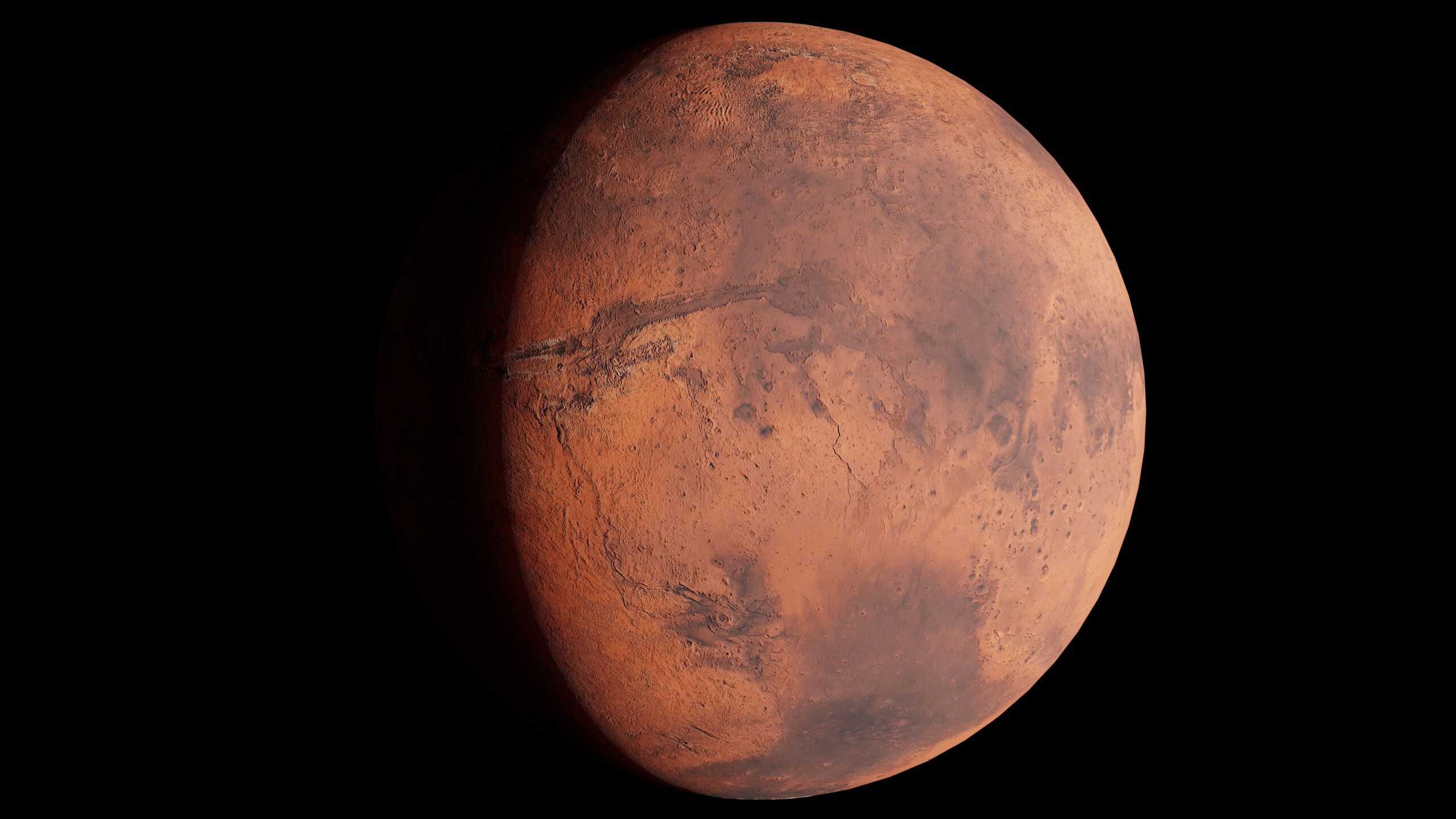
A caustic reagent carried from Earth pried more than twenty organic molecules out of a Martian sandstone, but the rover cannot tell whether they came from meteorites, from Mars itself, or from something that once lived.
Tucked inside Curiosity’s chassis sits a small set of sealed metal cups, each holding a dose of liquid reagent brought from Earth. There is no resupply. Once a cup is punctured and spent, that experiment is over for good, which is why the team waited years to spend one of them. When they finally did, on a slab of ancient lakebed sandstone at the foot of Mount Sharp, the rock gave up a chemical inventory far richer than anything the mission had pulled from Martian bedrock before.
Seven molecules were nailed down with confidence, including naphthalene, methyl benzoate, trimethylbenzene and benzothiophene, a ring molecule built around a sulfur atom. More than twenty additional peaks showed up in the data, several of them looking like benzene rings dressed with amine, alcohol or acid groups, and one consistent with a double ring carrying a nitrogen atom built into its structure. The results were reported in the journal Nature Communications by a team working with the Sample Analysis at Mars (SAM) instrument suite, the onboard chemistry laboratory that has been sniffing Martian rock powder since Curiosity landed in Gale crater.
The trick was chemistry, not heat. Every previous organic detection on Mars came from simply cooking rock powder and reading the fumes. This time SAM ran thermochemolysis, a reaction that combines a strong chemical base with heat to snap large, stubborn carbon structures into fragments small enough for an instrument to name. The reagent, tetramethylammonium hydroxide (TMAH) dissolved in methanol, soaked into roughly half a pinch of drilled powder before the oven ramped up past the temperature a self-cleaning oven reaches at full blast. It is the first time such an experiment has been run in place on another world rather than in a lab on Earth.
None of these molecules appeared when the same rock was merely heated. That is the detail that carries the result. Curiosity ran a plain, no-reagent run on powder from the same drill hole, and not one of the organics from the TMAH experiment turned up in it. The chemistry was not decorating an existing signal, it was opening a door that heat alone could not push through. Methyl benzoate makes the same point from another direction, since that molecule can only form through the TMAH reaction itself, which confirms the reagent really did meet Martian material rather than fizzling inside the instrument.
Benzothiophene is the headline detection. Sulfur-bearing aromatic molecules had only flickered weakly in Gale crater sediments before this, never solidly enough to call confirmed. Here it registered in both gas chromatograph channels, making it the largest underivatized aromatic molecule confirmed as native to Mars so far. Naphthalene, a two-ring molecule familiar on Earth from mothballs and coal tar, was also confirmed directly for the first time. The nitrogen-bearing candidate is the one the team is most careful about, and the most tantalizing, since nitrogen rings are structural building blocks of nucleic acids. The authors call it an exciting possibility and leave it there, tentative.
The molecules were probably torn out of something bigger. To read the Mars data, the team ran the same reaction on the Murchison meteorite, a carbonaceous chondrite that serves as the reference specimen for extraterrestrial organic chemistry. Sixteen of the twenty-eight species found in the Martian run also came out of Murchison’s insoluble organic matter, the tangled, tar-like carbon network that will not dissolve in any solvent. The overlap suggests the Martian compounds were not floating free in the rock as finished molecules. They were fragments, cleaved off a macromolecular structure that had been sitting in that sandstone since the crater held a lake.
Where the carbon came from is still open, and the instrument cannot settle it. SAM measures what comes off the powder, not where inside the rock it was sitting, and that limitation is the wall the interpretation runs into. The molecules could have been delivered by meteorites and interplanetary dust. They could have been made on Mars without life, through water reacting with rock or through electrochemistry. They could, in principle, be the residue of biology. The data are consistent with all three, and the authors say plainly that the origin cannot be resolved from this experiment. A detection is not a diagnosis.
What the rock does prove is durability. This sandstone has spent about three and a half billion years being buried, chemically reworked and bombarded with radiation at a surface with no ozone layer and almost no atmosphere to hide behind, and a structurally varied set of organic chemistry came through it intact. That matters more than any single compound on the list, because it means the Martian near-surface is not the chemical scorched earth it was once assumed to be. Fragile carbon can survive there, inside clay-rich sediment, on geological timescales.
That conclusion is what the next decade of hardware is built on. A second TMAH experiment is planned for SAM itself, tuned by what this first run revealed. The same chemistry is loaded aboard the MOMA instrument on the Rosalind Franklin rover and the DrAMS instrument heading to Titan on Dragonfly. Each will arrive knowing something the first attempt had to find out the hard way: on a world where the obvious organics burned off long ago, the interesting ones are locked inside bigger molecules, and you have to bring the key with you.
Source: Williams, A.J., Eigenbrode, J.L., Millan, M. et al. “Diverse organic molecules on Mars revealed by the first SAM TMAH experiment.” *Nature Communications* 17, 2748 (2026). DOI: 10.1038/s41467-026-70656-0