 Editorial NexoScience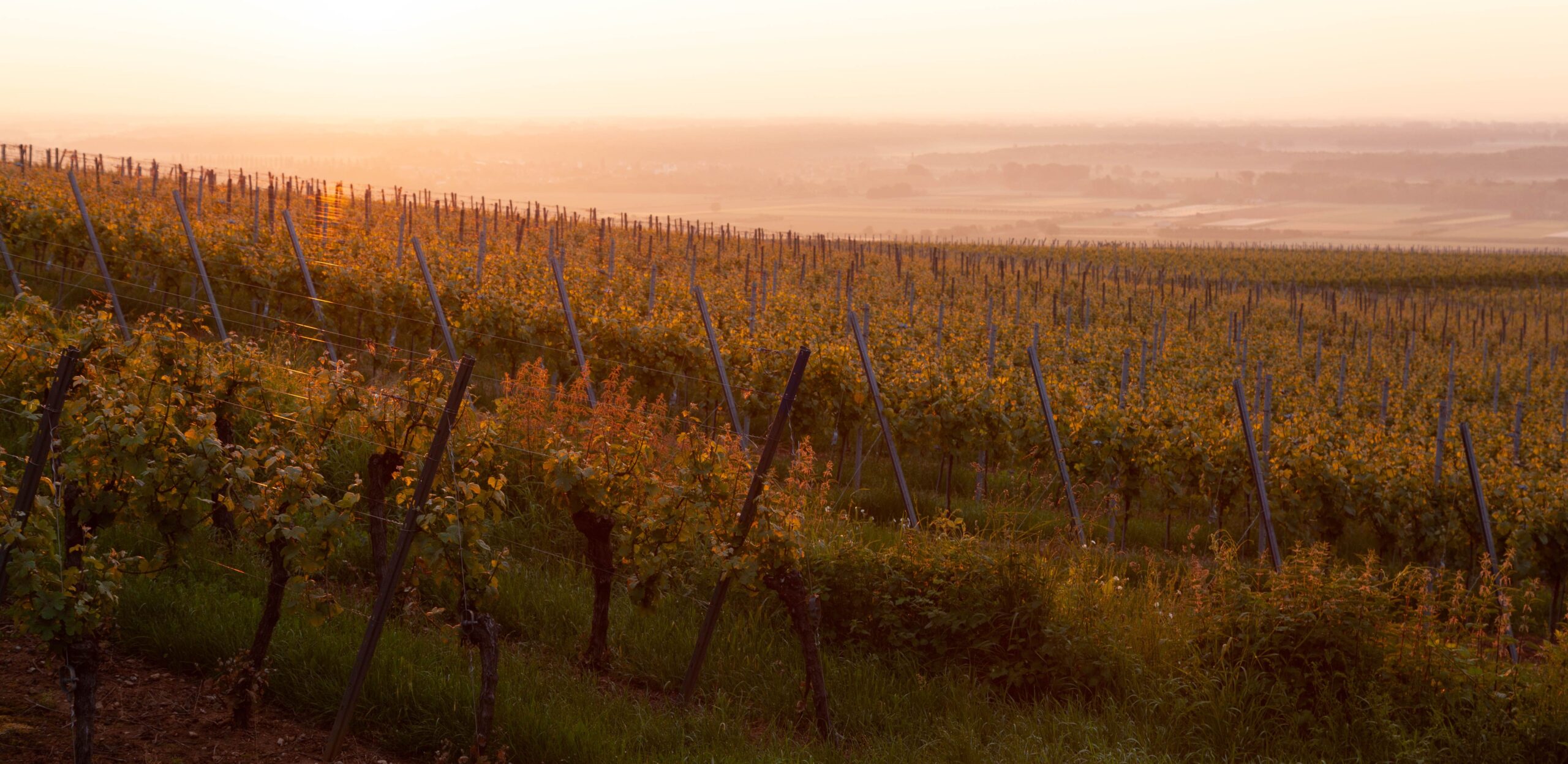
Look closely at the back label of a bottle of Rioja, Chianti or Champagne. Beyond the vintage and the alcohol content, that label certifies something far more binding: that the grapes were grown inside a legally drawn boundary, that they belong to a list of authorised varieties, and that they were farmed and vinified according to rules written decades ago. That legal architecture is what turns a place name into one of the most valuable assets in European agriculture. A study published in Nature Communications suggests it is also what could sink it.
A team led by Merle assessed the climate vulnerability of 1085 European wine regions, all of them producing wines under Protected Designation of Origin status, the strictest tier of the geographical indication system. The analysis does not measure damage already done, it projects vulnerability, combining three ingredients following the IPCC framework: exposure, meaning how much the local climate is expected to shift; sensitivity, meaning how close the region’s signature grape varieties already are to the limit of what they tolerate; and adaptive capacity, measured through 15 indicators covering financial, natural, physical, social and human resources. Exposure was calculated from the projected change in heat, night temperature and dryness indices between 1981 to 2010 and 2071 to 2100 under the ssp370 scenario, using an ensemble of five global climate models.
The geography that emerges is uncomfortable for the south. The highest exposure levels appear in Romania, Croatia, Bulgaria, Italy and Hungary, many of them in mountainous terrain across the Apennines, the Alps and the Carpathians. Southern regions also tend to score high on sensitivity, because their permitted grape varieties are already growing near the warm edge of their historical range. Meanwhile, adaptive capacity collapses in central Spain and much of eastern Europe, with scores below 0.3 in Slovakia, Greece, Romania, Bulgaria and Hungary. Around 5% of all the regions analysed fall into the most vulnerable group, including Southern Black Sea in Bulgaria, Hajós-Baja in Hungary, Trebbiano d’Abruzzo and Lambrusco Mantovano in Italy, and Sierra de Salamanca in Spain. Names as commercially powerful as Rioja, Alentejo, Côtes de Provence and Prosecco from Conegliano Valdobbiadene sit in the high vulnerability groups too.
The paradox is that protection and rigidity are the same thing here. A winegrower facing hotter, drier summers has an obvious toolbox: switch to a late-ripening variety better suited to heat, move the vineyard uphill or north, irrigate, change canopy management or rootstocks. Under a protected designation, most of those moves are not agronomic decisions, they are legal ones. Planting an unlisted variety, sourcing grapes from outside the boundary or altering regulated practices means going through a formal amendment of the region’s rules, or forfeiting the right to the name on the bottle. Burgundy and Champagne are built on Pinot Noir. If that grape stops performing there, a substitute would not qualify for the label that gives the wine its value.
The study also finds the flexibility is not evenly distributed, and neither is money. Spanish regions such as La Mancha score well on financial capacity but poorly on the other dimensions, which drags their overall adaptive capacity down. Slovenia and Italy hold the largest share of top-quartile regions, 65% and 14% respectively, with the strongest scores near the Alps and the Apennines. At the opposite end of the vulnerability ranking sit Rheinhessen in Germany, Crémant de Wallonie in Belgium, Alsace and Côtes d’Auvergne in France and Alto Adige in Italy, cooler or higher-altitude places that may even see modest short-term gains from warming, such as better sugar ripeness and less pathogen pressure. Those gains shrink sharply once warming intensifies.
Some regions are already quietly rewriting their own rulebooks. Bordeaux has added new grape varieties to its production regulations and is testing them in the field. Kunság in Hungary has redefined its wine product categories, and Cebreros in Spain has updated its analytical parameters. These are small legal openings rather than transformations, and in the most vulnerable regions the authors note that limited resources still cap what any rule change can achieve. There are limits to the modelling too: more than 1000 grape varieties are registered across European protected regions, but detailed phenological data exists mainly for international varieties representing roughly 1% of global vine diversity, so the sensitivity estimates lean on a narrow slice of what is actually planted.
The conclusion the authors reach is less about weather than about law. A system built on a narrow list of permitted grapes, fixed practices and tight boundaries risks becoming obsolete within decades unless it learns to bend. The historical idea of terroir always described a pact between a place and the people working it. Keeping that pact alive may now require letting the people change what they plant, so that the place can keep making wine at all.
Source: “Climate resilience of European wine regions”, Merle et al., Nature Communications (2024). DOI: 10.1038/s41467-024-50549-w