 Editorial NexoScience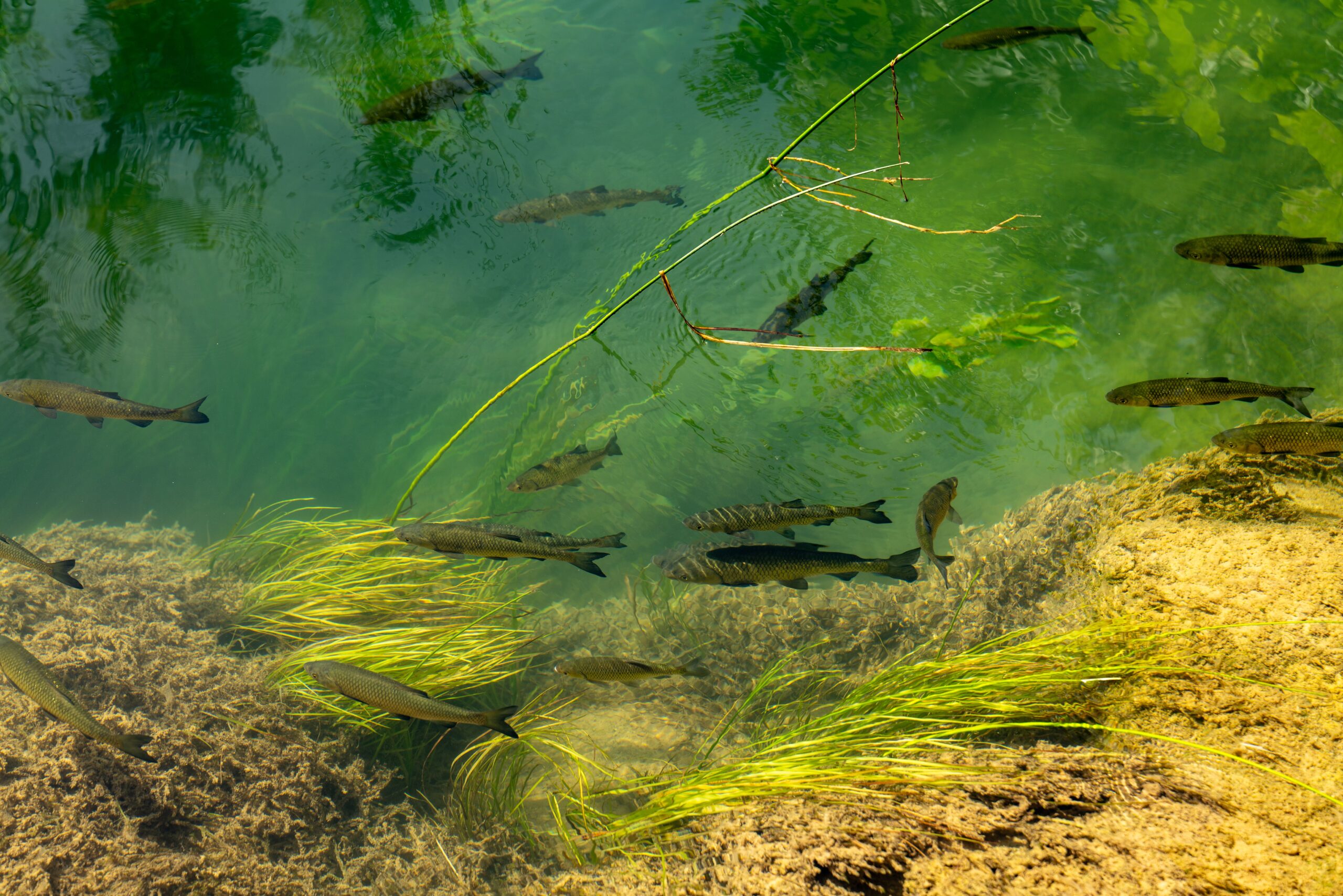
You are handed a world map and enough money to protect exactly one river basin. What do you look at first? For most governments and most corporate sustainability teams, the answer is the water itself. Water stress, meaning the ratio of demand to available supply. Nitrogen levels, meaning fertilizer runoff and eutrophication. Those figures are cheap, quantitative and auditable, which is why they have quietly become the backbone of target setting for freshwater. A global assessment published in Nature has now tested whether they work, and the result is not a small correction.
The freshwater realm is the most crowded and least watched corner of the biosphere. Liquid fresh water covers under 1% of the surface of the Earth, yet it holds more than 10% of all known species, roughly a third of vertebrates and about half of all fishes. It has also been disappearing at speed. Some 35% of monitored wetland area vanished between 1970 and 2015, about three times faster than forest loss, and 37% of rivers longer than 1,000 km no longer run free along their full length. Despite that, no speciose primarily freshwater group had ever been included in a comprehensive global extinction risk assessment.
One quarter is the number that reframes the debate. Drawing on the IUCN Red List, the assessment covered 23,496 species of freshwater decapod crustaceans, fishes and odonates, built over twenty years with more than 1,000 species experts and over 100 workshops. The best estimate is that 24% are threatened with extinction. The comparison is what makes it land: among tetrapods, the famous, well funded, heavily filmed land vertebrates, the figure is 23%. Decapods fare worst at 30%, fishes at 26%, odonates at 16%. Pollution affects 54% of threatened species, dams and water extraction 39%, agriculture 37%, invasive species and disease 28%. Most threatened species, 84% of them, face more than one of these at once.
The extinctions have already happened, and almost nobody can name the species. Since AD 1500, 89 assessed freshwater species have been confirmed extinct, most of them native to the USA, Mexico or the Philippines, where 15 lost species were all endemic to a single lake. A further 178 critically endangered species are tagged as possibly extinct, with the densest cluster, 46 species, in the Lake Victoria basin. Eleven freshwater fishes survive only in captivity.
Charismatic land animals turn out to be better surrogates than anyone expected. Testing threatened tetrapods as a spatial proxy for threatened freshwater species, the analysis found strong performance when prioritizing rarity weighted richness, with a species accumulation index of 0.66, and reasonable performance, 0.58, when targeting the most range restricted species. That contradicts earlier evidence suggesting cross realm surrogacy fails. The objective numbers are the ones that collapse. Every score for water stress and nitrogen came out negative, meaning they perform worse than random selection. Building targets around them could actively displace effort away from the places that matter.
The caveats matter as much as the headline. This is a test of spatial overlap and planning efficiency, not of causation. Tetrapods do not drive freshwater outcomes, they simply happen to co occur with them at a coarse global grid. And the uncertainty is real: 23% of freshwater species are data deficient, against 10% of tetrapods, which puts the plausible threatened range at 18% to 42%. Freshwater molluscs, roughly a third of which appear threatened in sampled assessments, were excluded entirely, so the 24% figure is probably conservative. The practical takeaway is narrow and firm. Broad global priority regions built on land vertebrates broadly capture freshwater needs, but ancient watersheds, springs and karst systems host many threatened endemics and very few tetrapods, so they need targeted action rather than incidental protection.
Source: “One-quarter of freshwater fauna threatened with extinction,” by Catherine A. Sayer, Eresha Fernando, Randall R. Jimenez and colleagues, published in Nature, volume 638, pages 138 to 145 (2025). DOI: 10.1038/s41586-024-08375-z. Published open access under CC BY 4.0.