 Editorial NexoScience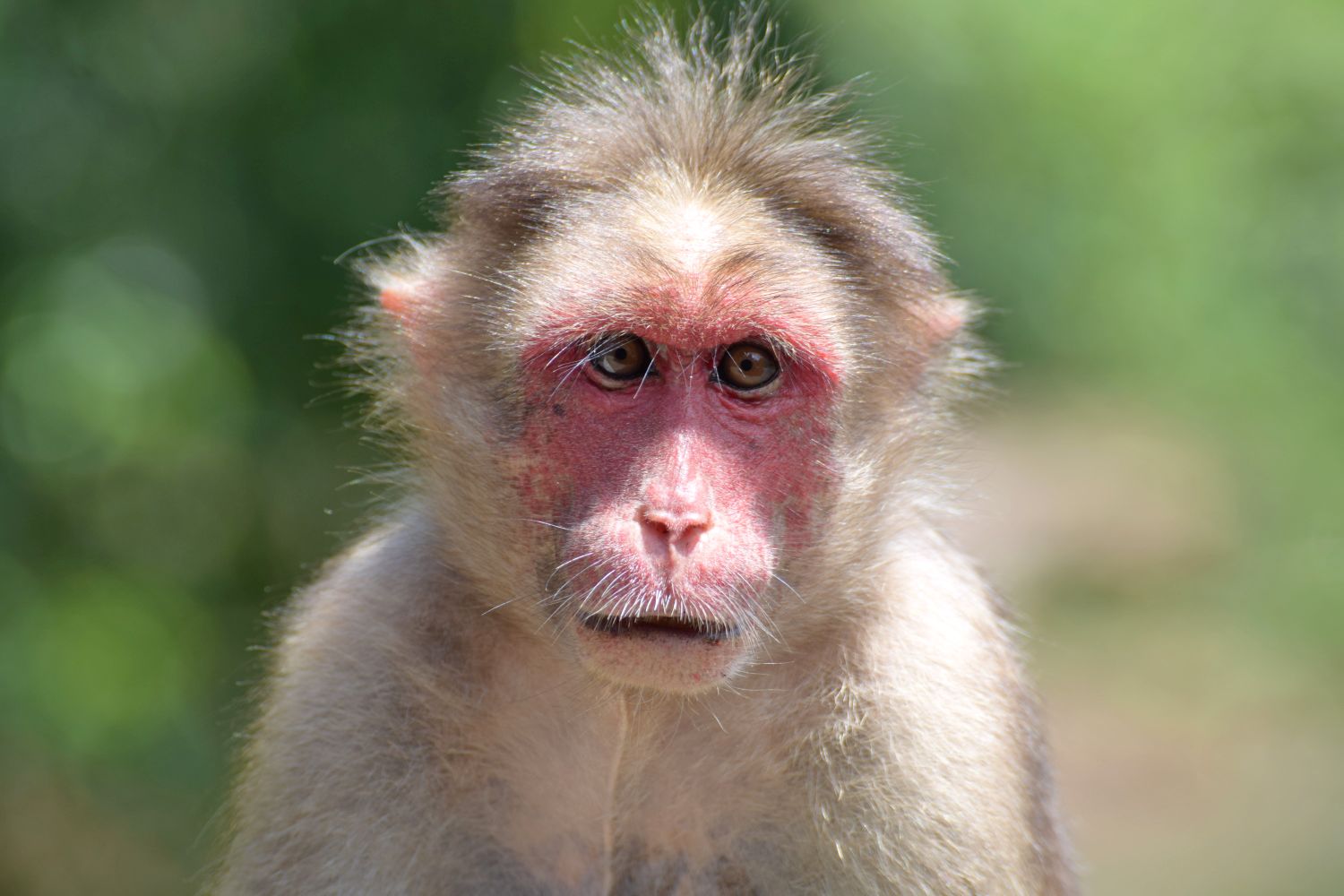
A stone-faced expression is not necessarily a sign of a simple mind. In the tightly ranked world of rhesus macaques, it might be the only face an individual can safely make. Researchers who spent months filming three macaque species, each running on a different flavor of monkey politics, wanted to know whether a looser pecking order also comes with a richer vocabulary of facial expressions.
Three macaque species offered a natural experiment in social style. Rhesus macaques run one of the strictest, most despotic hierarchies among primates, where conflicts escalate quickly and subordinates lean on stereotyped submission signals to avoid getting hurt. Barbary macaques sit in the middle, tolerant enough to allow some negotiation during conflict. Crested macaques are the most easygoing of the three, with looser rank enforcement and far more reconciliation after fights. The team filmed more than 3,000 social interactions across 389 animals from all three species and coded every visible twitch of facial muscle using the Facial Action Coding System, the same framework originally built to catalog human expressions one muscle contraction at a time.
The friendliest species used by far the widest range of expressions. To measure that, the researchers calculated an entropy ratio for facial behavior in each species, a way of quantifying how diverse and unpredictable the signals were. Crested macaques scored highest in every single context measured, affiliative, aggressive and submissive alike, while rhesus macaques scored lowest in two of the three. In practice that means a crested macaque greeting a friend, picking a fight or backing down from one draws on a noticeably bigger and more varied repertoire of facial movements than a rhesus macaque doing the same thing.
Rhesus macaques compensate with precision instead of variety. The team also measured context specificity, essentially how reliably a given facial expression predicts what is actually happening. Rhesus macaques scored highest here, with the majority of their facial signals showing high specificity across all three contexts, some individual expressions were used in one situation and almost nowhere else. Crested and Barbary macaques reused the same facial movements far more loosely across different social situations, trading predictability for flexibility.
A machine learning model confirmed just how much harder the tolerant species are to read. The researchers trained a random forest classifier to guess whether a given facial expression happened during an aggressive, submissive or affiliative encounter, using nothing but the muscle movements involved. For rhesus macaques the model nailed it with a kappa of 0.92, dramatically better than chance. Accuracy dropped to 0.68 for Barbary macaques and fell further still to 0.49 for crested macaques, the species whose faces turned out to be the least predictable of the three.
The pattern held even after ruling out the obvious alternative explanations. Body size can affect how expressive a primate’s face is capable of being, but the three species are close enough in weight, roughly 6.5 to 11.5 kilograms as adults, that size differences do not explain the gap. The authors are also upfront that their design is correlational: it shows that social tolerance and facial complexity move together across species, not which one, if either, drove the other over evolutionary time. Still, the result lines up with earlier work showing that the vocal calls of tolerant macaques are similarly less predictable than those of stricter species, and the authors note that humans, who live in some of the most complex primate societies around, also happen to have the most mobile and expressive faces of any primate.
The study, “Higher social tolerance is associated with more complex facial behavior in macaques,” was led by Alan V. Rincon and colleagues and published in eLife in 2023 (DOI: 10.7554/eLife.87008).