 Editorial NexoScience
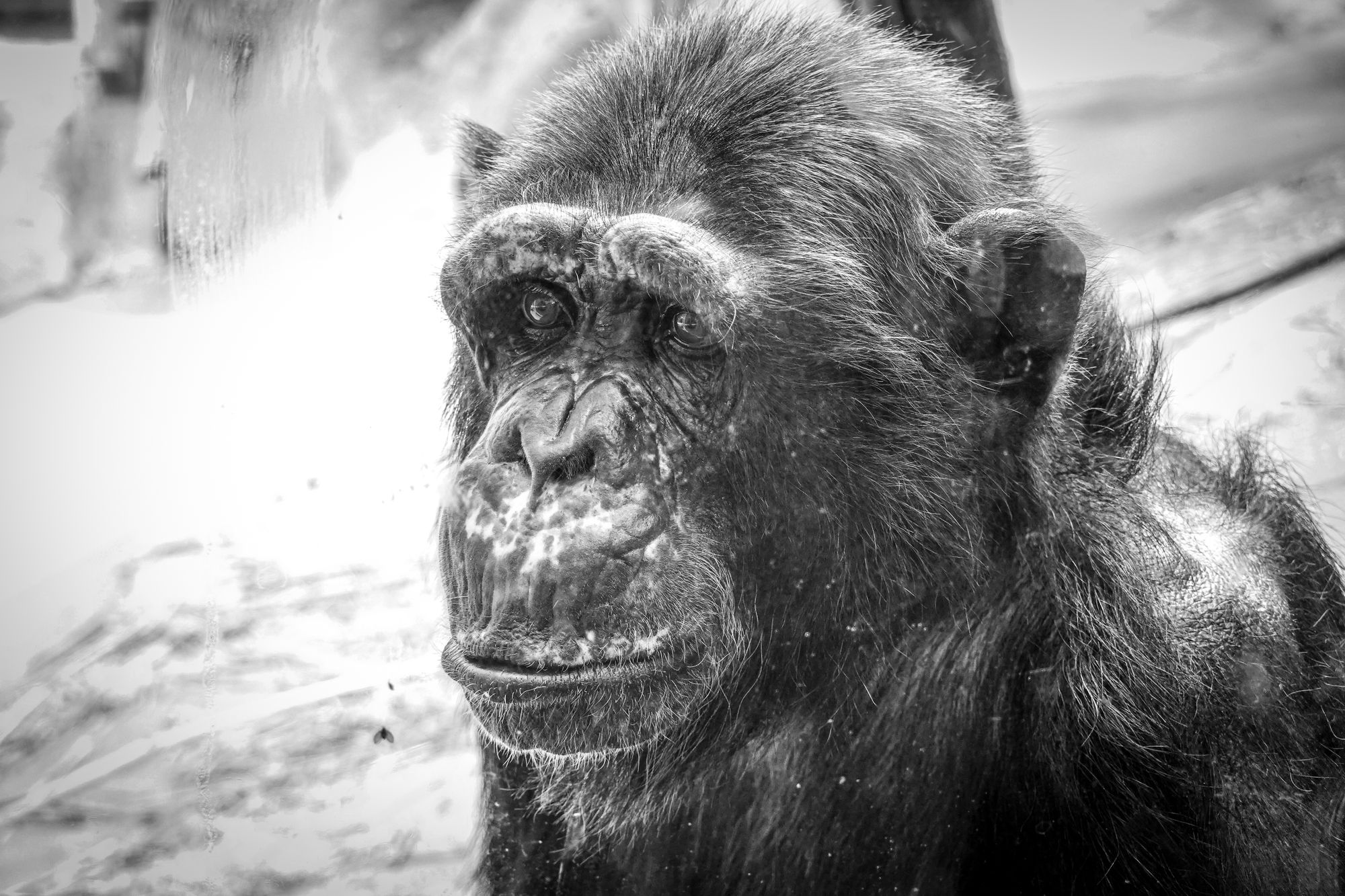
Put a human vs chimp brain side by side and the size gap jumps out first. Ours is roughly three times bigger. Yet the two species share more than 96% of the DNA sequences that build proteins. If the recipe for the parts is nearly the same, something else has to explain the difference. Part of that something, it turns out, is an old infection.
A retrovirus called PTERV1 colonized the chimpanzee genome but never got into ours. One of the copies it left behind sits inside a gene called LINC00662 and switches it off in chimp cells. In humans, the same gene is active while the brain is forming, and lab experiments show it helps young neurons mature and grow their branches. That makes the virus one concrete, testable piece of the difference between human and chimp brains. The findings were published Oct. 23 in the journal Science Advances. The study’s first author is Patricia Gerdes, a molecular neurogeneticist at Lund University in Sweden.
How an ancient virus got into chimp DNA
Viruses can write themselves into a family tree. Retroviruses insert their own genes into the DNA of the cells they infect. When that happens in an egg or sperm cell, the viral DNA is passed down like any other gene. Biologists call these leftovers endogenous retroviruses. They are far from rare. At least 8% of the human and chimp genomes is made of them, a fossil record of epidemics that swept through our ancestors.
PTERV1 hit the chimp line hard and missed ours. The name stands for Pan troglodytes endogenous retrovirus 1, after the chimpanzee (Pan troglodytes). Infections are thought to have started in the ancestors of African apes about 5 to 7 million years ago. Chimps, bonobos and gorillas all carry the virus in their DNA. Humans carry none of it. The authors offer two explanations. Our ancestors might have lived somewhere else when the virus spread, or their cells resisted it. For the second idea, they point to earlier work showing that the human version of an antiviral protein called TRIM5α blocks PTERV1 from infecting human cells.
The epidemic left 158 scars. Scanning the chimp reference genome, the team counted 158 full copies of PTERV1, each about 7,500 DNA letters long on average. Then they checked the copies’ chemical state. Almost every one was completely covered in DNA methylation, small chemical tags that cells use to keep stretches of DNA silent. Picture tape stuck over a light switch so the viral genes can’t turn on. The catch is that the tape can creep onto the switches next door.
Ancient viral DNA that switches off a brain gene
Brain organoids stood in for fetal chimp brains. Nobody can study a developing chimpanzee brain directly. So the researchers grew brain organoids, tiny clusters of brain cells raised in a dish from stem cells. They made human and chimp versions under near-identical conditions, using cells from two individuals of each species. At 15 days, the organoids from both species looked alike and held a similar mix of cells.
One gene went dark in chimps. The team searched for genes with a PTERV1 copy sitting inside them and found 45. Ten of those behaved differently in the two species. The standout was LINC00662. It was highly active in human organoids and completely silent in chimp ones. LINC00662 is a long noncoding RNA, a gene whose message is never turned into a protein but still does a job of its own inside the cell.
The culprit sits inside the gene. In chimps, a viral insertion almost 7,000 letters long lies in the gene’s first intron, a stretch that gets trimmed out of the final message. Apart from that, the human and chimp versions of this region barely differ. The insertion shows up only in chimpanzees and bonobos, so it landed after our lineage had already split off, sometime between 1.5 and 5 million years ago. The chemical tags on the viral DNA spilled into the surrounding genome. The same spot in human cells stayed almost bare.
Cutting the virus out turned the gene back on. This is the experiment that ties cause to effect. With the gene-editing tool CRISPR, the team snipped the viral stretch out of chimp stem cells. Once it was gone, the chimp cells started making LINC00662. The authors also checked public data from orangutans, macaques and bonobos, plus stem cells from eight more chimps. The gene was active only in human cells.
What the gene does in developing human brain cells
The gene peaks early in pregnancy. Data from human brain tissue showed LINC00662 activity peaking around 10 to 12 weeks after conception, then fading slowly into adulthood. Across the adult body, it is busiest in the brain and the testes.
It works on the cell’s scaffolding. In human neural progenitor cells, the cells that give rise to neurons, nearly all of the LINC00662 sat in the cytoplasm, outside the nucleus. There it latched onto proteins of the cytoskeleton, the internal frame that lets a neuron push out long branches. Several of its partners, such as FLNA and MYH10, are well known for their role in that growth. Those branches, called neurites, are the axons and dendrites that carry signals between brain cells.
Without the gene, young neurons grew weaker branches. To see what the gene does, the team silenced it in human organoids, copying the chimp state. The organoids still formed and grew normally. At 15 days, nothing looked different. By day 30, though, staining for a protein that marks neurons and their branches was markedly fainter in the zone where new neurons send out their neurites. A second marker, found in maturing dendrites, trended the same way, although that difference did not reach statistical significance.
The cells seemed to try to compensate. The team also read gene activity in nearly 120,000 single cell nuclei. The mix of cell types was the same with or without LINC00662. But at day 30, neurons lacking the gene turned up genes tied to axon and dendrite growth. The researchers read that as a feedback loop, cells pushing harder on a pathway that wasn’t working. Honestly, it’s a good reminder that a cell doesn’t sit still when you take a part away.
What the study can’t say about chimp intelligence
This doesn’t explain why we think differently. The authors are careful on this point. Organoids are a simplified model that captures only the first weeks of brain growth, and the researchers acknowledged that it is hard to fully pin down the role of a human-specific gene this way. The main comparison used stem cells from two people and two chimps. Exactly how the insertion shuts down the gene’s on switch still needs more molecular work, the team noted. Gerdes told ScienceAlert that “we cannot predict that this would produce a particular brain shape, ability, or behavior.” She added that removing the insertion from an adult chimp would not undo how its brain had already developed.
LINC00662 is probably not the only target. PTERV1 copies also sit inside other genes that act differently in the two species. One is GABRB1, which helps brain cells signal to each other and has been linked to schizophrenia. Another is LRP1B, tied to several cancers. Here’s the thing: if one viral insertion can mute one brain gene, 158 of them had room to nudge many more. Even so, brains differ for many reasons, and the size gap has roots far beyond a single gene, as research on what animal parenting reveals about big brains shows.
Koalas are living through a version of this right now. The authors point to koala retrovirus A, which is spreading through wild koalas and writing itself into their sperm and egg cells as it goes, with a heavy toll of cancer and disease. PTERV1 likely did something similar to chimp ancestors, possibly squeezing their population through a bottleneck. The next questions are which cell proteins target PTERV1 for silencing, and what the other insertions do. For now, the study adds a hard example to an old idea: some of what separates our brains from a chimp’s was written by viruses.
Source: Gerdes, P., Karlsson, O., Garza, R., Atacho, D. A. M., Hsieh, P., Prajapati, B., et al. “Retroviral insertions contributed to the divergence of human and chimpanzee brains.” Science Advances (2026). DOI: 10.1126/sciadv.aeg5791