 Editorial NexoScience
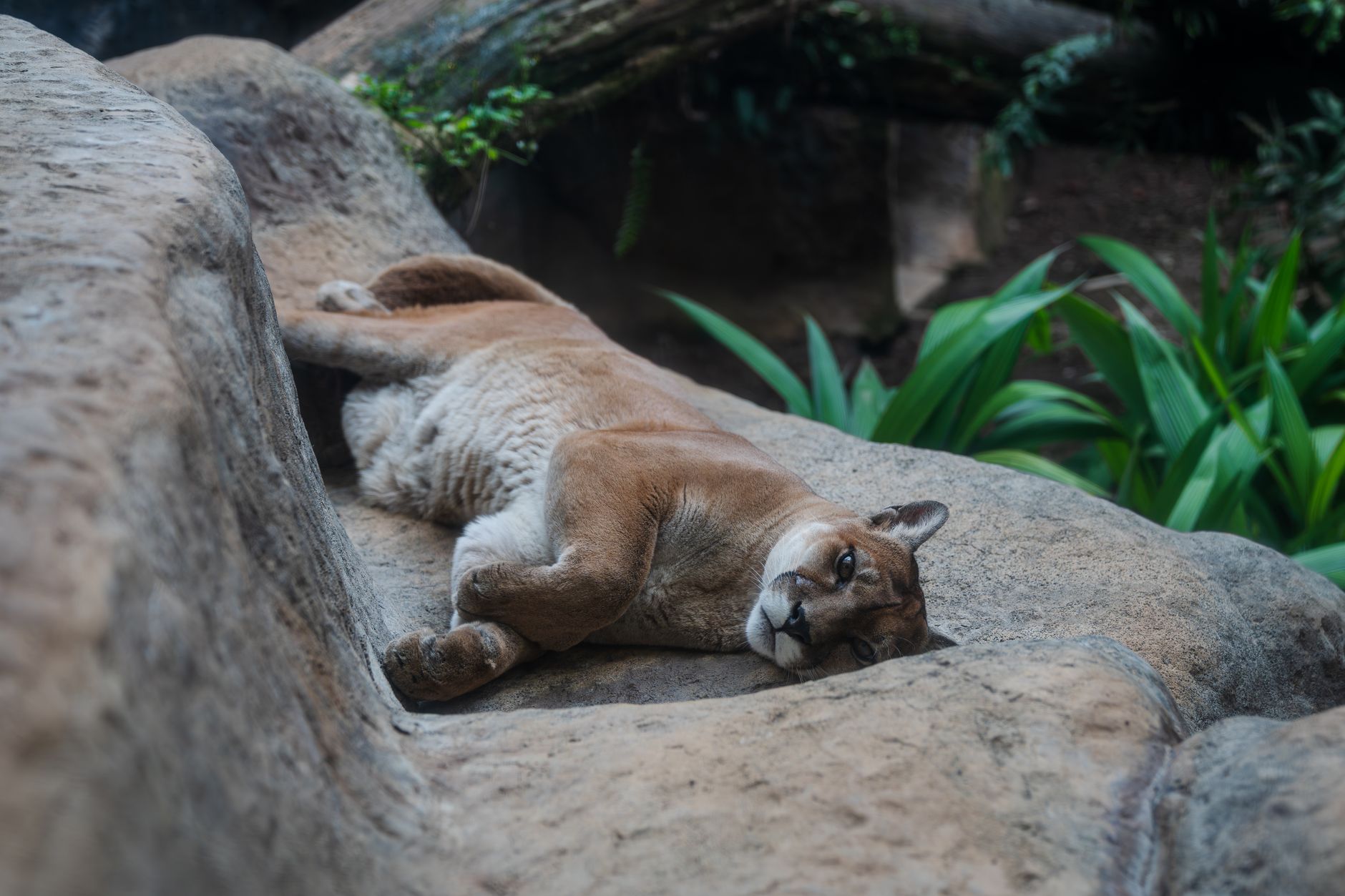
In the dry mountains of southeast Nevada, the horse a mountain lion is most likely to kill weighs about as much as a grown mule deer. It’s a foal, born that same year. Adult horses, the big ones with the powerful back legs, almost never turn up at a lion’s kill site.
So, do mountain lions eat wild horses? Yes, and in some months they eat more horse than deer. Biologists who followed collared lions in the Delamar and Clover Mountains found that horses made up about half of the large prey the cats killed. But the menu flipped with the seasons. From spring to fall, the lions killed horses about two and a half times as often as deer. In winter, deer took over, killed at more than four times the rate of horses. And almost all of the horses were young.
A long chase through the sagebrush. The work was led by Peter Iacono of Utah State University, with Kathryn Schoenecker of the U.S. Geological Survey and partners at the Nevada Department of Wildlife. It was published Sept. 3, 2026, in the journal Frontiers in Conservation Science. The fieldwork ran from late 2021 through 2022, across a 1,219-square-mile (3,158 square kilometers) block of pinyon-juniper woods, sagebrush and Joshua trees. Almost all of it is public land run by the Bureau of Land Management. Mountain lions (Puma concolor) are the only large predator there.
How biologists find mountain lion kills
The collar does the snitching. The state wildlife agency had already been catching lions in the area since 2018, at first to watch over bighorn sheep that had been brought back to the Delamar range. Each lion wore a GPS collar that logged its position six times a day. When a lion stayed put in one small spot, three or more fixes within about 500 feet (150 meters) over at least 20 hours, that cluster was flagged. A lion that lingers like that is usually eating. Crews then hiked in and searched the spot for bones, hair and buried remains. Lions drag a carcass under brush and cover it with dirt and needles, a stash called a cache.
Teeth tell the age. Of 201 clusters the crews reached, 147 held a kill. They aged each carcass from tooth wear and bone length. Ten lions were collared during the study, but collar failures and one lion leaving the area cut the usable set to six adults. Those six gave the team 131 kills of hoofed animals to work with.
Cameras counted what was on offer. To know whether the lions were picky or just taking what came along, the team needed to know what was out there. They set 49 trail cameras on a grid, one about every 4.3 miles (7 kilometers). The cameras shot 343,243 photos. Mule deer showed up on almost every camera. Horses showed up on about half of them, but in big numbers where they did.
What mountain lions eat in Nevada’s Delamar and Clover Mountains
Two prey animals carry the whole menu. Of the 131 kills, 69 were feral horses (Equus caballus) and 60 were mule deer (Odocoileus hemionus). Only one elk and one bighorn sheep turned up. Lions also eat rabbits and other small animals, but those are hard to identify at a cache and were left out. For the big prey, it was a two-way race.
Summer is foal season. Wild mares in the Great Basin give birth anywhere from March to September, with no tight peak. Mule deer drop their fawns in a much shorter window. That long foaling season keeps young horses on the ground for about half the year, and the lions cashed in. In the growing season the average lion killed about one horse every two weeks and one deer every four and a half weeks. In winter it was the other way around: roughly one deer every five days, and a horse only every three weeks.
Not every lion hunts the same way. Here’s the thing: the average hides a lot. In the growing season, two of the five lions tracked then, one adult male and one adult female, picked horses more often than horses were available and steered clear of deer. In winter, two females did the reverse and went after deer. The other lions took both prey roughly in proportion to how common each one was. The authors saw all three styles in one small group: choosing, avoiding and simply grabbing what was around.
Why mountain lions kill foals and not adult horses
The lions seem to shop by size, not by species. Of the 69 horses, 52 were foals and only four were full adults. Deer went the other way. Most of the deer the lions killed were adults, and fawns were rare. Put the numbers side by side and a pattern pops out. About 90% of the adult animals killed were deer, while about 90% of the young ones were horses. The authors plotted body weights by age and found that a horse foal in its first two months weighs about the same as an adult mule deer. Their reading is that a lion targets a body that is big enough to be worth the effort but small enough to be safe, whatever animal it happens to belong to.
Domestic roots may make foals easy marks. Feral horses descend from European stock brought over in the 1500s. Earlier field studies cited by the authors found feral horses far less watchful than bighorn sheep or pronghorn living alongside them, and slower to flee or bunch up than wild zebras. After about a month, foals start wandering and playing away from their mothers. And many Great Basin horses use steep, wooded slopes, which is exactly where lions like to ambush deer. The study found more young horses killed in areas with more deer, which hints that deer draw lions into horse country. The model couldn’t confirm that link, though, likely because the sample was small.
Other herds tell a similar story. In the 1990s, lions at Montgomery Pass in eastern California also ate mostly young horses in summer and turned to deer in winter, when the horses moved down to open flats and the foals had grown. In Nevada’s Virginia Range, where deer are scarce, female lions ate horses all year. If you’re curious how the West’s wild herds got here in the first place, the wild horses of Theodore Roosevelt Park hide a DNA puzzle of their own.
Can mountain lions control wild horse populations
The idea is popular, and the evidence is thin. Since 2004, Congress has used budget riders to limit how federal managers can reduce wild horse herds. Herds now sit above their target sizes on more than 80% of the areas set aside for them, according to work the authors cite, and some members of the public have pushed lions as a natural fix. A 2013 report from the National Research Council called lion predation inconsequential for horse numbers, because adult horses are big and often live on open ground lions avoid. This study doesn’t settle that debate. It shows lions take a lot of foals in rugged country, which could slow the growth of small herds. Earlier work suggests the effect matters most in herds under about 300 animals.
The limits are real. Honestly, six lions is a small sample, and the authors say so. Their results apply to this patch of Nevada, with its mix of deer, horses, terrain and climate, and may not hold elsewhere. They assumed every animal of a species was equally available to a lion, which isn’t true: some are faster, warier or better hidden. The study counts kills. It does not measure whether those kills actually shrink the herd, and it did not find a herd size at which lions could hold horse numbers in check.
Managers might pick lions one by one. Because single lions hunt so differently, the authors suggest wildlife agencies could treat them as individuals. A lion that keeps killing rare bighorn sheep might be removed, while one that leans on foals might be left alone. They also call for closer tracking of deer numbers wherever horses and lions overlap. The next open question is whether the steady supply of foals takes pressure off the deer, or simply lets more lions live in these mountains.
The study at a glance
- Journal: Frontiers in Conservation Science, September 2026
- Type of study: Field study of GPS-collared mountain lions, their kill sites and a grid of trail cameras
- Sample: 131 kills of hoofed animals from 6 adult mountain lions in southeast Nevada, 2021 to 2022
- Main finding: Horses, mostly foals, made up about half the kills; lions killed horses about 2.5 times as often as deer in the growing season and deer about 4.3 times as often as horses in winter.
- Limits: Only six lions in one area; the study does not show whether lion kills reduce horse herd size.
Source: Iacono, P. C., Schoenecker, K. A., Dodge, J. M., Jackson, P. J., Manlove, K. R., & Stoner, D. C. (2026). “Mountain lion prey-selection in a community comprised of native and introduced ungulate species.” Frontiers in Conservation Science, 7, 1779101. https://doi.org/10.3389/fcosc.2026.1779101