 Editorial NexoScience
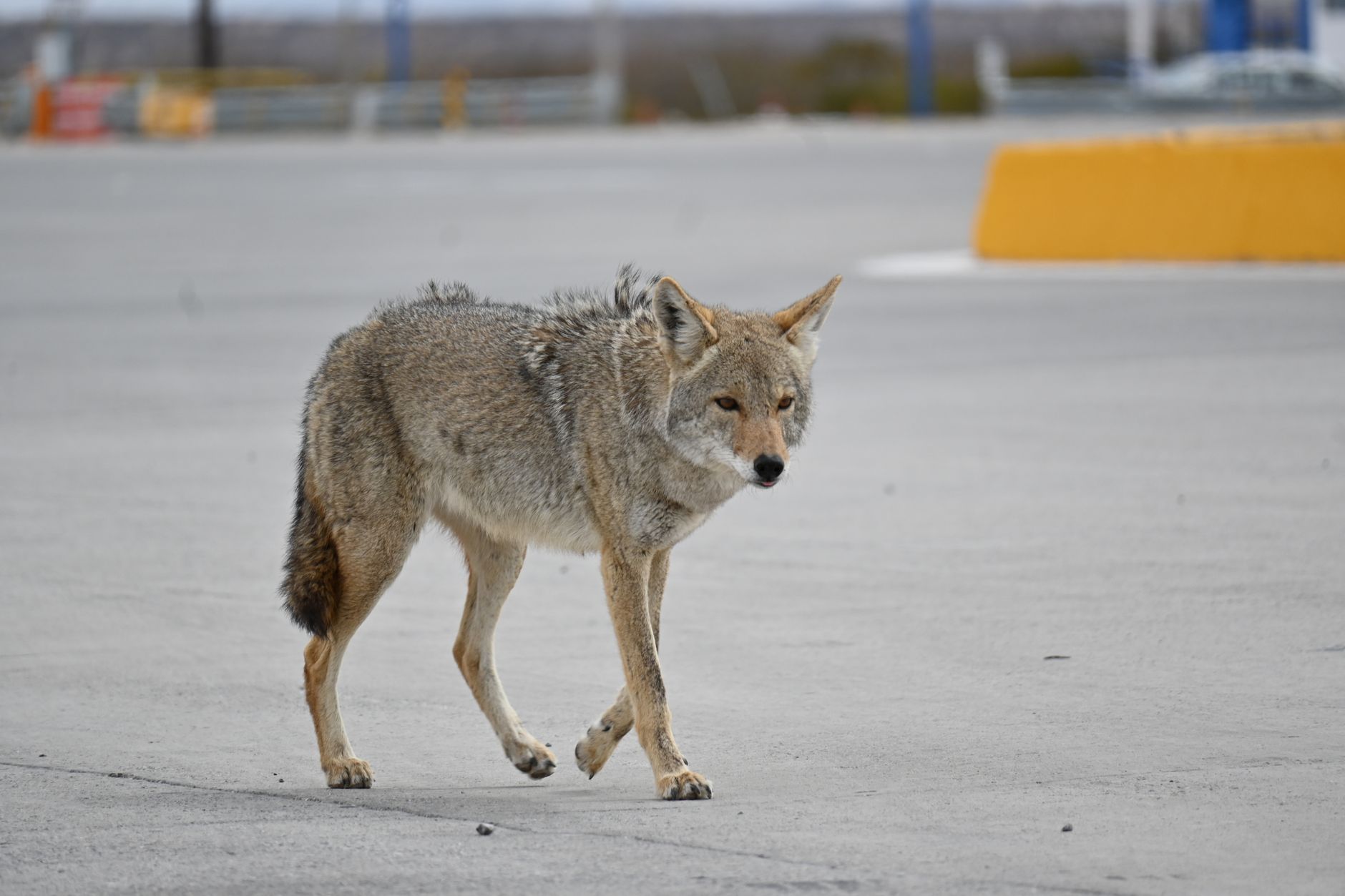
Leaving home is the most dangerous thing a young coyote ever does. It means crossing ground it has never seen, dodging rivals and cars, and finding an empty patch to claim before its luck runs out. In a metro area of millions, that trip runs through backyards, parking lots and busy roads.
For Chicago coyotes, the start of that trip depends on where the pup was born. Over almost two decades of tracking, coyotes raised in heavily built-up ground were more likely to leave their parents’ territory than pups raised in forest preserves, and the ones that left went farther. Pups from the greenest dens tended to stay close, sometimes for good. One thing did not change with birthplace: the odds of dying young, or of dying under a car.
The pups were followed from the den. The data come from a long-running study of urban coyotes (Canis latrans) in the Chicago area, run with Stanley Gehrt of Ohio State University. Emily Zepeda of the University of California, Davis, led the analysis with Eric Payne, Ashley Wurth, Andrew Sih and Gehrt. It was published in 2021 in the journal Behavioral Ecology. The team used coyotes captured between 2000 and 2018 and fitted with radio collars. The catch was strict: a pup only counted if both it and at least one parent wore a collar in the year it was born. That left 85 young coyotes from 44 parents.
Why there are coyotes all over Chicago
A wild animal that moved downtown. Coyotes are one of the few large carnivores that now live in almost every major city in North America. In Chicago they find a patchwork. Developed land covers most of the region, yet the Forest Preserve District of Cook County protects about 70,000 acres (28,300 hectares), roughly one acre in nine across the county. Those preserves are scattered among homes, malls and factories. So a pup can be born in a quiet wetland or in a den a few hundred yards from a busy road.
Tracking them took trucks, aircraft and DNA. Field crews located each coyote by radio, taking bearings from antennas mounted on trucks. When a signal vanished, they went up in a helicopter or a small plane and searched northeastern Illinois and parts of Wisconsin and Indiana. Blood samples, read at 12 genetic markers, confirmed which pup belonged to which parents. Young pups stay near the den and its gathering spots, so the parents’ range served as the pup’s childhood home. The team then split the map into “natural” land (forest, grassland, wetland, water) and “developed” land, which included farm fields because of how much people disturb them.
When coyote pups leave their parents
Most coyote pups go, but not all. Coyotes are known as strong dispersers. A study in Maine found that four in five collared coyotes left home within their first year, and dispersal usually starts at about six months of age. In the wild, the push often comes from the parents, who turn on their yearlings during the mating season and drive them out.
City-born pups were the ones packing up. Of the 85 Chicago pups, 22 ended up with an adult range that did not overlap their parents’ at all, the study’s test for a clean departure. Fourteen of those 22 came from childhood homes that were more than half developed. In the model, a pup whose home was 97% developed was 2.7 times as likely to leave as one whose home was only 22% developed. Sex made no difference.
Some preserve coyotes simply took over the family land. Honestly, this is the detail that sticks. In the nature preserves, Gehrt’s crews have seen young coyotes claim part of their parents’ range, and the parents shift their own range away to make room. The authors think richer food in natural areas may ease the social pressure to leave. In developed areas, where food is scarcer and competition stiffer, that kind of quiet inheritance is probably rare.
How far young coyotes travel through the suburbs
The team bet on the wrong coyotes. The researchers expected preserve-born coyotes to travel farther, hunting for the kind of green land they grew up in. The opposite happened. Among coyotes that settled, the distance from childhood home to adult home ran from about 1 mile to 37 miles (1.7 to 60 kilometers), with a median near 5 miles (8.1 kilometers). In the best-fitting model, coyotes from the most developed homes traveled 3.9 times as far as those from the greenest ones. The result held with all three methods the team used to define the land each coyote could reach.
In the city, an empty territory is harder to find. Earlier Chicago work showed that coyotes in developed areas need bigger home ranges than those in preserves. The authors suggest that this forces city-born dispersers to go farther before they find a vacant spot. Think of apartment hunting in a building where each tenant takes a whole floor. You’ll have to climb a lot more stairs before you hit an open door.
Even the long trips were short by coyote standards. Chicago dispersers averaged about 11 miles (18 kilometers). In less disturbed places, studies have measured average trips of 32 to 193 miles (51 to 310 kilometers). Part of that gap is built into the method, since crews could only follow animals that stayed inside the area they tracked. But a patchy, built-up landscape likely cuts journeys short too. Shorter trips mean fewer genes moving between groups, a quiet process that can matter as much as the loss of genetic diversity in wildlife. The authors note it could even speed up how fast city coyotes adapt to urban life.
City-born coyotes barely chase city land. The pull was weak, if it exists at all. Among 19 coyotes that clearly settled down, just one of three models linked a developed childhood home to a taste for developed land as an adult. In that model, the greenest-born coyotes strongly avoided built-up land, while the most city-born ones showed only a slight preference for it. The other two models found no link at all. Coyotes may have an inborn pull toward natural land that outweighs what they learn as pups.
Coyotes hit by cars, and why birthplace didn’t matter
Cars were the main killer. Crews recovered 48 of the 85 coyotes after death. Of those, 28 had been hit by a vehicle, well over half. Survival to age two was high, with only 11 of the 48 dying before then.
A city childhood did not make them road-smart. The researchers had predicted that preserve-born coyotes, with little early experience of cars and people, would die more often on the road. They didn’t. Neither the share of developed land in a pup’s childhood home nor in its adult home changed its chances of reaching adulthood or of being killed by a vehicle. You know what? The authors offer a sobering reason. City-born coyotes may learn about traffic early, but they also travel farther through it, and the two effects may cancel out.
The study has clear limits, and the authors list them. This is an observational study, so it shows a link between birthplace and behavior, not proof that the birthplace causes it. Food, family size and each animal’s personality could also play a part. The samples were small: 22 clear dispersers, 19 settled adults and 48 recovered bodies. For 27 of the 85 pups, nobody knows what happened. And the landscape was boiled down to just two kinds of land, which hides the details of road density, traffic and patch size that may drive the pattern.
The next question is who comes out ahead. The authors suspect that preserve-born coyotes, which stay close and skip a risky journey, may raise more pups over their lives than their city-born neighbors. Nobody has measured that yet. Other studies have found that urban coyotes act bolder around people, and that they can be genetically distinct from coyotes in natural habitat. If city-born coyotes end up pairing mostly with each other, the authors warn, the boldest animals could keep breeding together. And that could mean more run-ins between coyotes and people.
The study at a glance
- Journal: Behavioral Ecology, July-August 2021
- Type of study: Long-term radio tracking of coyote pups and their parents, with genetic tests to confirm family ties
- Sample: 85 young coyotes from 44 parents in the Chicago metropolitan area, collared between 2000 and 2018
- Main finding: Pups raised in more developed land were more likely to leave home and traveled farther than pups raised in forest preserves.
- Limits: Small sample of dispersers, tracking biased toward short trips, and no link found between birthplace and survival.
Source: Zepeda, E., Payne, E., Wurth, A., Sih, A., & Gehrt, S. (2021). “Early life experience influences dispersal in coyotes (Canis latrans).” Behavioral Ecology, 32(4), 728-737. https://doi.org/10.1093/beheco/arab027