 Editorial NexoScience
Leave a tallgrass prairie alone, with no big grazers on it at all, and it gets duller. A few tall grasses take over and crowd out almost everything else. On the Konza Prairie in the Flint Hills of eastern Kansas, scientists have watched that happen for decades, right next door to pastures where bison and cattle were turned loose.
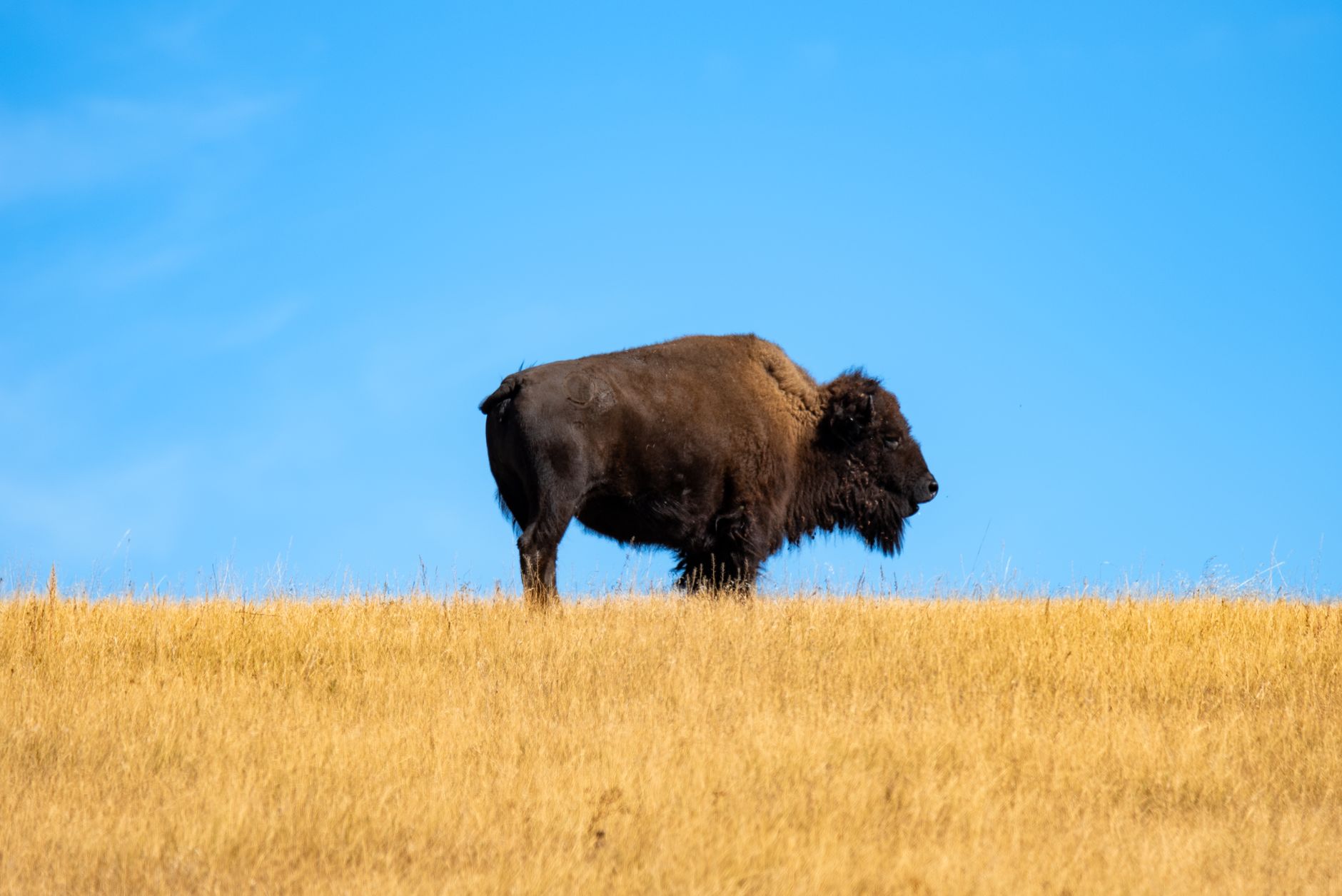
The bison won by a wide margin. After 29 years, the bison pastures held about twice as many native plant species as the ungrazed ones. Cattle raised the count too, but by less than half as much. That is the answer this long test gives to the old question of bison vs cattle grazing. And the bison gains held up through the most extreme drought the region had seen in four decades.
A slow experiment in the Flint Hills. The work was led by Zak Ratajczak, an ecologist at Kansas State University, with colleagues from three other universities. It was published Aug. 29, 2022, in the journal Proceedings of the National Academy of Sciences (PNAS). The site, Konza Prairie Biological Station, has never been plowed. It sits in the Flint Hills, the largest stretch of tallgrass prairie left in North America.
How bison help the prairie at Konza
Three pastures, three ways of running land. Bison arrived at Konza in 1987, a small herd of 30 adults. In 1992 they got their full range, and the herd stood at 121 animals. That same year, cattle moved into a separate set of pastures. Other areas got no grazers at all. Each pasture covered more than 44 acres (18 hectares). The bison stayed all year, the way bison are usually managed. The cattle grazed only from about April to November. To make up for the shorter season, more of them shared the land. In winter, cattle operations usually switch to hay and other feed. The team tracked permanent plots of about 108 square feet (10 square meters), plus the whole watersheds that hold them.
Without grazers, four grasses run the show. Big bluestem (Andropogon gerardii), Indiangrass (Sorghastrum nutans), switchgrass (Panicum virgatum) and little bluestem (Schizachyrium scoparium) make up around 80% of the plant growth on an ungrazed Konza pasture. In those pastures, their cover crept up a little over the years. The number of native plant species barely moved.
Bison trimmed the giants. In the bison pastures, cover of those four grasses dropped, held steady for nine years, then dropped again. For the last 11 years of the study it hovered around 20% to 25%. As the grasses gave ground, new species moved in. From 1994 to 2010, a typical small plot gained about one native species every two years. By 2020, bison plots held 103% more native species than ungrazed ones, and whole bison watersheds held 86% more. Picture a party where four loud guests used to hog the room. Bison keep showing them the door, and the quieter guests finally get a word in.
A record by world standards. The team compared its numbers with a global database of grazing studies in grasslands. The bison gains landed above the 95th percentile, among the largest increases in plant species ever recorded from grazing anywhere. Why so big? The study ran long enough for the full effect to show. And tallgrass prairie grows fast, so freeing it from the big grasses should matter more.
Bison vs cattle grazing, side by side
Cattle helped, just not as much. By 2020, cattle plots held 41% more native species than ungrazed plots, and cattle watersheds held 30% more. That’s a real gain. It’s also less than half of what bison delivered. The cover of the four big grasses in the cattle pastures ended up not much lower than in the ungrazed ones.
Bison are picky in the right way. Ecologists call it “keystone herbivory.” A grazer eats so much of the top plant that weaker rivals get room to grow. Bison eat mostly grass. Their hair chemistry, their dung and direct counts of what they bite all show that. Cattle are less fussy. Studies of cattle diets in tallgrass prairie and elsewhere find that wildflowers and other forbs make up 10% to 34% of what they eat. Every bite of a wildflower is a bite not taken from big bluestem. Bison also roll in the dirt and leave bare, dusty wallows. They keep short “grazing lawns,” too. Those patches add variety. Cattle don’t make wallows.
Who moved in. The bison pastures now host plants that are nearly missing from the other two treatments. Among them are tall members of the daisy family such as rigid goldenrod (Solidago rigida), plus 11 annual species that weren’t there before. Two short grasses of the drier western plains, blue grama (Bouteloua gracilis) and buffalograss (Bouteloua dactyloides), also became more common. Honestly, the worry with grazing is usually weeds. That didn’t happen here. Bison and cattle plots averaged fewer than four nonnative species each, against 48.9 native species in a typical bison plot.
Why bison-grazed prairie bounced back from drought
Then the rain stopped. In 2011 and 2012, years 20 and 21 of the experiment, the Great Plains went through one of the worst droughts since the Dust Bowl of the 1930s. At Konza, 2012 was the driest year on record. The ungrazed pastures stayed thick with grass and low in species, before, during and after. The bison pastures took a hit: their species count dipped below its long upward trend. That was the only time it did.
The dip didn’t last. Within four years at the plot scale, and two years across whole watersheds, the bison pastures were back on the line they’d been climbing before the drought. The authors read that as clear evidence of resilience. The prairie didn’t stand still during the drought, but it recovered fast. The cattle pastures swung up and down from year to year after 2011, and ended the decade with no net change in species.
Different roots, different water. Why would a more varied prairie cope better? At Konza, grasses drink mostly from shallow soil, while many forbs reach deeper water. In a dry year, a mixed community doesn’t have every plant fighting over the same thin layer of moisture. An ungrazed pasture is the opposite: a handful of shallow-rooted grasses, all chasing the same water. The bison pastures had also gained plants built for hard years. Some are dry-country grasses. Others flower early, or spring back fast when rain returns.
Limits of the Konza bison experiment
The fine print. The researchers noted that they can’t separate the animal from the way it’s managed. Bison grazed all year and cattle only in the growing season, so the design can’t say how much of the gap comes from the species itself. That choice was on purpose. It mirrors how each animal is really run on the Plains. The pastures are also so big that the watershed comparisons rest on just four watersheds, a weakness the authors acknowledged. Plot data from the cattle pastures only began in 2008. Still, an earlier, smaller experiment at Konza that gave bison and cattle identical management also found more plant species where bison grazed.
A bigger argument about rewilding. Plains bison (Bison bison) once ranged across most of North America’s grasslands. Hunting nearly wiped them out in the late 1800s, and today they live on less than 1% of their former range. Hundreds of sites have brought them back. The Konza results suggest many Great Plains grasslands now hold far fewer plant species than when bison roamed. They also suggest the loss can still be reversed. Returning native grazers is part of a wider push to let land run wild again, with its own tradeoffs, as seen in Europe’s abandoned farms that are turning wild.
The next test is a longer drought. Records from the Dust Bowl suggest ungrazed Great Plains grasslands can ride out a drought of about four years. Climate change is expected to double the chance of extreme, decade-long droughts by the end of the century. A two-year drought was the hardest trial the bison pastures faced. The authors say the real question now is how they handle a dry spell that lasts much longer.
The study at a glance
- Journal: Proceedings of the National Academy of Sciences (PNAS), August 2022
- Type of study: Long-term field experiment comparing bison grazing, cattle grazing and no grazing on a tallgrass prairie
- Sample: Permanent plant plots in bison-grazed, cattle-grazed and ungrazed watersheds at Konza Prairie, Kansas, tracked for 29 years
- Main finding: Bison roughly doubled native plant species compared with ungrazed prairie, cattle added less than half as much, and the bison gains recovered within two to four years of an extreme drought.
- Limits: The design can’t separate the grazer species from how it’s managed, since bison grazed all year and cattle only from spring to fall.
Source: Ratajczak, Z., Collins, S. L., Blair, J. M., Koerner, S. E., Louthan, A. M., Smith, M. D., Taylor, J. H., & Nippert, J. B. (2022). “Reintroducing bison results in long-running and resilient increases in grassland diversity.” Proceedings of the National Academy of Sciences, 119(36), e2210433119. https://doi.org/10.1073/pnas.2210433119