 Editorial NexoScience
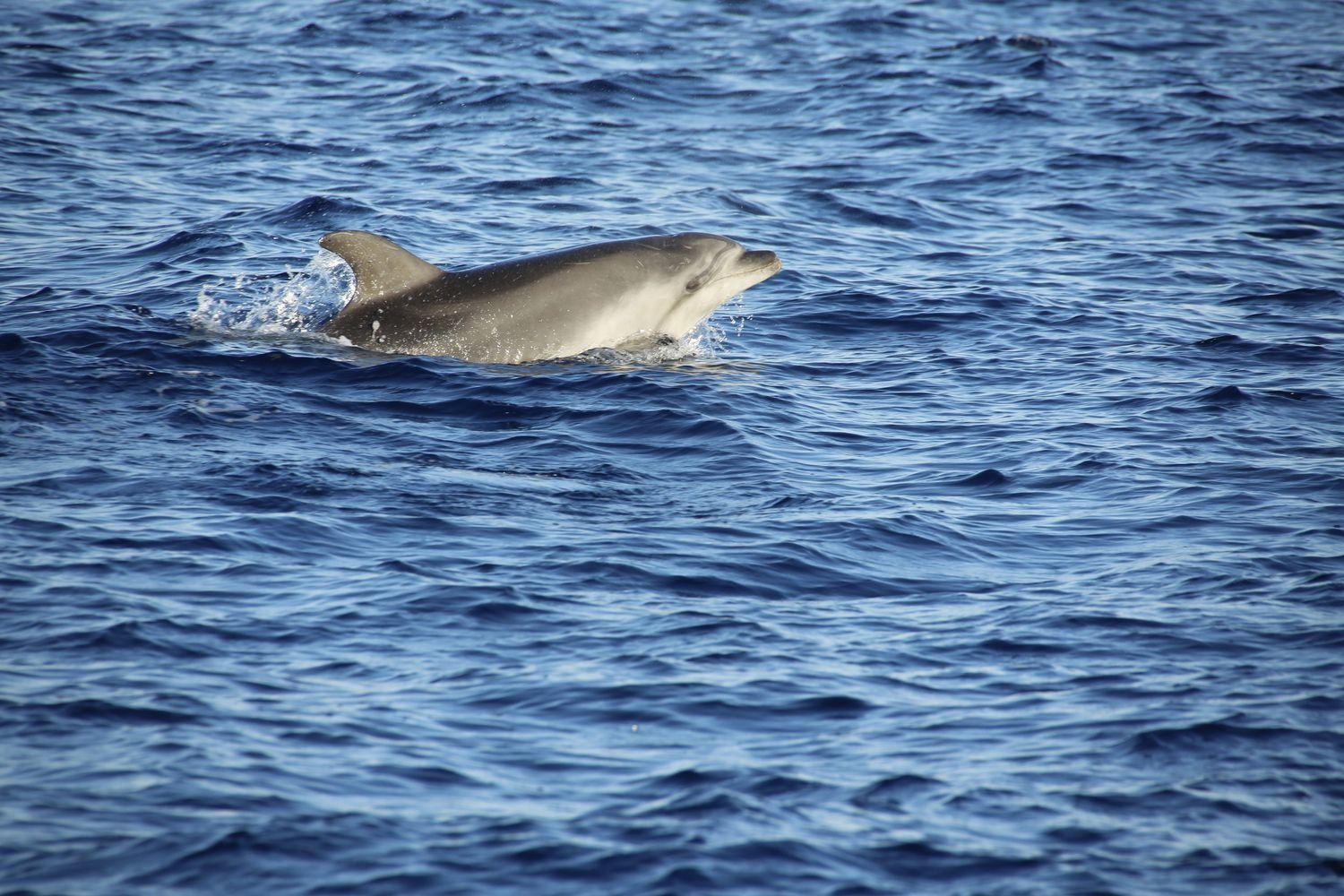
A fish breaks away from its school and runs. A dolphin stays right on its tail, turning when it turns. Then the fish does something odd. It throws up. The dolphin snaps up the food it brought up and lets the fish swim off untouched.
That’s not a one-off. A male bottlenose dolphin off Lady Elliot Island, at the southern tip of Australia’s Great Barrier Reef, makes fish vomit on purpose and then eats the vomit, again and again. Resort staff call him Bubbles. A team led by Romney Edwards-Francis filmed him doing it for four years and described the behavior in the journal Ecology and Evolution. The authors call it the first direct evidence of a dolphin, or any cetacean, stealing food this way. Here’s the twist: Bubbles never eats the fish themselves. Only what comes back up.
Food theft has a name. Biologists call it kleptoparasitism, the deliberate theft of food another animal has already caught. Gulls, frigatebirds and terns do it all the time, mugging other seabirds in midair. Hyenas and jackals do it on land. In the ocean it’s rarely reported, and in whales and dolphins it had never been confirmed.
Kleptoparasitism in dolphins, caught on camera
The old evidence fell one step short. Before this study, there were only two reports of something similar in cetaceans. In both, sperm whales (Physeter macrocephalus) vomited while being harassed by smaller species, including false killer whales and Risso’s dolphins. But nobody saw the attackers eat what the whales brought up. Without that last step, the researchers note, kleptoparasitism in cetaceans “remains unverified.”
Bubbles supplied the missing step. Between June 2021 and October 2025, the team logged 20 foraging encounters between the dolphin and schools of bigeye trevally (Caranx sexfasciatus), a predatory reef fish. Eleven of them, a little over half, ended with a trevally vomiting and the dolphin eating it. All the footage came from snorkelers using action cameras, mostly the authors themselves plus a few resort guests, in water less than 33 feet (10 meters) deep and within about 330 feet (100 meters) of shore.
His fin works like a fingerprint. The team confirmed it was the same dolphin every time using photo-identification. Nicks and notches on a dolphin’s dorsal fin barely change over the years, and Bubbles also carries a distinctive V-shaped scar on his right flank. He’s been seen on the island’s western side since at least 2017. Staff estimate he puts on the show for four to five days in a row, at least twice a month, though that part is anecdotal.
How this dolphin hunts fish without eating them
The routine runs in stages. From the video, the researchers built an ethogram, a catalog of each behavior in the sequence. It goes like this:
- Scanning: the dolphin moves slowly with sharp turns, swinging its head from side to side while it clicks.
- Targeting: the head stops swinging and locks onto one fish, while the rest of the school is ignored.
- Chasing: the dolphin speeds up and mirrors every turn the fish makes, staying close.
- Ingestion: the trevally vomits, and the dolphin grabs and eats what it expelled.
He doesn’t lose track of his mark. When Bubbles surfaced to breathe, he appeared to pick up the same fish when he came back down. After a meal, he returned to the school and started over, up to 10 times in 30 minutes. He only did this to bigeye trevally. And he was always alone, even though he’s sometimes seen with other dolphins. That’s unusual for a species that often hunts in groups.
The fish probably vomit out of fear. The authors think the trevally expel their last meal as a stress reaction to being chased. Bottlenose dolphins elsewhere, in Western Australia and Florida for example, simply eat trevally. Bubbles has never been seen doing that. Why skip the fish and take the vomit? The researchers suggest it might be cheaper. Trevally eat small schooling fish, and catching those usually takes a team of dolphins working together. Letting a trevally do the hard part, and then collecting the result, could be the lazier and more efficient meal. It’s a bit like waiting outside a bakery for someone to drop their bag.
Bottlenose dolphin echolocation and the sounds of the chase
The chase is loud. In one clean recording, 75 seconds long, Bubbles made 200 sounds. Most of them, 182, were low-frequency tonal sounds, short hums far deeper than a dolphin’s whistle. He made them in bursts the whole time he was pursuing a fish, until the fish vomited. Between those bursts came trains of echolocation clicks, the sonar dolphins use to “see” with sound.
Sonar might read a full belly. Dolphins can tell fish species apart by their echoes, because different swim bladders bounce sound back differently. They can also pick up small differences in an object’s shape, size and makeup. So the authors raise a tantalizing idea: Bubbles may use those scanning clicks to find the trevally with the fullest stomachs. Honestly, it’s a guess, and the team says so. They also wonder whether the hums themselves push the fish to panic and vomit. Similar low calls have been recorded in bottlenose dolphins during aggressive encounters in Georgia, in the United States.
The limits are hard to miss. This is one dolphin. Every observation came from opportunistic snorkeling, not a planned survey, and the sound analysis rests on a single recording. Nobody has measured whether the vomit actually gives Bubbles more energy than hunting would; the authors say the profit “is unclear without additional data.” It’s also unclear whether he invented the trick himself or picked it up from other dolphins. He was filmed once, in 2018, near trevally alongside another adult and a calf, so social learning can’t be ruled out.
He may not be the only one. Underwater hunting is hard to watch from a boat, and the authors suspect food theft in dolphins is underreported for exactly that reason. Their next steps are clear: look for other dolphins on the southern Great Barrier Reef doing the same thing, check how the habit spreads if they find them, and analyze what Bubbles really eats. Video tags stuck on the animals and drones overhead could help, much as camera traps recently unmasked a new species of wild cat. Until then, Bubbles remains a reef celebrity with a very strange diet.
The study at a glance
- Journal: Ecology and Evolution, 2026
- Type of study: Underwater video observations and sound recordings of one wild dolphin
- Sample: One adult male bottlenose dolphin at Lady Elliot Island, with 20 foraging encounters filmed from 2021 to 2025
- Main finding: The dolphin repeatedly chased bigeye trevally until they vomited, then ate the vomit, in 11 of the 20 encounters.
- Limits: A single animal and opportunistic footage; whether the tactic pays off in energy, or exists in other dolphins, is unknown.
Source: Edwards-Francis, R., Kiszka, J. J., Ingram, M., Demmers, P., Shackleton, J., Ramos, E. A., and Armstrong, A. O. “Repeated Observations Suggesting Kleptoparasitism by a Common Bottlenose Dolphin (Tursiops truncatus) on the Great Barrier Reef.” Ecology and Evolution (2026). DOI: 10.1002/ece3.74270