 Editorial NexoScience
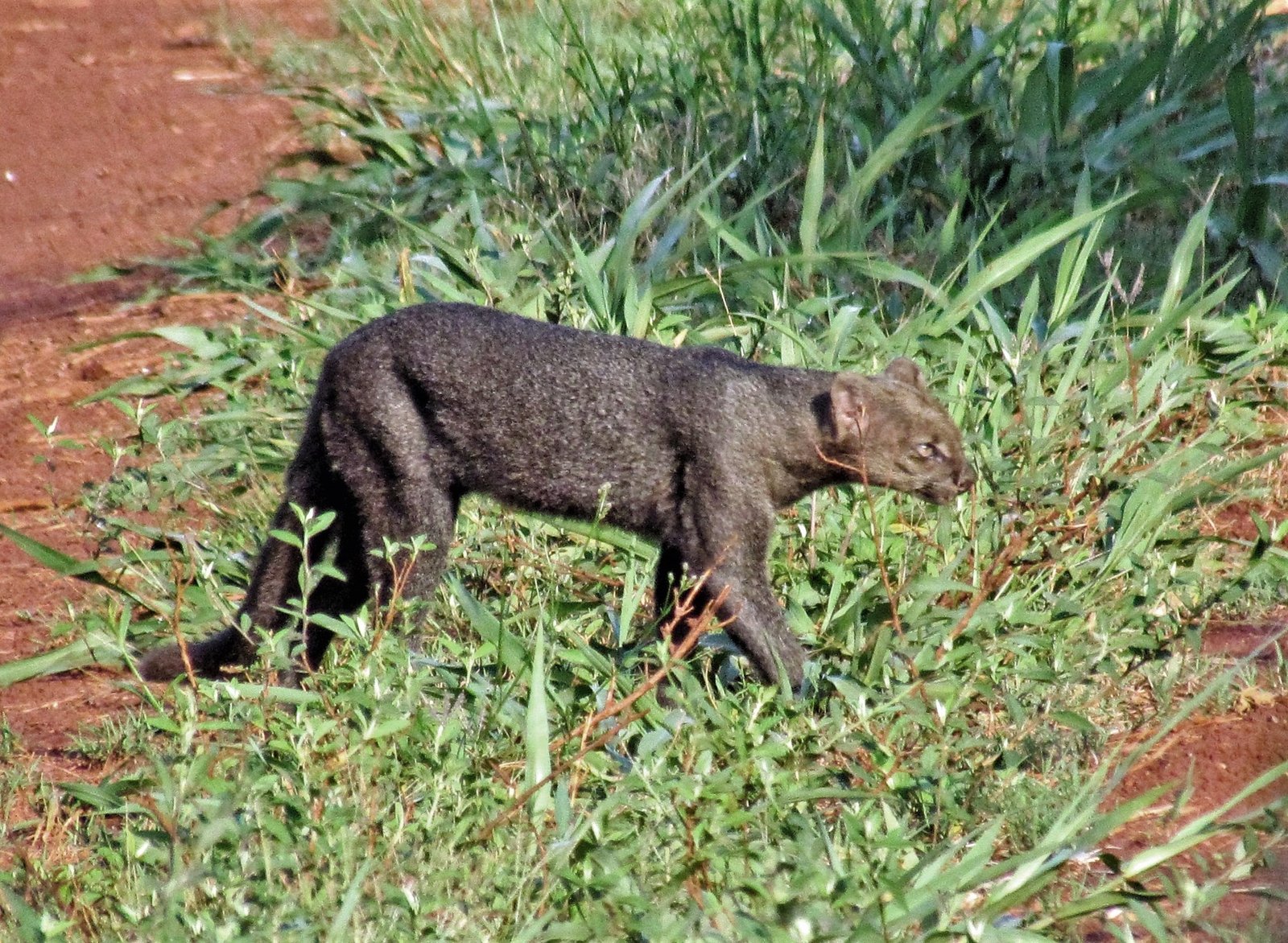
A dead cat on the shoulder of State Highway 4, a few miles east of Brownsville. The year was 1986, and the animal was a jaguarundi (Puma yagouaroundi), a small wild cat with a weasel-like body, short legs and a long tail. Nobody could have known it then, but that roadkill would become the last confirmed record of the species in the United States.
So is the jaguarundi in Texas still out there? Almost certainly not, according to the largest camera search for wild cats ever run along the Texas and Mexico border. Between 2003 and 2021, biologists logged more than 320,000 trap nights in South Texas (a trap night is one camera watching for one night) and never photographed a single jaguarundi. Just across the border, in the mountains of Tamaulipas, cameras caught the cat 126 times. The team concluded that the jaguarundi is likely extirpated, meaning gone from the wild, in the United States.
Eighteen years of empty frames. The work was led by Jason Lombardi, a wildlife biologist at the Caesar Kleberg Wildlife Research Institute at Texas A&M University-Kingsville, with partners from the East Foundation, the Texas Department of Transportation and conservation groups in Mexico. It was published in March 2022 in the journal Ecology and Evolution. All that camera time in Texas adds up to a single camera left running for close to nine centuries.
How biologists searched for the jaguarundi in Texas
Cameras on stakes, trees and fence posts. The team didn’t run one big survey. It pooled many smaller ones, each built for its own reason, across 685 camera sites in Texas and northeastern Mexico. Cameras sat 1 to 3 feet (0.3 to 1 meter) off the ground, the standard height for photographing cats, aimed at game trails and the pale caliche roads that cut through South Texas ranches next to thick brush. Some watched oxbow lakes. Others stood along two highways, FM 1847 in Cameron County and US 77 in Willacy County, where wildlife crossings were planned or had just been built.
A cat’s weakness for cologne. Some surveys used lures, and one was a classic of the trade: Calvin Klein Obsession for Men, sprayed on a square of carpet tied to a wooden stake near the camera. Later surveys aimed at bobcats tried trapper scents with names like Cat-Man-Do and Feline Fix. Other sites, such as the federal conservation easements on the Yturria-San Francisco Ranch, used no bait at all, as the permits required. The sites ranged from the Sabal Palm sanctuary on the Rio Grande to the Choke Canyon Reservoir and the East Foundation’s ranches in Kenedy, Willacy, Jim Hogg and Starr counties.
Telling the cats apart. A jaguarundi is hard to confuse with its neighbors. It has a small, flat, blunt head, a slender body of about 21 to 29 inches (53 to 73.5 centimeters) and a tail of up to 23 inches (59 cm). The ocelot (Leopardus pardalis) and the bobcat (Lynx rufus) are spotted. The jaguarundi is a single plain color, in one of two forms: red-brown, from brick red to pale tawny, or gray, from blackish to pale slate. Technicians sorted every photo by species, and doubtful frames went to a more experienced cat biologist.
The cameras were working. Bobcats turned up at every survey site in Texas. Ocelots, which are endangered in the U.S., appeared on the Yturria-San Francisco and El Sauz ranches. Coyotes and hog-nosed skunks walked past too. The authors argued that this rules out bad habitat or bad cameras as the explanation. The brush was fine, the cameras saw other cats, and the jaguarundi simply wasn’t there.
When the last jaguarundi was seen in the United States
The trail went cold in 1986. The last confirmed jaguarundi in the United States, the Brownsville roadkill, was found only 5 to 6 miles (8 to 10 km) north of two protected areas on the Rio Grande that the team surveyed in 2003. Live trapping for wild cats in Willacy, Cameron, Hidalgo and Kenedy counties, which ran from 1982 to 2021, never caught one either. The roads tell the same story. In the 35 years since that last specimen, Texas has recorded more than 30 ocelots killed by cars and not one jaguarundi, even though ocelots are themselves rare.
Jaguarundi sightings in Texas never came with proof. Biologists sort sightings into classes. Class I means hard evidence, such as a body or a verified photo. Class II means a credible report without that proof. People have reported jaguarundis from the Edwards Plateau, the eastern coastal plain and Big Bend, where an earlier review found “strong support” for 40 Class II sightings. Yet camera studies in the Trans-Pecos, the Davis Mountains, Big Bend National Park and the nearby Mexican sierras found none. A retired National Park Service staffer told the team that no roadkill, body parts or tracks have ever been verified around Big Bend. Most of those regions also sit outside the cat’s known historic range.
Where jaguarundis still live near the border
Six cats on one Mexican ranch. On Rancho Caracol y Camotal, at the northern edge of the Sierra of Tamaulipas, the cameras recorded jaguarundis in Tamaulipan thornshrub and tropical dry forest. They also caught ocelots, bobcats, pumas, jaguars and margays. That makes six wild cat species on a single property, against two in all of the Texas surveys combined.
Quick to find, still easy to miss. On that ranch, the first jaguarundi photo came after about 72 trap nights. In the Calakmul Biosphere Reserve, farther south in Mexico, another team needed 1,140. Even so, the chance of catching a jaguarundi at a given camera on a given day was only about 1 in 20. Think of a neighbor who walks past your window once every few weeks. You’ll see him eventually, but only if you keep looking for a long time.
The math is the argument. Honestly, this is the heart of the paper. If cameras in the same kind of thornshrub found the cat within days in Mexico, nearly two decades of cameras in Texas should have found it too, had it still been there. Based on these results, the team placed the current northern edge of the jaguarundi’s range in the Mexican states of Nuevo León and Tamaulipas. Other researchers have photographed it about 125 miles (200 km) from Texas, in Cumbres de Monterrey National Park, and 60 to 125 miles (100 to 200 km) south of the border in northern Tamaulipas.
Absence on camera is not the same as proof. No survey can show that a species is gone for good. Most of these cameras were placed for ocelots and bobcats, and several lures were chosen for bobcats. The study did not calculate how likely it was to miss a very small, scattered population. Texas is also about 97% private land, so large areas have never had a camera at all. The authors’ case rests on the weight of many lines of evidence together: cameras, decades of trapping, road deaths and citizen reports. Together, they wrote, those make jaguarundi presence “highly unlikely.” Camera traps are now the standard tool for secretive small cats across the Americas, the same method that helped scientists recognize the clouded tiger cat as a new species.
Bringing the jaguarundi back to Texas
Calling it gone is the first step back. The researchers recommend that the U.S. Fish and Wildlife Service formally declare the jaguarundi extirpated from the United States. That would set in motion the federal recovery plan for the Gulf Coast jaguarundi, published in 2013. The plan calls for restoring and reconnecting habitat, teaching the public about the cat, cutting road deaths and studying whether jaguarundis could be reintroduced to South Texas. Let me explain why the ranches matter so much here. With almost all of Texas in private hands, no reintroduction can work without landowners, conservation groups and universities on board.
The source cats would come from Mexico. Before any cat crosses the Rio Grande, the team wants more live trapping and camera work in northeastern Mexico. Very little is known about how jaguarundis live there, or how they get along with bobcats. Field studies could find populations large and genetically varied enough to spare animals for South Texas. Detailed habitat maps would then show where in Texas they could survive. If that work pays off, the next jaguarundi photographed in Texas may be one that people brought back on purpose.
The study at a glance
- Journal: Ecology and Evolution, March 2022
- Type of study: Combined camera trap surveys for wild cats in South Texas and northeastern Mexico, 2003 to 2021
- Sample: 350,366 trap nights at 685 camera sites, more than 320,000 of them in Texas
- Main finding: No jaguarundi was photographed in Texas, while cameras in the Sierra of Tamaulipas recorded 126 detections, so the cat is likely extirpated from the United States.
- Limits: Cameras cannot prove a species is absent, and most were set for ocelots and bobcats.
Source: Lombardi, J. V., Haines, A. M., Watts, G. W., III, Grassman, L. I., Jr., Janečka, J. E., Caso, A., Carvajal, S., Wardle, Z. M., Yamashita, T. J., Stasey, W. C., Branney, A. B., Scognamillo, D. G., Campbell, T. A., Young, J. H., Jr., & Tewes, M. E. (2022). “Status and distribution of jaguarundi in Texas and Northeastern México: Making the case for extirpation and initiation of recovery in the United States.” Ecology and Evolution, 12(3), e8642. https://doi.org/10.1002/ece3.8642