 Editorial NexoScience
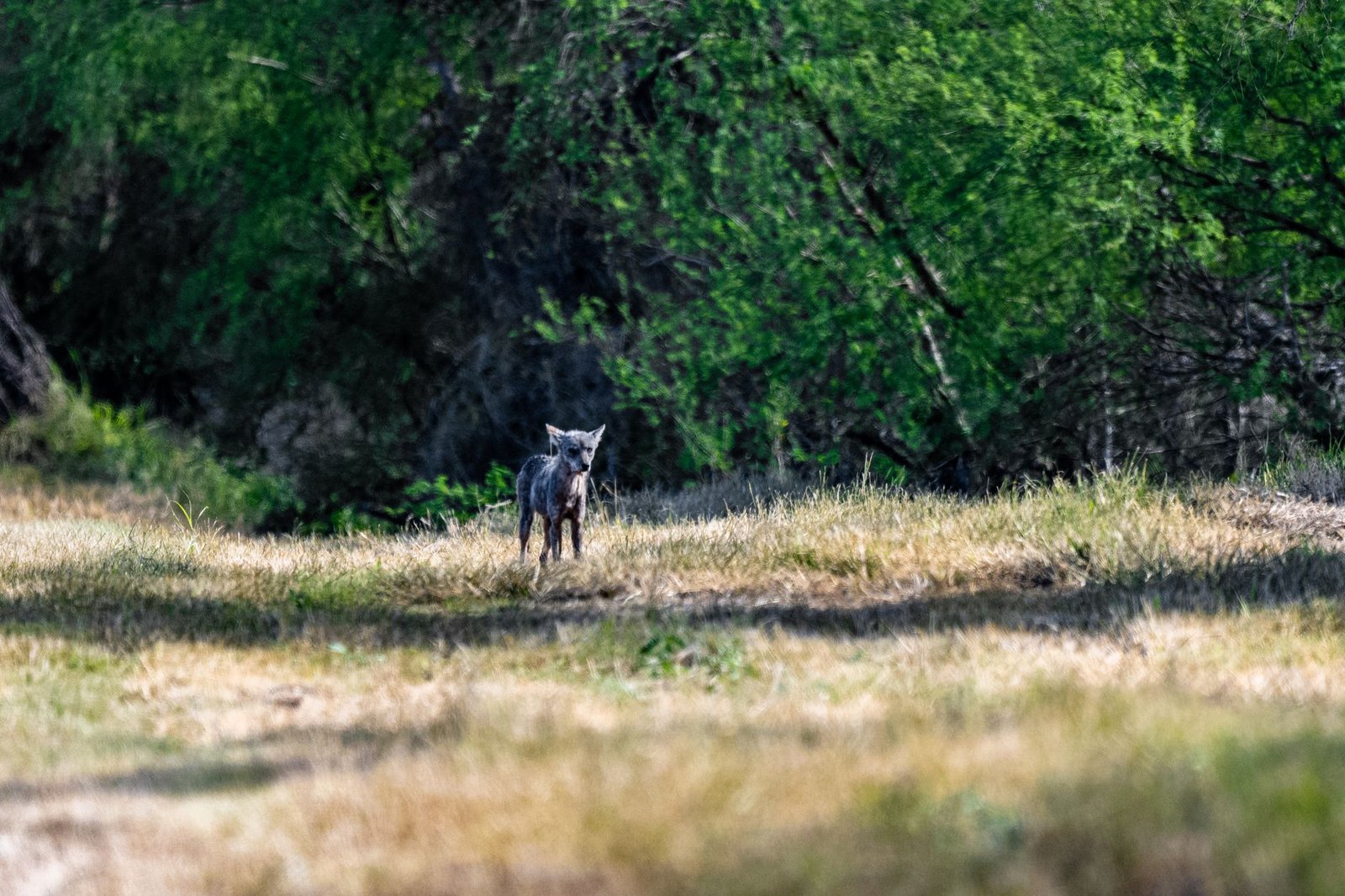
The first coyote turned up in New York City in 1994. For years it looked like a stray that had wandered down from the suburbs. By 2016, biologists had evidence of breeding groups inside the city limits, raising pups a subway ride away from 8.8 million people. So what do coyotes in New York City eat, in a place with more pizza boxes than rabbits?
Mostly wild food, with a steady side of chicken. DNA pulled from coyote scat in city parks turned up raccoons, rabbits, meadow voles, brown rats, pigeons, ducks, wild turkeys and a long list of plants. Human food showed up too, in close to two thirds of the city samples, and chicken led that list by far. Pet cats were rare. The work, led by Carol Henger of Fordham University’s Louis Calder Biological Field Station with colleagues from the American Museum of Natural History and the City University of New York, was published in September 2022 in the journal PeerJ.
Coyotes (Canis latrans) now live in nearly every city in the lower 48 states. Chicago and Los Angeles have studied theirs for decades, down to where young Chicago coyotes go when they leave home. New York is the newest and densest test, and until this work almost nobody knew what its coyotes lived on.
How DNA in coyote scat reveals what they ate
A dropping is a grocery receipt. Between 2007 and 2017, the Gotham Coyote Project and the city’s Parks Department wildlife unit picked up scat in 10 municipal parks in New York City and New Jersey, plus one ballfield. Most sites were in the Bronx, such as Pelham Bay Park, Van Cortlandt Park and Bronx Park, with Inwood Hill Park at the top of Manhattan. For comparison, the team also gathered scat on hiking trails in five state parks and preserves north of the city, in Westchester, Orange and Rockland counties, including Harriman State Park.
The split was not a guess. The researchers measured how much pavement and rooftop surrounded each sample within about 3 and 6 miles (5 and 10 kilometers). City sites sat in 30% to 80% hard surface. The country sites sat in 10% or less. Nothing landed in between.
Not every pile came from a coyote. A first genetic test checked who left it. Among the country samples, 15 turned out to be red fox and three came from dogs. After that sorting and some failed samples, the final set held 95 city scats and 31 country scats.
Then came DNA metabarcoding, a method that reads short “barcode” stretches of DNA and matches them against a reference library of species. Think of a supermarket scanner. It doesn’t need to see the apple, only the label. The team ran three scans on each sample, one for animals with backbones, one for insects and one for plants. They also added a blocking molecule so the coyote’s own DNA wouldn’t drown out its dinner.
Older methods missed a lot of the menu. A previous study of many of the same samples, by Neil Duncan and colleagues in 2020, sorted bones, teeth, hair and seeds under the microscope. That works well for mammals. But birds could only be filed as “bird,” and human food barely showed up, because a deboned, cooked chicken breast leaves nothing hard behind. DNA doesn’t care whether the meat came with bones.
Raccoons, deer and the wild prey of New York coyotes
Raccoons sit near the top of the list. Raccoon DNA appeared in 27% of city scats and in about 42% of the country scats. That stands out, because studies in other places have rarely found raccoons to be an important coyote food. Raccoons are everywhere in the New York area, with no larger predators to keep them in check, so coyotes may simply be taking what is plentiful. The authors were careful here. They can’t tell how many raccoons were hunted and how many were found dead on a road.
Deer are a suburban dish. White-tailed deer (Odocoileus virginianus) showed up in about 42% of the country scats and fewer than 10% of the city ones. Only two of the city parks in the study, Pelham Bay and Van Cortlandt, have deer at all, and even there just 7 of 36 scats held deer DNA. Outside the city, most deer scats were collected from April to June, which matches fawning season in New York. Eastern coyotes are bigger than their Western relatives, a size gap tied to their mixed ancestry and the routes they took east, and that bulk may help them take deer.
City birds were a bigger part of the story in town. City coyotes ate 10 kinds of birds against two for their country cousins, many of them the usual urban crowd: dabbling ducks, pigeons and doves, European starlings, an American crow and a laughing gull. The city scats also held muskrat, opossum, striped skunk and brown rat. A few samples even carried traces of bobcat and red fox, which could mean a fight, a roadside carcass, or just a fox that urinated on the pile.
The city menu was longer, not shorter. The team expected the opposite. Instead, city coyotes ate 61 different species, compared with 29 outside the city. Even with all the human food taken out, the city still won, 48 to 27. Let me explain why that makes sense. New York’s parks mix wetland, meadow and forest, while the state parks up north are mostly hardwood forest. More kinds of habitat, more kinds of prey. And where deer are thick, they can thin out the plants other small animals depend on.
How much human food city coyotes eat
Chicken leads the human side of the menu. Chicken DNA turned up in about 48% of city scats and 45% of country scats, and pork in roughly one of every six city samples. City coyotes ate 13 kinds of human food, including beef, goat, sheep, rice, soybeans, banana and tuna. Country coyotes ate only chicken and pork.
Here is the twist: the city barely raised the dose. Human food appeared in 64% of city scats and 55% of country scats. The gap is small, and the link between the amount of pavement around a sample and the amount of human food in it was not statistically significant. You know what? That is not what earlier work in California and Chicago found, where coyotes in busier areas ate more human food. In New York, it seems that wherever people and coyotes share space, coyotes find leftovers, and a few more apartment blocks don’t change much.
It is also not the work of a few bold trash raiders. Earlier genetic work had identified individual coyotes from their scat, and 22 of 25 of those animals, or 88%, had eaten human food at least once. The authors called it a near universal habit. They also found no sign that city coyotes depend on human food to meet their energy needs.
Why coyotes in New York City rarely eat cats
House cats barely register. Cat DNA turned up in 4 of 95 city scats, a bit over 4%, and in none of the country scats. Studies in Chicago, San Diego, Los Angeles, Tucson, Cleveland and Albany also found cats in 3% of coyote meals or fewer, although a few other cities have reported much higher rates. One blind spot matters here. The test could not detect dogs at all, because coyote and dog DNA are identical in the stretch the team read.
The DNA can’t tell a hunt from a scavenge. That is the biggest limit, and the authors spelled it out. A raccoon in the scat could be a kill or roadkill. Worse, if a coyote eats a raccoon that just ate chicken from a trash can, both may show up as the coyote’s meal. Pollen, seeds or urine landing on a scat after the fact can add false hits. The country sample was small, at 31 scats. And when the team compared its DNA results with the microscope results for the same 68 city scats, the two methods often disagreed about what was in a given sample, especially for birds and human food. The city and country gap describes what these coyotes ate in these parks, not proof of why.
The authors closed with a point for city planners rather than biologists. A varied, mostly wild diet depends on varied, wild patches of land, so they urged cities to keep biodiversity in their parks and to set aside green space that stays undeveloped, not just ballfields and lawns. The next step for diet studies, they suggested, is to use DNA and the microscope together, since each catches what the other misses.
The study at a glance
- Journal: PeerJ, September 2022
- Type of study: DNA analysis of coyote scat collected in city parks and in state parks north of New York City
- Sample: 95 coyote scats from New York City and New Jersey parks and 31 from parks in Westchester, Orange and Rockland counties, gathered from 2007 to 2017
- Main finding: City coyotes ate a wider range of species than country coyotes, mostly wild prey such as raccoons and rodents, with human food in 64% of city scats and cats in about 4%.
- Limits: DNA cannot separate hunting from scavenging, and the country sample was small.
Source: Carol S. Henger, Emily Hargous, Christopher M. Nagy, Mark Weckel, Claudia Wultsch, Konstantinos Krampis, Neil Duncan, Linda Gormezano and Jason Munshi-South, “DNA metabarcoding reveals that coyotes in New York City consume wide variety of native prey species and human food,” PeerJ, 2022. DOI: 10.7717/peerj.13788.