 Editorial NexoScience
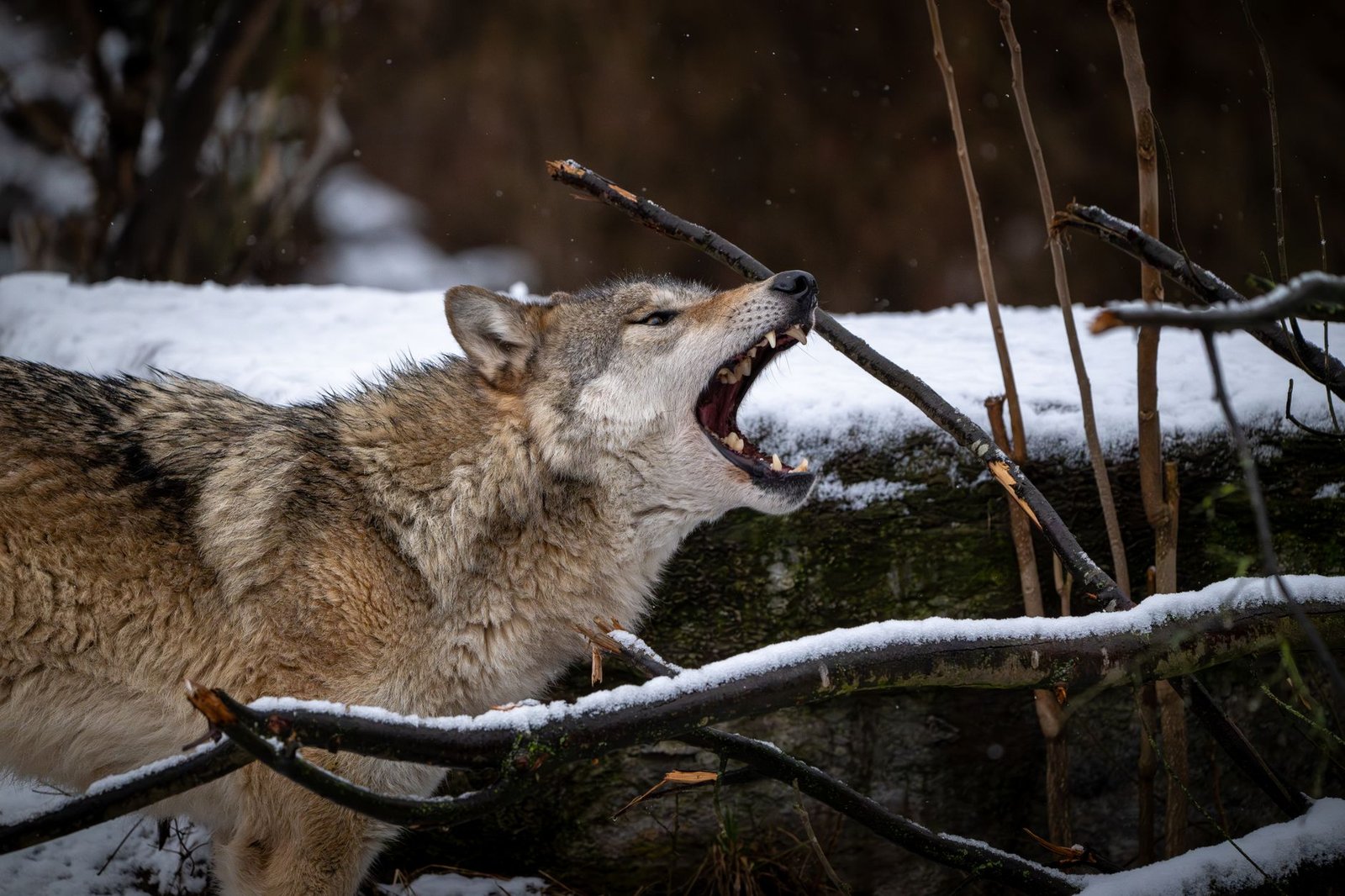
A line on a map decided where the shooting had to stop. From 2005 on, permitted private pilots in eastern Interior Alaska could shoot wolves from small planes, and later state crews joined them from a helicopter. On the other side of that line sat Yukon-Charley Rivers National Preserve, where the National Park Service bans wolf control. The wolves, of course, never saw the line.
So did Alaska wolf control stay outside the preserve? It didn’t. Park Service biologists followed radio-collared packs in Yukon-Charley for 22 years, from 1993 to 2014. During the years of aerial shooting next door, the yearly odds that a preserve wolf survived and stayed with its pack fell by about a quarter, from 0.45 to 0.34 on average. The packs answered with far more pups. It wasn’t enough. Before the shooting, the preserve produced more wolves than it lost in most years and sent the surplus out. During it, the preserve mostly needed wolves from outside to keep its numbers up.
Three Park Service biologists kept the count. Joshua Schmidt, John Burch and Margaret MacCluskie, all with the U.S. National Park Service in Fairbanks, published the work in June 2017 in the journal Wildlife Monographs. The team found packs by following fresh tracks in the snow from small planes, then darted one to three gray wolves (Canis lupus) at a time from a helicopter and fitted them with collars. Over two decades, 146 wolves from 42 packs wore those collars. Their uncollared packmates were counted from the air, too.
Why Alaska kills wolves near Yukon-Charley
It comes down to caribou, and an old number. The state’s aim was to grow the Fortymile caribou herd (Rangifer tarandus) so that hunters could take more of it. Much of the herd’s calving ground lies inside the preserve, and cutting wolf predation on calves was one of the goals. Back in 1920, the biologist Olaus Murie put the herd at 568,000 animals. His methods were rough and the figure has been revised again and again, the authors note, yet it is still used to justify long, intensive predator control. Since the 1930s the herd has swung between roughly 5,000 and 50,000.
The preserve is big, cold and lean. Yukon-Charley covers about 3,950 square miles (10,220 square kilometers) on the border with Canada’s Yukon Territory, including the whole Charley River watershed. Moose (Alces alces) are thin on the ground, and Dall’s sheep are scattered over a few small mountains. For about half the packs, caribou were the main meal. Hunting and trapping wolves is legal in the preserve under the 1980 law that created it. What the Park Service forbids is control: killing a native predator to boost its prey.
The first program didn’t use bullets. From 1997 to 2001, the Alaska Department of Fish and Game picked 15 packs along the preserve border. Crews caught every wolf except the dominant pair and moved them more than 100 miles (160 kilometers) away. The pair was surgically sterilized and released back into its own territory. Along much of the border, wolf numbers dropped by about 78% for roughly five years. None of the preserve’s study packs were treated.
How aerial wolf hunting in Alaska reached the preserve’s packs
The second program did. In January 2005 the state opened the Upper Yukon-Tanana Predator Control Area, where private pilots could shoot wolves from fixed-wing aircraft. In 2006 it grew to about 18,750 square miles (48,562 square kilometers) and took in the part of the preserve south of the Yukon River, on paper. Shooting stayed illegal on Park Service land. From 2008, state staff also shot wolves from a helicopter.
Wolves don’t read boundary signs. Most study packs denned inside Yukon-Charley but spent part of the year outside it, especially in winters when caribou weren’t close by. Some made long trips, called extraterritorial forays, covering hundreds of miles before coming home to den. Those trips were risky on their own: survival dropped while a pack was away. After 2005, an outing could also end under a plane. Picture a no-fishing zone whose fish swim out past the buoys every winter.
The losses fell on the wrong wolves. Among collared wolves, the share killed by people rose from 19% before lethal control to 29% during it. Thirteen of the 15 collared wolves killed in control operations were known breeders, the pair that holds a pack together. Ordinary trapping tends to take young wanderers instead. Uncollared wolves took most of the hits, though. In some control events a single pack lost as many as 24 wolves, and in the last two study years several preserve packs were largely or entirely wiped out.
Hunted wolf packs have more pups, but not enough
Fewer neighbors, bigger litters. Here’s the thing about wolves: they push back. During both control programs, the number of young added to each preserve pack over the summer nearly doubled, then sank back to earlier levels between the programs. The authors read this as density dependence, meaning that with fewer wolves in the surrounding area, each pack faced less competition for prey. Late in each program they saw a single pack with 10 pups, a hint that some packs raised more than one litter.
Breeders still mattered most. Packs that lost a known breeder, or that had shrunk, made fewer pups the following year. Lethal control hits breeders more often than trapping does, and many of its kills came late in winter, after most natural deaths had already happened. So the extra pups never fully filled the hole.
A new yardstick caught the switch. Counting wolves from collar locations turned out to be unreliable. Density estimates swung with how many locations the team logged, and dropping the 5% most extreme points could more than double them. So the authors built a different measure. Each year it asks one thing: did births in the study packs cover their deaths and departures, leaving newcomers aside? Before lethal control, the answer was yes in 10 of 13 years. During it, only in 3 of 9.
Source turned to sink. In ecology, a source population makes surplus animals and exports them, while a sink needs imports to hold steady. Yukon-Charley had been a source. Its young dispersers traveled as far as 438 miles (705 kilometers), into much of Alaska and Canada’s Yukon, and many ended up in hunters’ and trappers’ tallies. During the shooting years the preserve leaned on wolves from elsewhere. Reported wolf harvest inside the preserve also dropped, which the authors link in part to fewer dispersers coming in from the control area.
What the Yukon-Charley wolves can’t tell us
No one claims the wolves were vanishing. The authors stress that Yukon-Charley’s wolves belong to a wide, continuous population that was never at real risk of disappearing. What changed was how that population worked. The study compares years with and without control in one place, so it can’t rule out every other difference between those periods, although snowfall, pack size and breeder loss were built into the model. No good yearly data on prey existed. The team couldn’t see why pup numbers rose, only that they did. And the collars leaned heavily toward breeders, which is why the analysis folded in counts of uncollared packmates.
Earlier work set the bar. Reviews by other teams had suggested a wolf population can absorb a human toll of about 22% to 29% of its fall numbers each year without shrinking. Removals inside the preserve usually stayed below that line, except in the last two years. Even so, the drop in survival and the loss of breeders flipped its status. Honestly, the island wolves of Isle Royale show why that matters. With almost no newcomers, they never recovered from a crash in the early 1980s, and no one was shooting them. Small, cut-off groups of animals pay in other ways too, which is part of why wildlife is quietly losing its genetic diversity in many places.
The fix may have to be regional. In Alaska, most Park Service units sit next to areas where wolf control is planned or under way, and hunters and trappers take about 1,300 wolves across the state each year. The authors argue that banning control inside a boundary, an approach they call passive management, may not keep a park’s wolves working as a natural population. They want agencies to plan across borders, and they expect their yardstick to help other parks check whether their own wolves are a source or a sink.
The study at a glance
- Journal: Wildlife Monographs, June 2017
- Type of study: Long-term field study of radio-collared wolf packs, analyzed with a model that joins collar data and aerial counts
- Sample: 146 collared wolves from 42 packs in Yukon-Charley Rivers National Preserve, Alaska, followed from 1993 to 2014
- Main finding: During aerial wolf control outside the preserve, yearly survival of preserve wolves fell by about a quarter, and the preserve shifted from exporting wolves to relying on immigrants despite packs nearly doubling their pup output.
- Limits: One study area compared across periods, no yearly prey data, and the wolves were part of a continuous population never at risk of disappearing.
Source: Schmidt, J. H., Burch, J. W., & MacCluskie, M. C. (2017). “Effects of control on the dynamics of an adjacent protected wolf population in interior Alaska.” Wildlife Monographs, 198, 1-30. https://doi.org/10.1002/wmon.1026