 Editorial NexoScience
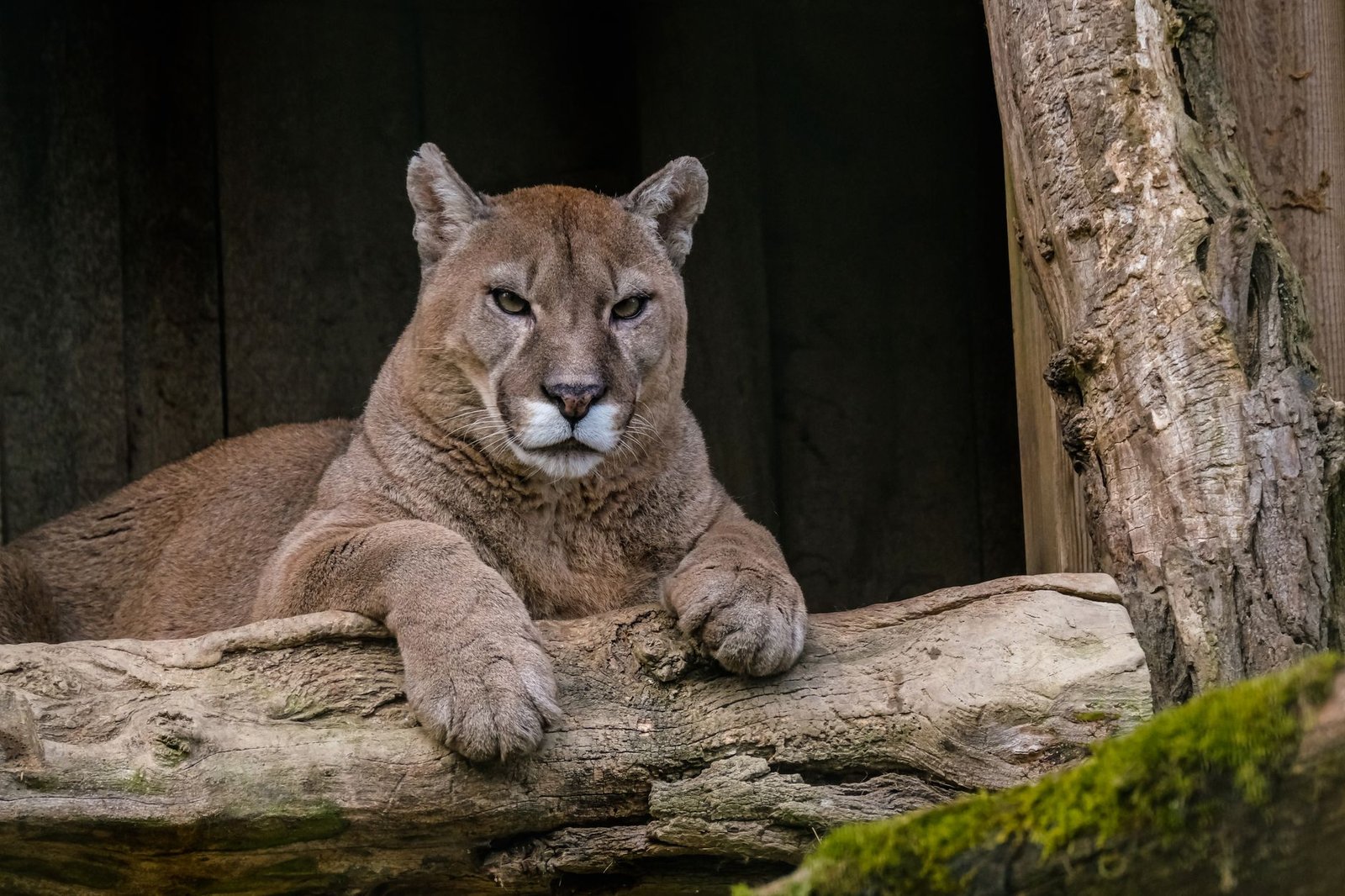
A cougar that kills a deer doesn’t eat and run. It drags the carcass into cover and can stay near it for several days, feeding and resting. Where that meal happens turns out to matter a great deal to the people who live nearby.
Cougar sightings in Washington line up with where the cats hunt, not with the routes they travel. On the Olympic Peninsula, cougars on the move steered clear of houses and farms. When they fed on a kill, they were far more willing to settle close to homes. The places best suited for feeding were also where people reported the most cougar sightings and the most attacks on pets and livestock. The routes the cats preferred for travel showed the opposite pattern. That is the core of a study led by Justin Suraci of Conservation Science Partners in Truckee, California, with the wild cat group Panthera and six tribes and tribal agencies of the peninsula. It was published in September 2025 in the journal Ecological Applications.
The animal goes by many names. Biologists call it the puma (Puma concolor). In Washington most people say cougar, and in much of the country it’s the mountain lion. It has the largest range of any carnivore in the Western Hemisphere, and it often lives right next to farms, timberland and small towns.
Olympic Peninsula cougars, followed by GPS collar
Hounds, collars and a lot of walking. Between 2017 and 2022, crews of the Olympic Cougar Project tracked cougars with trailing hounds and fitted them with GPS collars that logged a position every one or two hours. After cleaning the data, the team kept 63 cats: 26 adult females, 19 adult males and 27 young dispersers, cats that have left their mother and roam in search of a territory of their own. Nine of them were tracked twice, first as dispersers and later as settled adults.
Every cluster of points was a possible meal. When a collar showed a cat lingering in one spot, field teams hiked in to look. They confirmed 1,103 kill sites. About four in five held black-tailed deer or Roosevelt elk, and nearly all the rest were other wild prey. Only 17 kills, 1.5% of the total, were domestic animals, house cats or livestock. The team reran its analysis without them and got the same answer.
Two maps from the same cats. For each group of cougars, the researchers built two models. One used the collar data to learn what kind of ground the cats picked while moving. The other compared kill sites with random spots inside each cat’s range to learn where they chose to eat. Then the team painted both preferences across the whole study area, one small square of ground at a time.
Why cougars come near houses when they hunt
On the move, cougars play it safe. Traveling cougars avoided land with more houses and more farm fields. Let me explain what that looks like on the ground. A cat crossing the peninsula sticks to forest and rough country, even when that means more climbing. In areas that were good only for travel, slopes averaged about 29 degrees, against about 12 degrees where the land suited both travel and feeding.
At the dinner table, the rules relax. At kill sites, most of that caution disappeared. Cougars fed in spots fairly close to development and showed only weak, mixed reactions to farmland. Adult females were the exception. They were the only group that still avoided houses and fields while feeding. For every other group, the best feeding model didn’t need any measure of human land use at all.
The difference shows up in the ground cover. In places that were prime for feeding but poor for travel, development covered about 17.5% of the land on average and farm fields about 26.7%. In places good for both, each covered barely 1%. Tree cover fell too, from about 76% to 44%. Those feeding spots look a lot like rural roads, pastures and the scattered homes at the edge of town.
Both behaviors share a taste for forest edges, moderate tree cover and shrubs, where deer and elk browse and a cat can creep close. Think of it as a commute and a grocery run. A cougar takes the quiet back roads to get around. But the store it shops at, deer and elk country, often sits right at the edge of town.
Where cougars kill pets and livestock, and get seen
The incident reports follow the hunting map. The team pulled records from the Washington Department of Fish and Wildlife: 129 reports of livestock or pets hurt or killed, and 573 cougar sightings or face-to-face confrontations. For all cougars together, the better a spot was for feeding, the more likely it was to have a report of either kind. The better it was for travel, the less likely. Split by group, the feeding link held for adult males and for young cougars of both sexes, but not for adult females. The travel link was negative for all four groups.
The team had guessed wrong about sightings. Going in, the researchers expected sightings to follow travel routes, with cats crossing paths with hikers along trails and forest edges. You know what? The data didn’t back that up. Sightings, like attacks on animals, clustered where cougars hunt. Part of the reason, the authors wrote, may be that a cougar spends several days near a kill, which gives people more chances to run into one.
Most of these run-ins look like chance. On the peninsula, cougars ate deer and elk almost all the time. The authors read the pattern this way: the cats aren’t seeking out goats or house cats. They meet them while hunting good deer and elk habitat that happens to overlap with farms and backyards. Earlier work points the same way. In Colorado’s Front Range and in California’s Santa Cruz Mountains, conflict with livestock peaked at low to moderate housing density. Across California, cougar survival was lowest where human presence was middling, mostly because of cats killed after conflicts. Mountain lions shape life around their prey in wilder places too, as with what mountain lions do to Death Valley burros at their springs.
Young males take the easy road. Male cougars, and above all dispersing males, picked areas near major roads while traveling. Females showed weak or no preference. Roads lead to houses, and the authors suspect this helps explain why the state removed more males than females after livestock conflicts: 112 males against 73 females statewide from 2020 to 2022. That worries them, because the Olympic cougar population already has low genetic diversity and high inbreeding.
How to protect pets and livestock from cougars
The fixes are small, and they’re on our side. The authors suggest a two-part approach. First, don’t feed deer and elk, because that pulls prey, and the cats that hunt them, close to people. Second, keep pets indoors at night, and keep sheep and goats in roofed night pens away from field edges and close to the house. Both steps cut the odds that a hunting cougar bumps into a domestic animal. They also favor nonlethal responses after a conflict, such as moving the cat, to keep more cougars alive in a population that can’t spare its genes.
Some ground does double duty. About 24% of the study area, some 1,500 square miles (3,900 square kilometers), or roughly the size of Rhode Island, scored high for both travel and feeding. Those mostly forested blocks let cougars hunt, roam and hold territory without coming near people. The authors see them as the habitat most worth keeping.
The maps have limits. The two models worked at different scales. Travel was judged one step at a time, with an average step of about 650 yards (594 meters) every two hours. Feeding was judged across a cat’s whole home range, which can take days to cross. So the two maps can be compared only in a relative sense, the authors noted. The link between feeding habitat and incident reports is a correlation, not proof that a given cat caused a given report. A sighting isn’t a conflict, either, and every report depends on someone noticing and calling it in. The study also covers a single peninsula, with its own forests, elk herds and towns.
Cougars across the West have learned to live close to people. People, the authors argue, have adjusted less: hunting limits on cougars have gone up in much of the western United States, and killing “problem” cats is still the usual answer to conflict. Their maps point to a different deal, one where the forest blocks stay intact and the cougar’s next meal is a deer at the edge of the woods, not a goat in an open pen.
The study at a glance
- Journal: Ecological Applications, September 2025
- Type of study: GPS collar tracking and kill site surveys, compared with state reports of cougar incidents
- Sample: 63 cougars collared on the Olympic Peninsula, Washington, from 2017 to 2022, with 1,103 confirmed kill sites and 702 incident reports
- Main finding: Habitat that cougars prefer for feeding matched where livestock attacks and sightings were reported, while habitat they prefer for travel was linked to fewer reports.
- Limits: A correlation at two different spatial scales, in one region, based on incidents people chose to report.
Source: Justin P. Suraci, L. Mae Lacey, Patrick T. Freeman, Andrew Stratton, Caitlin Kupar, Kimberly Sager-Fradkin, Dylan Bergman, Bethany Ackerman, Kristen A. Phillips, Shannon Murphie, Cassandra Sullivan and L. Mark Elbroch, “Puma habitat preferences when moving and feeding predict the potential for human-carnivore conflict in shared landscapes,” Ecological Applications, 2025. DOI: 10.1002/eap.70101.