 Editorial NexoScience
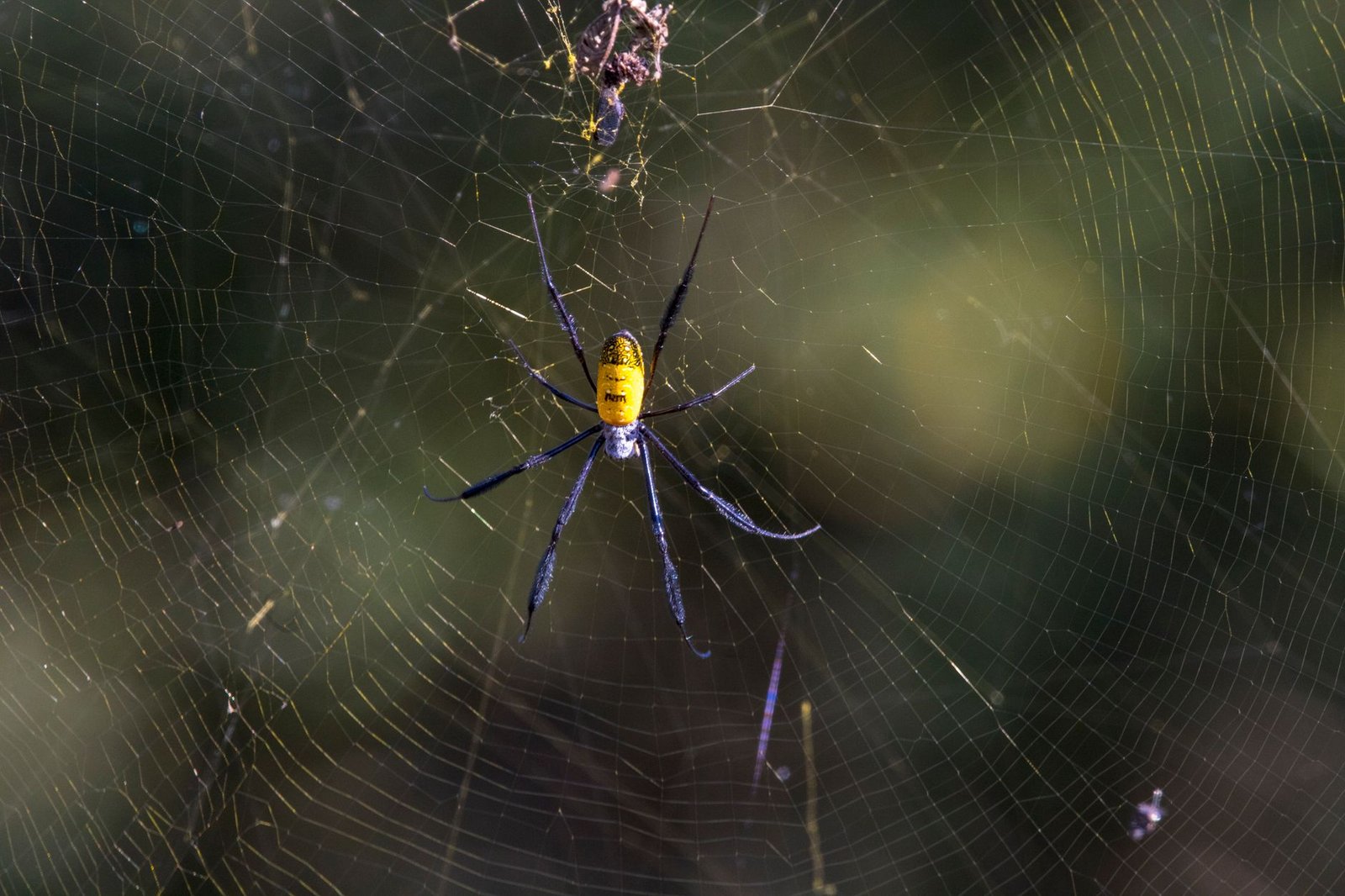
Every fall now, webs wider than a doorway hang across the creeks and trails of Atlanta’s woods. In the middle of most of them sits a female Joro spider, a newcomer from East Asia. In 2021, one Atlanta researcher found none in the patch of forest around his home. The next fall he counted 32.
That jump marked the start of the Joro spider invasion of Atlanta, and the climb since then has been steep. Across 25 forests in and around the city, Joro spiders doubled every year from 2022 to 2024, from 444 spiders on the trails to 1,713. Over the same three autumns, the native orb weavers living beside them fell by roughly 40% a year. By the last count, there were almost 100 Joros for every native orb weaver. The study can’t prove the newcomer caused the drop. But the two trends moved in lockstep.
One researcher, the same trails, three autumns. The counts come from Robert W. Pemberton, an independent researcher in Atlanta who did the work without outside funding. He published the results April 23, 2025, in the journal Insects. It is only the second study to put numbers on Joro spiders next to native orb weavers, and the first to follow both over time at the leading edge of the invasion. Spiders get far less attention than invasive plants and insects, even though invasive species rank among the main drivers of biodiversity loss. They add one more pressure on wildlife that is already losing its genetic diversity.
Where Joro spiders came from and where they are now
A stowaway from East Asia. The Joro spider (Trichonephila clavata) is native to Japan, Korea and China. It was first found in northeastern Georgia in 2014, though it may have been there as early as 2010. It most likely came over in shipments of goods. Young Joros travel by “ballooning,” letting out a thread of silk that catches the wind and carries them off like a kite. People move them too, most likely by accident. That would explain why Joros keep turning up far from their Georgia base.
The map keeps stretching north. From Georgia the spider spread into Tennessee, the Carolinas and Alabama, then West Virginia and Maryland. In the fall of 2024, people posting sightings on iNaturalist reported it in coastal Virginia, Philadelphia, Boston and Florida. Earlier lab work found the Joro has a faster metabolism and handles cold better than its cousin, the golden silk orb weaver, which stays in the Southeast. One climate model found land that suits the Joro covering about 20 times the area it held in 2022. Some forecasts reach as far as the Great Lakes.
How fast Joro spiders are spreading in Atlanta’s woods
The method is a slow walk. Each September and October, when female Joros and their webs are at their biggest, Pemberton walked a fixed route through each of the 25 forests. He counted every adult female within about 16 feet (5 meters) of the path. He also counted other orb weavers, the spiders that spin the classic wheel-shaped web. Each walk lasted about an hour, on the same date within three days each year. Because walk times varied a little, he turned every tally into spiders per hour. Most sites were nature preserves and parks inside the Interstate 285 loop. They are old hardwood stands of oak, maple, hickory and tulip poplar, spread over about 100 square miles (250 square kilometers).
Double, then double again. Joro spiders turned up at all 25 sites in all three years. The count went from 444 in 2022 to 859 in 2023 and 1,713 in 2024. Per hour of walking, that’s about 16 spiders the first fall and 59 the last, more than three times as many. Between 2022 and 2024, the rate rose at every single site. Public sightings tell the same story. DeKalb County had only four Joro posts on iNaturalist before 2022, then 108 that year and 570 in 2024.
What happened to Atlanta’s native orb weavers
The locals thinned out. Pemberton found seven native orb weaver species on his routes. The most common were the spinybacked orb weaver (Gasteracantha cancriformis) and the marbled orb weaver (Araneus marmoreus). In 2022 he counted 52 native orb weavers at 18 sites. In 2023 the tally fell to 32 at 11 sites, and in 2024 to 18 at just eight. The drop from the first year to the second, and from the first to the third, was statistically significant. The smaller dip from 2023 to 2024 was not.
A ratio that ran away. Let me explain why the ratio matters more than the raw counts. In 2022, the trails held about nine Joros for every native orb weaver. A year later it was 27 to one. By 2024 it was nearly 100 to one, a more than tenfold shift in two years. A 2022 survey of 103 sites across northern Georgia, published in Ecology and Evolution, saw the reverse balance, with native orb weavers slightly outnumbering Joros. That survey also found fewer native species at sites where Joros had settled earlier.
The Joro’s cousin dropped out of the count. The golden silk orb weaver (Trichonephila clavipes), the Joro’s closest relative in the region, showed up only in 2022: four spiders at three sites. Pemberton didn’t find a single one in 2023 or 2024. That species is more common farther south, near the coast, so a few sightings at the edge of its range may say little on their own.
What Joro spiders eat and why native spiders lose out
Big nets on the insect highways. The author’s leading explanation is competition for food and web space. Joro webs often spanned 3 to 6.5 feet (1 to 2 meters), with extra tangles of “barrier” silk around them, and they were packed tight. In 2024, the wooded lot around his home, about 0.3 acre (0.12 hectare), held some 80 Joro webs. Many were strung across paths and creeks, which work as flyways for insects. Picture a fishing fleet dropping nets across every channel into a harbor. Smaller boats working the same water come home with less. Joros also hunt both day and night, so they catch insects from both shifts.
A broad menu, other spiders included. DNA studies of Joro web remains, droppings and gut contents found a wide diet. Flies, especially midges, were the most common prey, with beetles high in the mix. One web survey ranked bees and wasps first, and Pemberton saw honeybees, bumblebees and hornets caught in Joro webs himself. Joro meals have also included members of the orb weaver family. So the Joro may compete with its rivals and, now and then, eat them.
The true numbers were probably higher. Honestly, the counts likely undersell the invasion. At the Chattahoochee Nature Center, staff cleared Joro webs from paths for visitors before the census, and the same probably happened at other busy parks. In 2024, Pemberton also logged empty webs. Before a cold snap on Oct. 17 that dropped temperatures to 35 degrees Fahrenheit (1.7 degrees Celsius), empty webs were usually torn and often still held males. That points to birds picking off the females, and Northern cardinals have been seen attacking Joros. After the cold, empty webs were mostly intact, which fits females leaving to climb trees and lay eggs. At one of the last sites of the season, empty webs outnumbered occupied ones, 51 to 39.
A link, not a verdict. Pemberton states plainly that the pattern is not proof the Joro caused the native decline. Nobody counted orb weavers in these forests before the Joros arrived, so there is no true baseline. Other, unknown factors could be at work. The native spiders were also so scarce that year-to-year swings for any single species may mean little, and only the overall drop stands out. The walks were done in daylight, while several of the native species in the study are active mostly at night.
Booms don’t always last. Part of the Joro’s success may come from leaving its enemies behind in Asia. In Japan, a parasitic wasp sometimes attacks it. In the United States, the only known enemies are mud-dauber wasps, which stock their nests with young Joros, and birds such as cardinals, with little effect so far. Some invaders explode and then crash once local predators learn to use them. Pemberton writes that it is too early to guess which way the Joro will go. He is now searching Georgia, Japan and Korea for parasites and predators of Joro eggs. If the damage proves as serious as his counts hint, he says biological control, bringing in a natural enemy from the spider’s home range, could be worth a look.
The study at a glance
- Journal: Insects, April 2025
- Type of study: Timed walking counts of spiders along forest trails, repeated each fall for three years
- Sample: Female Joro spiders and native orb weavers at 25 forest sites in the Atlanta region, 2022 to 2024
- Main finding: Joro spiders roughly doubled each year, from 444 to 1,713, while native orb weavers fell about 40% a year, from 52 to 18.
- Limits: No counts exist from before the Joro arrived, so the study can’t show the spider caused the native decline.
Source: Pemberton, R. W. (2025). “Explosive Growth of the Jorō Spider (Trichonephila clavata) and Concurrent Decline of Native Orbweaving Spiders in Atlanta, Georgia Forests at the Forefront of the Jorō Spider’s Invasive Spread.” Insects, 16(5), 443. https://doi.org/10.3390/insects16050443