 Editorial NexoScience
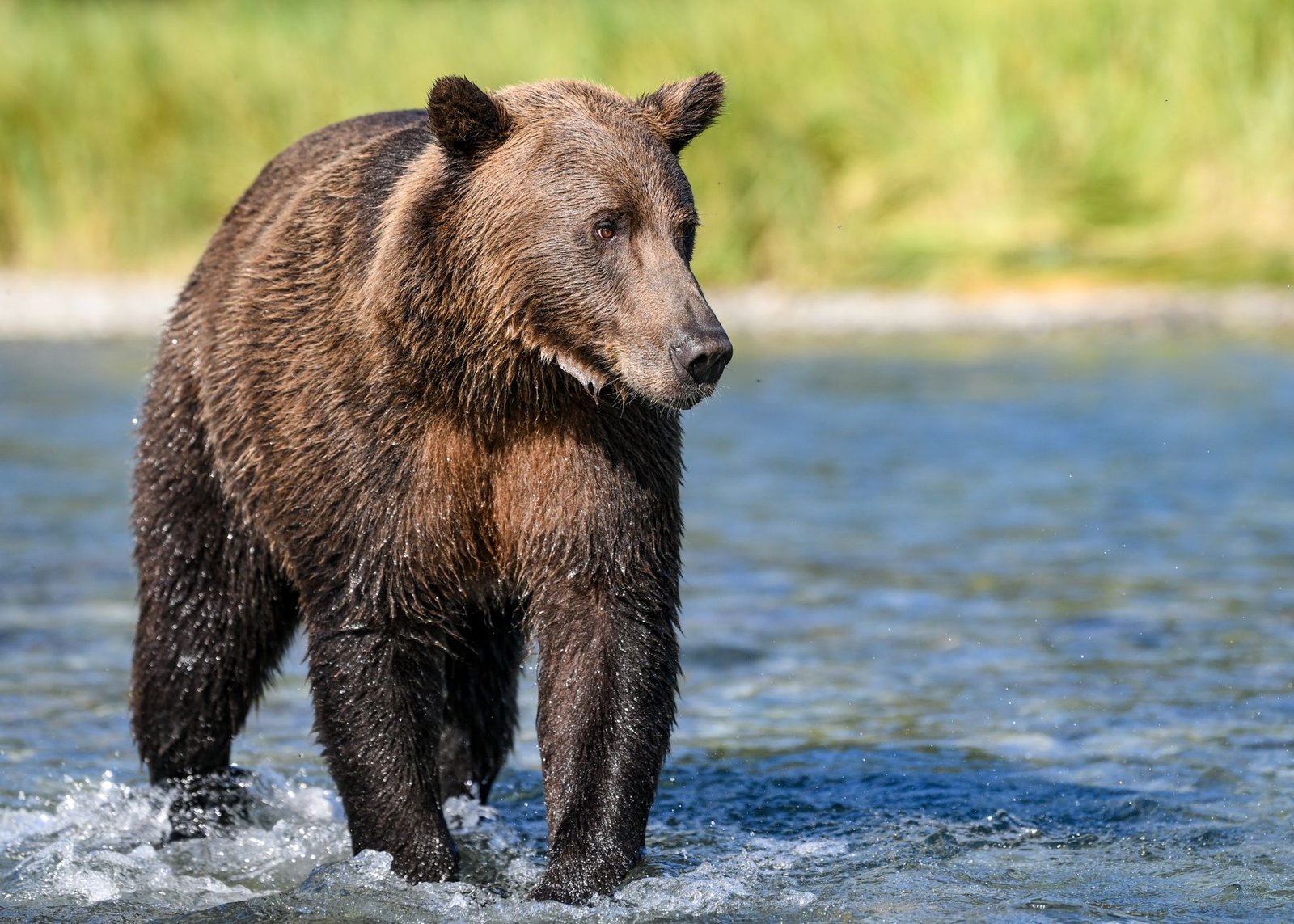
Admiralty, Baranof and Chichagof islands sit in the temperate rain forest of southeast Alaska, a long way from the nearest sea ice. Their brown bears fish for salmon like brown bears anywhere. Look at their genes, though, and part of each bear is polar bear.
These animals are the living record of an old polar bear grizzly hybrid population. Genome data show that polar bears gave the brown bears of the ABC Islands, as the trio is known, all of their mitochondrial DNA, about 6.5% of their X chromosome and less than 1% of the rest of their genome. The researchers argue that polar bears were stranded here as the last ice age ended. Then male brown bears moved in and, over many generations, turned them into brown bears. In the data, genes flowed one way only: from polar bears into brown bears, never back.
A genetic detective story from California. The work was led by James Cahill and Beth Shapiro of the University of California, Santa Cruz, with colleagues in the United States, Russia and Canada. It was published March 14, 2013, in the journal PLOS Genetics. The team read the genomes of seven polar bears, a brown bear from Admiralty Island, a brown bear from mainland Alaska and an American black bear from central Pennsylvania. They added genomes published by other groups, among them two more ABC Islands bears and a polar bear about 115,000 years old.
How polar bears and brown bears are related
Two camps, two very different family trees. The polar bear (Ursus maritimus) and the brown bear (Ursus arctos) are close cousins. Grizzly is the name for inland North America’s brown bears. Their ranges overlap at the edges, and fertile hybrids, sometimes nicknamed pizzlies or grolar bears, are known from zoos and from the wild. When the two species split was another matter. One earlier study, based on 14 genes, pointed to a fairly recent split and little mixing since. Another team put the split more than 4 million years back, with mixing that never stopped.
The ABC Islands bears sat at the center of the fight. Mitochondrial DNA (mtDNA) is a small set of genes that only mothers pass on. Every living polar bear carries one family of it. So do the ABC Islands brown bears and some extinct brown bears from Ireland. The usual view was that polar bears got this mtDNA from brown bears. To make that work, bears had to interbreed at least twice, once in each direction. “Unfortunately, this prevailing consensus has gone unquestioned,” the authors wrote.
Why the X chromosome gave the hybrids away
Polar bears turned out to be near copies of each other. Two polar bears differ at about 4 sites in every 10,000 DNA letters. Two brown bears differ at about 17, roughly four times as much. That matters. In a group this uniform, any foreign DNA should stick out like a red sock in a load of white laundry.
A test borrowed from the Neanderthal hunt. The team used the D-statistic, a test first built to find Neanderthal DNA in modern humans. It counts gene variants that two bears share with a third. By chance alone, the sharing comes out even. If one bear shares more, it likely has ancestors from the other species. Every pair of polar bears came out even against both brown bears, so the polar bears showed no brown bear ancestry. The ABC Islands bear shared more with polar bears than the mainland bear did, every time.
The X chromosome lit up. Across most of the genome, the polar bear share in the ABC Islands bear came to roughly 0.75%. On the X chromosome it jumped to about 6.5%. The same excess showed up in the two ABC Islands bears sequenced by another team. Then the team tested both directions on a computer. Mixing brown bear DNA into a polar bear X made it look nothing like a real polar bear. Mixing polar bear DNA into a brown bear X matched the real data. The ancient polar bear told the same story as the living ones.
How the ice age stranded polar bears in Alaska
Picture southeast Alaska at the height of the cold. Between about 26,000 and 12,000 years ago, fossils are plentiful on the islands just south of the ABC group. No brown bears turn up among them. Marine mammals do, including ringed seals, a polar bear favorite. Polar bears likely followed the sea ice south while brown bears stayed away. The same ice age reshaped the north in other ways, as the Bering land bridge between Asia and North America shows.
Then the ice pulled back and the young males showed up. As the climate warmed, some polar bears were likely left behind. The land grew friendlier to brown bears. The first to arrive from the mainland were probably young males, which roam far more than females. They mated with island females. Their sons did the same, and the polar bear share of each genome kept shrinking.
Let me explain why the X kept the secret. A female bear carries two X chromosomes and a male carries one. So when the newcomers are nearly all males, the X gets diluted more slowly than the rest of the genome. The mtDNA never gets diluted at all, since only mothers pass it on. Think of a family recipe book handed from mother to daughter while every new son-in-law rearranges the rest of the kitchen. That is why the ABC Islands bears are 100% polar bear in their mtDNA, about 6.5% on the X and under 1% elsewhere. One burst of interbreeding can’t explain it. In the team’s models, a single burst gives an X-to-genome ratio of 2.7 at most. The real bears show about 14. A long, male-heavy trickle of newcomers can.
Distance from the mainland still matters. A bear from Baranof Island, the farthest from the mainland, carried much more polar bear ancestry than the Admiralty Island bears. Admiralty, the closest island, has bears that look more like mainland bears, and brown bears may still be crossing today. If nothing changes, the authors expect the islands to end up fully brown bear in every gene except the mtDNA.
When polar bears split from brown bears is still open
The genomes can’t date the split. The authors said plainly that their data cannot settle when polar bears became their own lineage. Ancient polar bear fossils are too rare. Three ways of setting the genetic clock gave very different dates. All of them, though, put a long gap between the black bear split and the later brown bear and polar bear split. Their best guess is that polar bears became a distinct lineage sometime in the Pleistocene, the era of the ice ages. They were clearly a separate species by at least 115,000 years ago, the age of the oldest known polar bear fossil.
Honestly, the sample is small. The team sequenced only one ABC Islands bear and relied on two more from published data. Their DNA was read at low depth. The tale of stranded polar bears and roaming males is a model that fits the genes and the fossils. Nobody watched it happen, and the data can’t say how many brown bears came over or when.
Ireland may hold a second case. Extinct Irish brown bears also carried polar bear mtDNA, and the authors think shifting ice may have stranded polar bears or hybrids there too. Climate change, they wrote, may often strand animals on islands or island-like places such as lakes or mountain plateaus. If those castaways breed with close relatives moving in, the same quiet takeover can play out again, one generation of newcomers at a time.
The study at a glance
- Journal: PLOS Genetics, March 2013
- Type of study: Genome comparison of polar bears, brown bears and a black bear, with computer simulations of hybridization
- Sample: New genomes from seven polar bears, two brown bears and one black bear, plus published genomes including two more ABC Islands bears and a polar bear about 115,000 years old
- Main finding: Brown bears on Alaska’s ABC Islands carry polar bear DNA, about 6.5% of the X chromosome and under 1% elsewhere, while polar bears show no brown bear ancestry.
- Limits: Only three ABC Islands bears were analyzed, and the data cannot date when polar bears became a separate species.
Source: Cahill, J. A., Green, R. E., Fulton, T. L., Stiller, M., Jay, F., Ovsyanikov, N., Salamzade, R., St. John, J., Stirling, I., Slatkin, M., & Shapiro, B. (2013). “Genomic Evidence for Island Population Conversion Resolves Conflicting Theories of Polar Bear Evolution.” PLOS Genetics, 9(3), e1003345. https://doi.org/10.1371/journal.pgen.1003345