 Editorial NexoScience
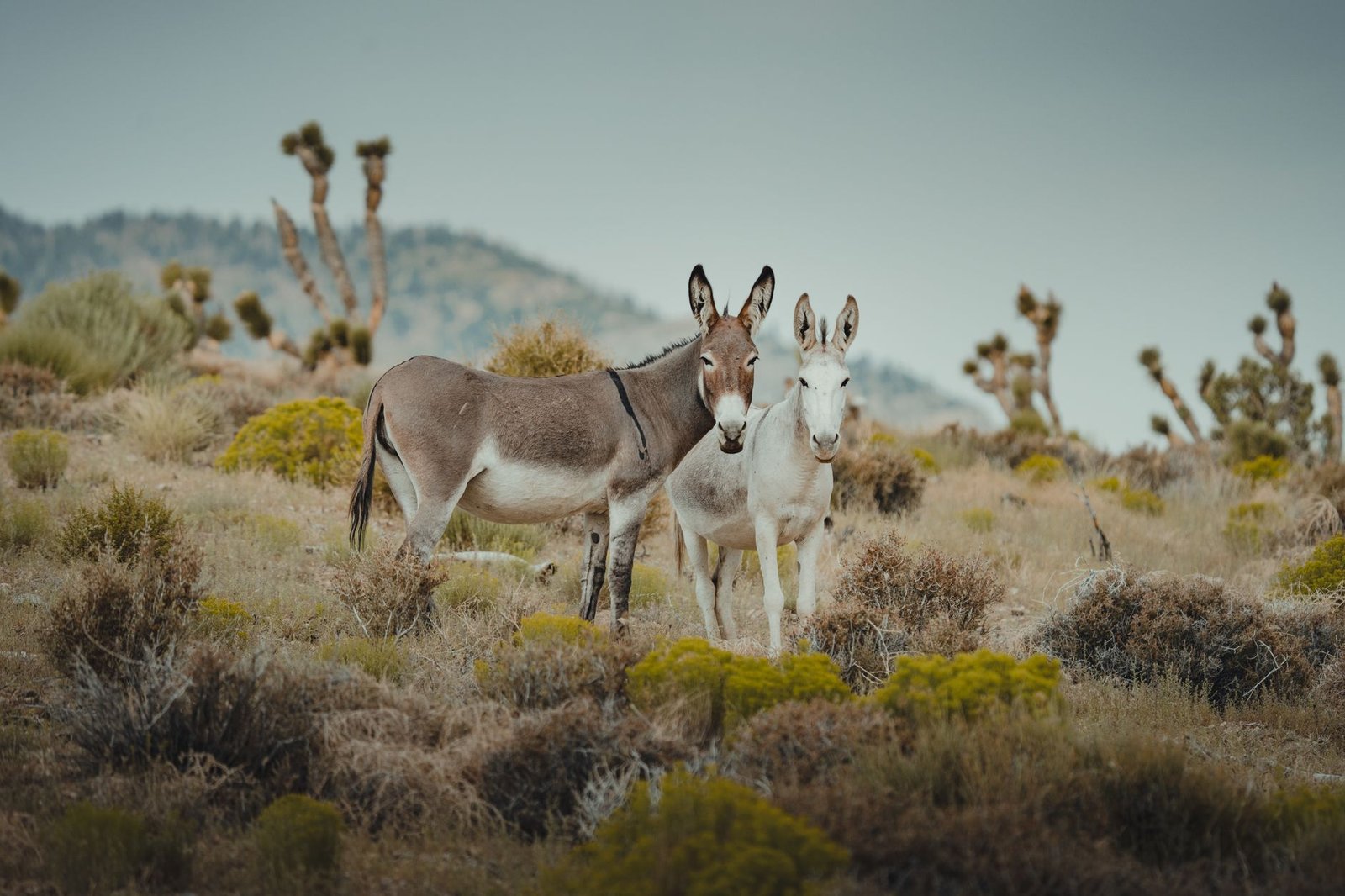
At the south end of Lake Pleasant, northwest of Phoenix, there are marinas, campsites and picnic tables. There are also donkeys. Researchers who tracked them for years watched visitors feed the animals near the marina and the boat landing, and saw them root through the trash.
That habit runs through their whole lives. GPS collars showed that the Lake Pleasant wild burros keep small, steady home ranges built around two things: a lake that never runs dry and the people who come to it. Over a year, a typical female there covered roughly a third of the ground that burros needed on the Colorado Plateau in Utah, where water comes and goes with the rain. And unlike their wild African ancestors, which keep well away from people, the Arizona burros chose spots close to roads and recreation areas.
Collars went on dozens of jennies. The work comes from Saeideh Esmaeili, Kathryn Schoenecker and Sarah King, researchers with Colorado State University and the U.S. Geological Survey (USGS). It was published Aug. 12, 2024, in the journal Ecosphere. Between 2016 and 2018, Bureau of Land Management (BLM) crews caught adult females, called jennies, and fitted them with satellite collars. Seventy-two of them sent back enough locations to analyze: 49 around Lake Pleasant and 23 at a herd in central Utah. Every one was a female between 3 and 9 years old.
Where wild burros live in Arizona and Utah
An African animal with a Spanish passport. The burro is simply the feral donkey (Equus asinus). Its ancestor, the African wild ass (Equus africanus), was tamed in northeast Africa around 7,000 years ago. Spanish explorers brought donkeys to North America in the 1530s, and for centuries they hauled gear for miners and settlers across the Southwest. Once trucks and trains took over, many were abandoned or set loose. Their descendants settled in desert mountains near the Colorado River in Arizona, California and Nevada, and in scattered spots across the region.
Protected, counted and understudied. That’s why there are wild burros in Arizona today, and why they are legally protected. Since the Wild Free-Roaming Horses and Burros Act of 1971, the BLM and the U.S. Forest Service have managed them in designated herd management areas. In early 2023, more than 14,000 burros lived on federal land in about 39 BLM herd areas across five Western states, above the targets set when they first won protection. Even so, the authors note, very few studies had followed burros with GPS to see how they actually use the land.
Two homes that could hardly differ more. The Lake Pleasant herd area covers about 162 square miles (419 square kilometers) of Sonoran Desert, with saguaro, cholla, palo verde and mesquite, frost-free winters and summer monsoons. At its heart sits the reservoir. The Sinbad herd area, the one studied for wild burros in Utah, lies on the San Rafael Swell, about 345 miles (555 km) farther north and some 3,600 feet (1,100 meters) higher. It is 155 square miles (402 square kilometers) of canyons, mesas and grassland under juniper and pinyon pine, where the average December temperature sits below freezing. Sinbad has no known permanent water. Burros there drink from small reservoirs and natural rock basins called tinajas, which fill with rain and dry out without it. Cliffs keep them off the San Rafael River.
How far wild burros roam in a year
A small town against a small county. Over a full year, a Lake Pleasant jenny used about 13.5 square miles (35 square kilometers). A Sinbad jenny needed about 38 square miles (99 square kilometers), nearly three times as much. Put another way, the Arizona burro’s year fits inside an area a bit over half the size of Manhattan, while the Utah burro needs more than one and a half Manhattans. Individual animals varied a lot in both places, but the gap between the two herds was clear.
The desert herd shrinks its world in summer. At Lake Pleasant, ranges were tightest in the hot months. From April to June they averaged about 5.7 square miles (14.7 square kilometers), then more than doubled in the mild season from October to March. At Sinbad, season made no real difference: burros used about 18 to 21 square miles every season. An earlier study in Nevada’s Mojave Desert found burros there ranging even wider, about 59 square miles (152 square kilometers) per season on average.
Patchy land means long walks. The pattern fits the “resource dispersion hypothesis,” an old idea in ecology that animals cover less ground when food and water sit close together and stay put. Burros in greener areas used smaller yearly ranges. Where water sources and terrain were more scattered, ranges grew. Think of it like grocery shopping. With a store on the corner, you don’t need the car. With the nearest one across the county, you drive.
How water shapes where wild burros go
Every herd stuck close to water. Burros at both sites picked spots near surface water in every season. Like their African relatives, burros handle dehydration better than horses, yet they still drink about as much. So do wild burros need water nearby? In Utah, yes: how spread out the water was helped explain how big a burro’s range got. At Lake Pleasant, it didn’t matter, because the lake covers about 8% of the herd area and never vanishes. Water simply wasn’t the limit there.
A thin coat changes the choice of slope. Donkey fur insulates poorly, and in cold, wet weather donkeys seek shelter where horses stay in the open. The Utah burros showed it. In the cold months they favored south-facing slopes, which catch more sun, and in summer they shifted toward north-facing ground. They also favored gentle to moderate slopes and avoided terrain steeper than about 18%. The Arizona burros, with warm winters, simply avoided steep ground all year.
Why the Lake Pleasant burros stay near people
The marina outranked the quiet shore. In Arizona, the strongest factor behind range size was distance to recreation areas such as campgrounds, boat docks and parking lots. Burros whose ranges sat farther from those spots, and from roads, roamed wider. The animals also chose the busy south end of the lake over the north end, which had similar plants and terrain but far fewer people. Honestly, the authors could offer only two explanations: regular food from visitors, or easier access to the water at that end.
Old domestic habits may linger. Feral animals descend from tame stock that was bred for thousands of years to tolerate people. The authors suspect that history, or factors they didn’t measure, explains why the Lake Pleasant burros seek out busy places. It isn’t fear of predators pushing them toward people: the only predator there was the coyote (Canis latrans), which is comfortable around humans too. The contrast with the African wild ass is stark. Earlier studies in the Horn of Africa found it avoids people and their livestock, and feral burros in Brazil’s dry Caatinga forest kept away from people as well. Feral horses carry their domestic past in other ways, as the DNA of the wild horses of Theodore Roosevelt National Park shows.
Crowding has a cost. Animals that gather in one spot all year can wear down the plants other species rely on. And burros drawn to roads get hit by cars: collisions have already been a safety threat for both burros and drivers around Lake Pleasant, the authors wrote.
Here’s the catch. The study followed only adult females in two herds, so males, young animals and other habitats may behave differently. There were no data on where cattle grazed. At Sinbad, the team couldn’t map every rock tank, so the water map was incomplete. The link between handouts and range size is the authors’ best explanation, not something they measured, and like any tracking study it shows associations rather than proof of cause. One of their own predictions also failed: burros didn’t select more strongly when resources were scarcer and more variable.
More water could mean more burros. The authors expect burros to reach higher densities in warm places where water never runs out. Keeping herd sizes in check is a priority for the BLM and the Forest Service, so the next step is to connect each jenny’s range and habits to how many foals she raises. That link would tell managers which herds are likely to grow fastest.
The study at a glance
- Journal: Ecosphere, August 2024
- Type of study: GPS tracking of feral burros in two herd areas with different climates
- Sample: 72 adult female burros, 49 at Lake Pleasant in Arizona and 23 at Sinbad in Utah, tracked between 2016 and 2020
- Main finding: Lake Pleasant burros used yearly ranges about a third the size of Utah burros and chose areas near people and roads; Utah burros shifted habits by season.
- Limits: Only adult females in two herds, an incomplete water map in Utah, and no data on livestock.
Source: Esmaeili, S., Schoenecker, K. A., & King, S. R. B. (2024). “Resource availability and heterogeneity affect space use and resource selection of a feral ungulate.” Ecosphere, 15(8), e4939. https://doi.org/10.1002/ecs2.4939