 Editorial NexoScience
“No natural predators.” That phrase has followed the wild burros of the American West for decades, from federal land management reports to the Death Valley National Park plan that calls for removing them. It sounds like a simple fact. In the mountains above Death Valley, it isn’t.
Death Valley burros do have a hunter, and it has been changing how they live. Mountain lions kill young burros at the park’s desert springs. Where those kills happen, burros come to drink mostly by day and spend far less time at the water, and the plants around the springs grow back thick and tall. Where the lions are missing, burros linger day and night and trample the ground bare. That is the core of a field study led by Erick Lundgren, then at Aarhus University in Denmark, with colleagues from the University of Technology Sydney, Oregon State University and other institutions. It was published in 2022 in the Journal of Animal Ecology.
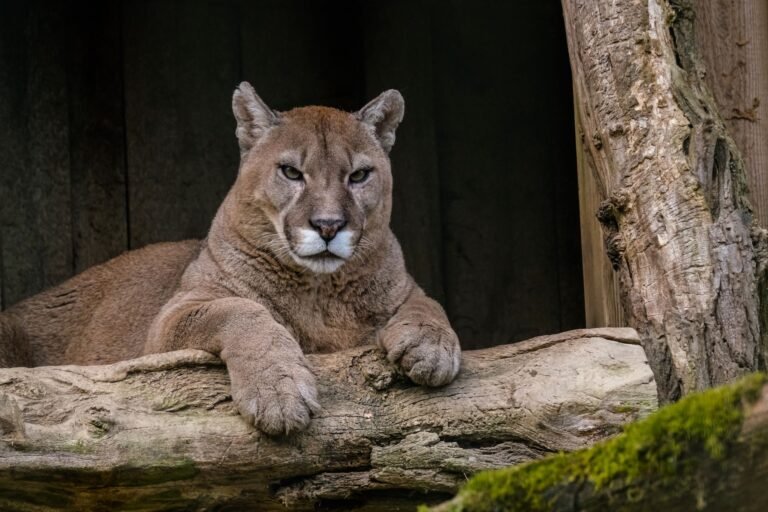
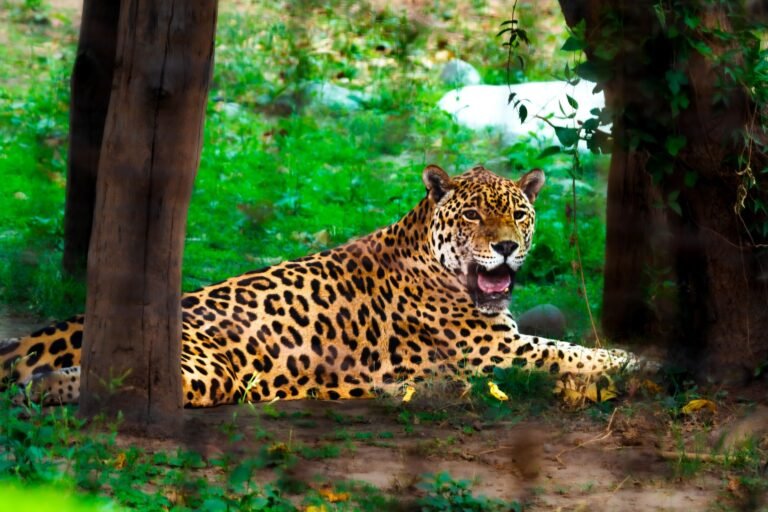
Burros are feral donkeys (Equus africanus asinus), descendants of pack animals that miners and prospectors turned loose in the deserts of the Southwest. Mountain lions (Puma concolor), also called cougars or pumas, roam the same rocky country. Until this work, nobody had documented one eating the other.
Mountain lions eat burros, and cameras caught them
The first proof came from a camera trap. In the Sonoran Desert of Arizona, a motion camera photographed a mountain lion with a yearling burro it had just killed. A second camera in Death Valley caught a lion with a burro foal. The team aged both donkeys from the way their teeth had erupted. Those are the first photographs of cougars preying on feral donkeys, the authors wrote.
The carcasses kept turning up. Mountain lions drag big kills to a hidden spot and cover them, a habit called caching. The researchers walked the lion trails around each spring looking for those caches. Of 29 cached carcasses they found in the study area, 24 were burros. In this corner of the desert, burros were the lions’ main recorded prey. The lions went for the young ones, foals and yearlings, not the full-grown adults.
Mountain lions have taken wild horses for years in places like Nevada, and that work keeps growing, including research on when mountain lions eat wild horses and which ones. Donkeys had simply never been on the record.
Wild burros and the clock of a predator
A spring in the desert is a dangerous place to drink. The study took place in the southern Panamint Mountains of Death Valley National Park, a rugged block of about 58 square miles (150 square kilometers) laced with burro trails. Lions there are protected from hunting. The team set cameras at every known spring and seep in the area and sorted them into three groups: springs with lion kills, springs where lions showed up but no kills were found, and springs with no lions at all.
Burros switched to the day shift. At springs without lions, burros came and went around the clock. At springs with kills, they showed up almost only in daylight, when lions are least active. Here’s the thing about that switch. It works like a pedestrian who avoids a dark alley at night but walks it at noon. The alley stays the same. The schedule changes. Cameras at extra sites across the Mojave and Sonoran deserts showed the same flip from night to day wherever lions were around.
Heat made the gap wider. Burros need more water when it’s hot, so they spent more time at every spring as temperatures climbed. But the climb was much steeper where there were no kills. On days at or above 95 degrees Fahrenheit (35 degrees Celsius), burros spent an average of 5.5 hours a day at springs without lion kills. At springs with kills, the average was 0.7 hours. Overall, burros were about 87% less active at springs where lions hunted, and those springs also had more days with no burros at all.
What wild burros do to desert springs
Hooves leave a mark. Feral donkeys and horses can graze, trample and crowd out other animals at scarce water. To see what that meant on the ground, the team measured 14 springs. They counted access trails, estimated how much of the water was shaded by plants, checked how much of the shoreline had vegetation at least knee high, and scored how much of the ground near the water was trampled bare.
The springs with lion kills looked like different places. They had nearly three times as much plant canopy over the water, about 42% against 14% at springs without kills. Tall plants lined about 60% of the water’s edge, compared with about 30%. They had roughly half as many burro trails, and the ground near the water was about half trampled instead of almost entirely bare. Two springs only about 4 miles (6 kilometers) apart, one with lions and one without, made the contrast plain in the team’s photos.
Ecologists call this a trophic cascade, a chain reaction that starts with a predator, runs through its prey and ends up in the plants. The famous example is the wolves of Yellowstone. This one runs from a mountain lion to a burro to the reeds around a desert spring, and the authors say it is the first such chain ever described with cougars and wild equids.
The lions weren’t just following the burros. If cougars simply went where prey was thickest, the busiest springs would have the most lions. The opposite was true. Springs near campsites and springs in flat, open ground had the most burro traffic and few or no lions. Lions are ambush hunters and need broken, rocky cover to get close. Elevation, terrain and the distance between springs did not explain the differences in the plants.
Why Death Valley wants burros gone, and the limits of this study
This was a natural comparison, not an experiment. Nobody added or removed lions. The springs without kills were also the ones near campsites or in flat terrain, and the authors acknowledged that people and landscape could have their own effects on burros and plants. They saw no sign that campers bothered the donkeys, and no evidence that the plants at those springs started out different, but they wrote that more research is needed to firm up the link. Some cached carcasses could also have been burros that died of other causes and were then scavenged by lions, although the pattern in the data argued against disease.
The finding lands in the middle of a policy fight. The damage burros do to springs is the main reason the park gives for removing them entirely. Honestly, the history here is messier than that. The authors point to earlier burro removals in the Death Valley region that were followed by the loss of several populations of endangered native fish, because the open water the donkeys kept clear grew over. Burros are not the only animals that trample springs, either. Wild horses and other large grazers shaped wetlands across North America until about 12,000 years ago, and mountain lions lived alongside several kinds of wild horses and asses for more than a million years.
The team’s point is not that burros are harmless. It is that a burro population with its predators looks and acts different from one without them. Lions are hunted in much of the West, and hunting tends to remove the older, skilled cats that can take bigger prey. The authors suggest that protecting mountain lions, and perhaps one day wolves, could shape what burros do to desert springs in ways that roundups never will. In the Panamints, the answer may already be written in the reeds.
The study at a glance
- Journal: Journal of Animal Ecology, July 2022
- Type of study: Field study with camera traps and plant surveys at desert springs with and without mountain lion kills
- Sample: Wild burros and mountain lions at 14 springs in the southern Panamint Mountains of Death Valley National Park, plus extra camera sites in the Mojave and Sonoran deserts
- Main finding: At springs where mountain lions killed young burros, burros came mostly by day and were about 87% less active, and the springs had nearly three times as much plant canopy.
- Limits: A natural comparison, not an experiment; springs without kills were also near campsites or in flat terrain.
Source: Erick J. Lundgren, Daniel Ramp, Owen S. Middleton, Eamonn I. F. Wooster, Erik Kusch, Mairin Balisi, William J. Ripple, Chris D. Hasselerharm, Jessica N. Sanchez, Mystyn Mills and Arian D. Wallach, “A novel trophic cascade between cougars and feral donkeys shapes desert wetlands,” Journal of Animal Ecology, 2022. DOI: 10.1111/1365-2656.13766.