 Editorial NexoScience
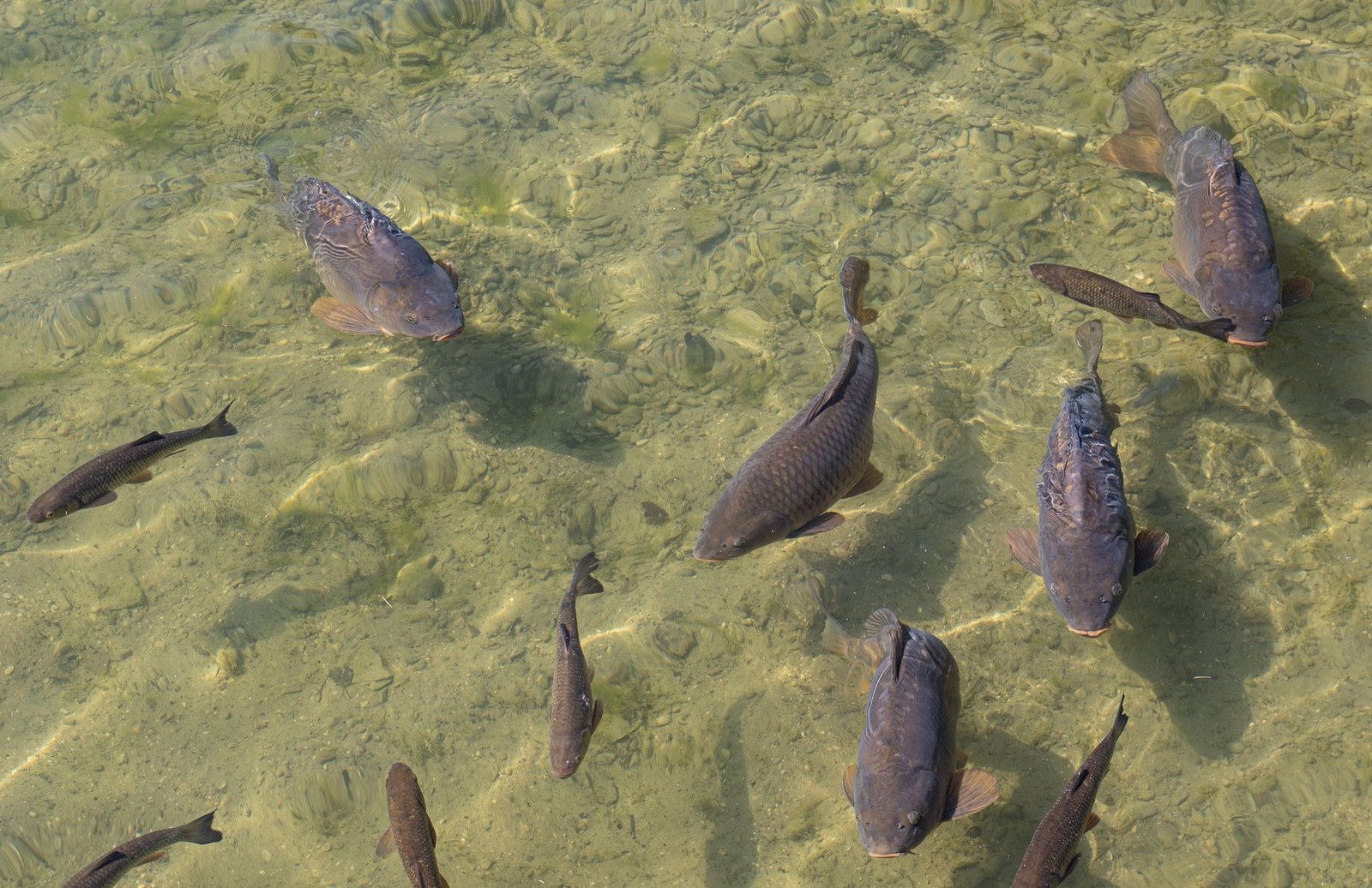
Every year, crews haul millions of pounds of fish out of one Midwest river. From 2010 to 2018, commercial fishing pulled an average of about 3.3 million pounds (1.5 million kilograms) of bighead and silver carp from the Illinois River each year. Asian carp in the Illinois River are not a curiosity. They are the target of one of the largest fish removal efforts in North America, and the reason so many people want to know whether all that netting is working.
The nets kill a lot of carp, and the river stays full anyway. Researchers tracked tagged silver carp for up to eight years and found that in the Illinois River, between about a quarter and three quarters of the adults died each year. In the Wabash River next door, where almost nobody fishes for them, only about 3% died per year. Yet carp densities in the Illinois River have barely budged. The survivors breed fast, and fresh fish keep swimming in from the Mississippi River, so heavy losses get refilled. The work, led by Andrew Wieland and James Garvey of Southern Illinois University, was published in April 2025 in the journal Management of Biological Invasions.
Silver carp (Hypophthalmichthys molitrix) and their cousin the bighead carp (Hypophthalmichthys nobilis) escaped fish farms in the 1970s. They spread through the Mississippi River basin and reached some of their highest numbers in the Illinois River, which links the Mississippi to Lake Michigan.
How scientists tracked silver carp fish by fish
Each fish carried a tiny speaker. Biologists caught adult silver carp with electrofishing gear, sedated them and slipped an acoustic transmitter about the length of a lipstick into the belly through a small cut. The tags weighed well under 2% of the fish’s body weight. Then the fish went back in the water, and every 90 to 120 seconds their tags sent out a ping.
Underwater receivers listened along about 273 miles (439 kilometers) of the Illinois River and 311 miles (501 kilometers) of the Wabash River in Indiana. Over the years, teams from Southern Illinois University, Purdue University and the U.S. Army Corps of Engineers tagged 1,194 silver carp in the Illinois River and 289 in the Wabash. After strict filters (a fish counted as alive in a year only if two different receivers heard it), 165 Illinois River carp and 205 Wabash River carp made it into the analysis.
Silence is the signal. A fish that keeps pinging year after year is alive. A fish that goes quiet before its battery should die has probably died too. The team fed those yes-or-no histories into a standard survival model, the Cormack-Jolly-Seber model, which also works out how often a living fish gets missed. Detection was high, above 80% in both rivers, so a quiet tag usually meant a dead fish rather than a deaf receiver.
This matters because older estimates came from a different trick. Biologists would net a batch of carp, age them and infer death rates from how many old fish showed up. That only works if the nets catch young and old fish equally well, and they often don’t. Following the same individuals for years skips that problem.
What heavy fishing does to Asian carp in the Illinois River
Two rivers, two very different odds. The Illinois and Wabash are similar in size and sit in the same part of the country, but they are treated very differently. The Illinois has had a contracted harvest program since 2011 above Starved Rock Lock and Dam, plus open commercial fishing below it. On the Wabash, fishers took out an average of only about 6,700 pounds (3,036 kilograms) of these carp a year. The authors put the Illinois harvest at roughly 500 times the Wabash rate.
The tags showed the gap. Annual mortality in the Illinois River swung from about 23% in 2017 to about 78% in 2014. On the Wabash, the best model held steady at about 3% a year across all years. Picture two towns of the same size: in one, almost everyone makes it to next year; in the other, in a bad year, three out of four are gone.
The year-by-year link with catch never showed up. Here’s the thing. If fishing were the only driver, years with bigger catches should have been years with more deaths. The team tested that and found no significant correlation in either river. The authors offered several reasons: carp moving into backwaters and tributaries, harvest records that lump species together, and a mismatch between the timing of tag data and catch data. Barge traffic, stranding in drying backwaters and crowding may also add to the deaths in the Illinois.
How long silver carp live in the Wabash River
Left alone, these fish hang on for years. A 3% yearly death rate is very low for any fish. It fits with reports that silver carp can live 10 to 15 years. It also clashes with what the Wabash numbers looked like before. Earlier studies, using the netting method, had put adult mortality in the Wabash at about 40% to 46% a year.
Honestly, that long life is the strange part. Silver carp grow fast, lay huge numbers of eggs and get big. Freshwater fish with that kind of life usually die young and stay small. The authors wrote that the mix is surprising, and that it likely helps explain why silver carp invade new rivers so well: once adults settle in, very little kills them.
The Wabash sets the baseline. Because almost nobody fishes there, its tiny death rate is close to natural mortality, the deaths from disease, predators and old age. For fishing to make a real dent, it has to push deaths above that natural level, a switch biologists call going from “compensatory” to “additive” mortality. In the Illinois River, the authors concluded, commercial fishing and other human causes have clearly crossed that line.
Asian carp, the Great Lakes and the electric barrier
The upper river is the success story. Above Starved Rock Lock and Dam, close to Chicago, contracted crews fish hard, and earlier studies showed carp numbers there did fall. That stretch sits below an electric barrier meant to stop the fish from moving up toward Lake Michigan. Few young carp grow up there, and adults trickle in slowly from downstream, so removals stick.
The lower river is another story. Yearly surveys there have shown no change in carp abundance, even with all the fishing. Biomass estimates from earlier work topped 1.5 million pounds (700,000 kilograms) in a single pool, the LaGrange reach. Young fish hatch in big numbers, and the lower river is wide open to the Mississippi. It is a bit like bailing a boat with a hole in the hull. Invaders that breed this fast and spread this well are hard to count down, as anyone who has followed the Joro spider spreading through Atlanta’s forests knows.
More fishing may not be enough on its own. The authors pointed to lake trout, an invader in some Western lakes, which only declines when harvest pushes yearly deaths close to half the population. For a carp that matures quickly and lays far more eggs, the bar is probably higher. There’s another catch: taking mostly big fish can push carp to mature younger and smaller, and those smaller fish still lay plenty of eggs. The authors suggest that cutting the number of adults so hard that fewer young survive may be the only way to shrink the lower river’s population.
The tags can’t see everything. Both rivers drain into bigger rivers, so some quiet tags may belong to fish that swam away rather than died. That would make the real death rates a little lower than estimated. The authors noted that this seemed rare: only one fish was heard at the last Illinois receiver and then never again. Carp can also hide in backwaters out of range of the receivers. The Wabash models fit the data less well than the Illinois ones. And the study measured deaths, not their causes, so it can’t say how much of the Illinois toll comes from fishing alone.
The next question is about the fish left behind. When nets thin a crowded river, the survivors may grow fatter and their young may face less competition, which can refill the population. The authors argue that this kind of feedback has to be measured before anyone can say whether fishing, alone, can ever win this fight.
The study at a glance
- Journal: Management of Biological Invasions, April 2025
- Type of study: Long-term acoustic tracking of individual fish with a survival model
- Sample: 165 tagged silver carp in the Illinois River and 205 in the Wabash River, followed from 2011 to 2019
- Main finding: Silver carp died at about 23% to 78% a year in the heavily fished Illinois River, against about 3% in the lightly fished Wabash.
- Limits: Fish that left the receiver range may have been counted as dead, and the study does not split deaths by cause.
Source: Andrew Wieland, Alison A. Coulter, David P. Coulter, Reuben R. Goforth and James E. Garvey, “Comparing long-term mortality of individual invasive silver carp (Hypophthalmichthys molitrix) between two large rivers,” Management of Biological Invasions, 2025. DOI: 10.3391/mbi.2025.16.2.10.