 Editorial NexoScience
She weighed about 44 pounds (20 kilograms), roughly a big beagle. She was less than a year old. And inside her were fetuses already 37 days along. That young sow, culled on a federal nuclear site in South Carolina, says a lot about why wild hogs are so hard to get rid of.
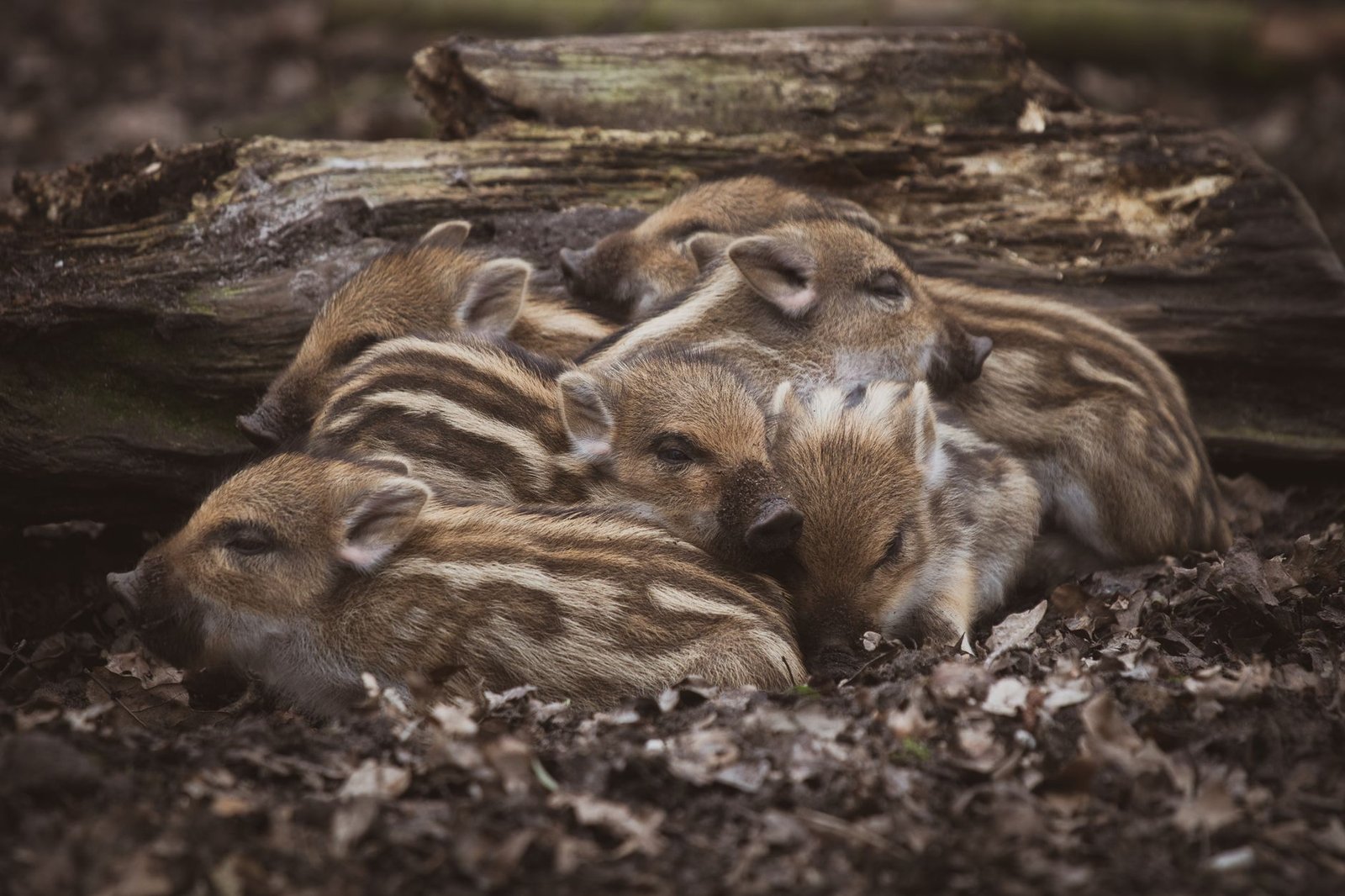
So how many babies do wild hogs have? On average, about five and a half per litter. A long survey of wild pigs on the Savannah River Site found 5.43 viable fetuses per pregnant female, with litters as small as one and as big as 12. That sits just above the U.S. average of about 5.3. The bigger catch is the timing. The sows were pregnant in every single month of the year, and the oldest, heaviest females carried the most piglets.
Three years inside a fenced-off forest. The work was led by Sarah Chinn of the University of Georgia’s Savannah River Ecology Laboratory, with James Beasley and colleagues, and it was published in August 2022 in The Journal of Wildlife Management. The Savannah River Site covers about 310 square miles (803 square kilometers) of pine forest, cypress swamp and bottomland oaks near Aiken. The U.S. Department of Energy has run it since the early 1950s. Farm pigs left behind when the land was taken over went feral, and wild boar hybrids were turned loose on and around the site in the 1980s. Hogs have been trapped and shot there since 1956. They keep winning: crews remove somewhere between 1,100 and 1,900 a year, and the population still topped 5,000.
Every sow got a full exam. From March 2017 to May 2020, the team examined 514 female hogs. Most came from the site’s ongoing control program. Each one was weighed, her teats were counted, and her rump fat was measured as a simple gauge of condition. A slice of ear went to a genetics lab. In pregnant sows, the researchers counted the fetuses and measured each one from crown to rump, which works like a growth chart: it tells you how many days along the pregnancy is. With a pig pregnancy lasting about 115 days, that let them work out when each litter was conceived and when it would have been born.
When wild hogs have babies
There is no off season. Of the 514 females, 160 were pregnant, a little under a third. Pregnant sows turned up in all 12 months. The share peaked between February and April, when close to half of the females sampled were carrying a litter, and it dipped in July and August. Nursing mothers were also present all year, which means there were dependent piglets on the ground year round.
Acorns set the clock. When the team worked backward from fetal age, conceptions clustered from November to February. That’s the hard mast season, when oaks drop acorns and other nuts that hogs gorge on. Births followed about four months later, peaking from March to June, with a smaller wave from November to January. Good years made a difference too. Sows sampled in 2017, after a heavy fall acorn crop, were more likely to be pregnant than sows sampled in the leaner years of 2018 and 2019.
Some sows double up. Four females were pregnant and still producing milk at the same time. All four were early in their new pregnancy. It’s a small number, but it shows how little rest a sow can take between litters when food allows.
How old wild hogs are when they start breeding
Babies having babies. About 17% of the juveniles, females under a year old, were pregnant. Their litters were smaller, about 4.3 fetuses on average against nearly 6 for adult sows older than three. Still, they count. Here’s the thing: a hog population doesn’t need to wait for its young to grow up before it starts adding the next generation.
A switch flips near 66 pounds. The team measured two reproductive hormones, progesterone and estradiol, in blood from 217 females. In young sows, both stayed low and flat until the animals reached about 30 kilograms (66 pounds), then climbed. The researchers read that as a size threshold for sexual maturity. Weight, not birthdays, seems to decide when a young female can breed, and on a site with plenty of food, a piglet can hit that weight within its first year.
The heaviest mothers carry the biggest litters. Litter size rose with a sow’s weight and age. That is why the authors single out large, older females as the core of the herd’s growth. One result looks odd at first: at any single moment, heavier and fatter sows were less likely to be pregnant. The authors offer a plausible reason. Many of those big females had probably just given birth. Pregnant sows had the most rump fat, about 0.45 inch (1.14 centimeters), while nursing mothers had the least, about 0.23 inch (0.59 centimeters). Milk is the most expensive stage of the whole cycle.
Why it matters that feral hogs are part wild boar
The wild boar blood didn’t move the needle. Most wild pigs in the United States are hybrids of escaped farm pigs and Eurasian wild boar. In Europe, wild boar litters grow bigger as domestic pig genes leak in. So the team expected boar ancestry to cut fertility. It didn’t. The sows ranged from about 6% to 61% wild boar ancestry, with an average near 24%, and that share had no clear link to whether a sow was pregnant or how many piglets she carried. Teat count didn’t matter either. Mixed ancestry is an old story in feral animals, as the DNA puzzle of the wild horses of Theodore Roosevelt Park shows, and here the mix left fertility untouched.
Some embryos never make it. Each released egg leaves a small scar on the ovary, called a corpus luteum. In 137 pregnant sows, the team counted 869 of those scars but only 751 fetuses. The gap means roughly 14% of embryos were lost early. Only 1.6% of the fetuses found were dead in the womb. Why the early losses happen is unknown. Separate surveillance on the site, not part of this study, found that most hogs tested carried antibodies to pseudorabies or swine brucellosis, two diseases known to hurt pig reproduction.
The best time to trap wild hogs, according to the data
Aim at the mothers. Honestly, the management advice follows straight from the numbers. Because the biggest, oldest sows produce the most piglets, the authors suggest putting removal effort into adult females and whole sounders, the family groups that travel together. They point to early winter, around the peak of conception, as a good moment to cull breeding sows in the Southeast. They also note that most births fall in spring and early summer, after the acorns are gone. Baited traps may work best then, when natural food is scarce. And because sows give birth all year, control can’t be a once-a-year push.
What the count can’t tell you. The study covers one population, in one part of South Carolina, so the authors are careful about stretching it. Their genetic test measured ancestry across the whole genome, not individual genes that might affect litter size. They mostly sampled females over 66 pounds, so they can’t say how often even smaller sows breed. Acorn crops were judged from field notes, not measured. The age structure was also skewed young, likely because hunters target big animals. Only about 9% of the sows aged by their teeth were older than four. And the links between weight, fat and pregnancy are patterns in the data, not proof of cause and effect.
The next count is elsewhere. Ancestry varies a lot from one hog population to the next, and the authors call for the same kind of work in other regions to see whether wild boar genes shift litter size or timing there. For anyone running traps in the meantime, the message from the Savannah River swamps is plain. A wild hog herd breeds every month, and its oldest mothers matter most.
The study at a glance
- Journal: The Journal of Wildlife Management, August 2022
- Type of study: Three-year field study of female wild pigs removed or captured on a federal site
- Sample: 514 female wild pigs on the Savannah River Site, South Carolina, March 2017 to May 2020
- Main finding: Wild sows were pregnant in every month and averaged 5.43 fetuses per litter, with larger, older females carrying the biggest litters.
- Limits: One population in one region; wild boar ancestry showed no effect here but may matter elsewhere.
Source: Chinn, S. M., Schlichting, P. E., Smyser, T. J., Bowden, C. F., and Beasley, J. C. “Factors influencing pregnancy, litter size, and reproductive parameters of invasive wild pigs.” The Journal of Wildlife Management 86, no. 8 (2022): e22304. https://doi.org/10.1002/jwmg.22304