 Editorial NexoScience
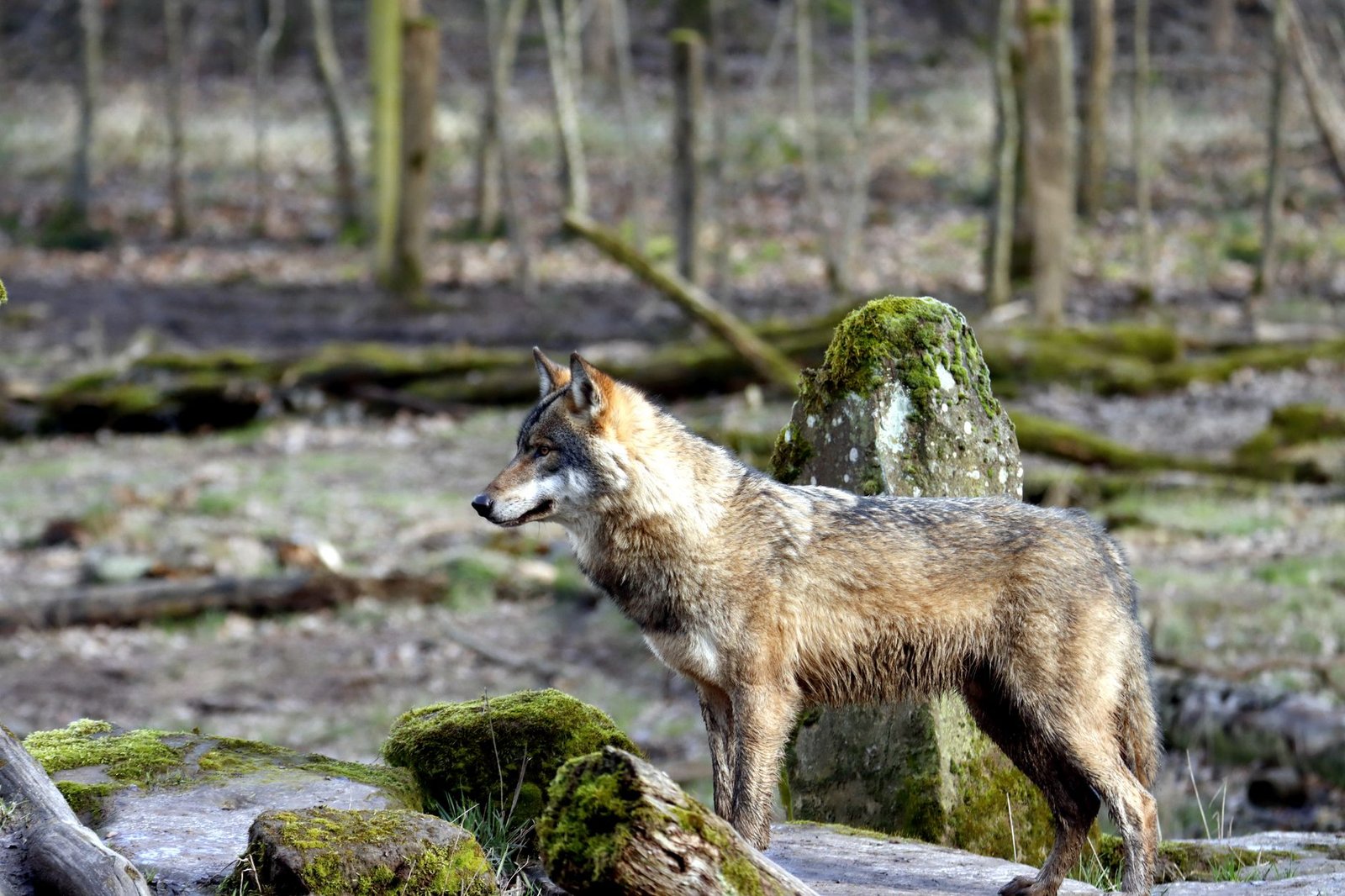
The red wolf got a head start in American law. When the Endangered Species Act took shape in 1973, the red wolf (Canis rufus) of the Southeast was among the first animals it protected, and a captive breeding program began soon after. It was protected even though people already knew it bred with coyotes. That old worry never went away, and it sits under every search for red wolf vs coyote: is the red wolf its own species, or something the two neighbors made together?
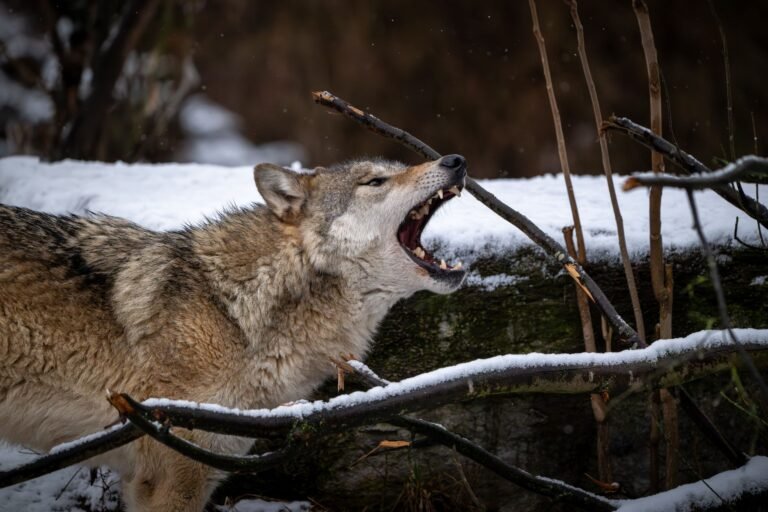
The genomes point to a mix. A team led by Bridgett vonHoldt and Robert Wayne sequenced whole genomes from wolves, coyotes and dogs and found that red wolves and the eastern wolf of Ontario carry little ancestry of their own. Both look like blends of gray wolf and coyote. Red wolves came out mostly coyote, with only about a tenth to a fifth of their DNA from gray wolves. The work appeared in July 2016 in the journal Science Advances.
That result cuts two ways, because the U.S. Fish and Wildlife Service had been using the eastern wolf as a reason to strip federal protection from the gray wolf. More on that below.
How closely related wolves and coyotes really are
Twenty-eight genomes, one dog yardstick. The researchers sequenced 28 canids: gray wolves from India, Iran, Mongolia and China, North American wolves from Mexico, Alaska and Yellowstone National Park, six wolves from the Great Lakes region, three red wolves from the captive colony, six coyotes, three dogs and a golden jackal. Every genome was lined up against the domestic dog reference genome, which gave the team about 5.4 million spots where the animals differ, known as SNPs (single letters of DNA that vary between individuals).
The family split is younger than anyone thought. Older estimates, built on short stretches of mitochondrial DNA, put the split between gray wolves and coyotes at around a million years. The whole genomes suggest about 51,000 years. The genetic distance between the two species turned out to be similar to the distance between human populations on different continents, and barely larger than the distance between Eurasian and North American gray wolves. For all their difference in size, coyotes (Canis latrans) and gray wolves (Canis lupus) are close cousins.
That closeness is what makes a wolf coyote hybrid possible at all. Earlier work had already shown that the two can produce viable offspring in captivity. And the in-between body size of red and eastern wolves fits the idea that they come from that kind of cross.
A wolf coyote hybrid zone that runs south to north
The coyote share climbs as you head east and south. Using a test that counts shared DNA variants (called the D statistic, or the ABBA-BABA test), the team measured how much coyote ancestry each North American wolf carried. Wolves from Alaska and Yellowstone had about 8%. Wolves from the Great Lakes region had about 22% to 24%. Wolves from Algonquin Provincial Park in Ontario, where the purest eastern wolves are thought to live, had at least a third. Two animals from Quebec had more than half.
One of those Quebec animals was labeled a wolf in the field. Its genome showed no detectable gray wolf ancestry at all. The authors concluded it was most likely a coyote, and that DNA is a safer guide than a field label in a zone where hybrids vary so much in looks.
The map follows the history of the bounty. Wolves vanished first from the South and East, as forests turned into farmland and private, state and federal bounties spread from the 1880s on. A lone wolf with no other wolves around has few choices, so the last ones mated with coyotes. That happened early and completely in the South, which is why red wolves carry so much coyote. In the Great Lakes, coyotes arrived only around the turn of the last century, and gray wolves never disappeared there, so the local wolves kept more wolf DNA. Coyotes and their hybrid offspring then pushed on through Ontario, Quebec and New England, a spread you can follow in how eastern coyotes moved east along two routes. People often call those big northeastern animals coywolves.
The eastern wolf in Algonquin, tested for unique DNA
A real species should leave fingerprints. If the eastern wolf (Canis lycaon) and the red wolf were old North American lineages that later mixed with wolves and coyotes, their genomes should still hold variants found in neither parent. So the team counted how many DNA variants in each animal were missing from a reference panel of four Eurasian wolves and three unmixed coyotes.
The coyotes looked more unusual than the wolves. Ordinary coyotes outside the reference panel had the most new variants, about 5.1%. Red wolves had about 4.4%, Algonquin wolves about 3.8%, and other Great Lakes wolves about 3.6%. North American gray wolves came in at 3.3%. Here’s the twist: animals of the same species as the reference coyotes looked more novel than the two supposed separate species. That is the opposite of what an ancient, independent wolf would produce.
Could a few genomes simply miss the evidence? The authors argue they would not, and they use people to make the case. Each genome holds pieces of a huge number of ancestors: go back 20 generations and one animal descends from more than a thousand of them. Neanderthals died out over 30,000 years ago, yet almost every European still carries a small trace of their DNA, under 2%, and scientists find it easily. A distinct wolf that once lived around the Great Lakes should have left a mark like that. The six Great Lakes genomes, including two from Algonquin, showed none.
Even a friendly model needs a lot of mixing. The team also ran a computer model that assumed, on purpose, that the red and Great Lakes wolves began as separate branches. To match the real genomes, the model still needed heavy gene flow: coyotes contributed roughly half or more of the red wolf, and gray wolves supplied a large share of the Great Lakes wolf.
What it means for the red wolf and the Endangered Species Act
A new species became a reason to drop an old one. The Fish and Wildlife Service accepted the eastern wolf as a species whose historic range covered the Great Lakes and 29 eastern states, with no gray wolves there. Because the 1975 gray wolf listing had included that range, the agency proposed that the whole listing was wrong and that the gray wolf, apart from the Mexican wolf, should lose protection across North America. The authors say their results undercut that reasoning. In their data, only two distinct wolf-like species live in the Great Lakes: the gray wolf and the coyote, plus their mixes.
The authors don’t want hybrids written off. They argue that the law leans on a rigid, Victorian idea of species, and that what matters more is the role an animal plays. Smaller wolves like the Great Lakes wolf and the red wolf may suit the patchy forests of the East better than big western gray wolves that need wide wild country and large prey. They point to “ecological authenticity,” the idea that a hybrid doing the job of the native animal, and carrying part of its DNA, deserves protection.
Think of it this way. In Yellowstone, after gray wolves returned, coyote numbers dropped and no wolf coyote hybrids have been seen. Protecting good wolf habitat around the Great Lakes could let the wolves there drift back toward gray wolf genes on their own. The red wolf in eastern North Carolina has no such fallback. With gray wolves gone from the South, the authors wrote that the wild population is “doomed to genetic swamping” by coyotes unless people keep managing the hybrids.
The sample was small, and the debate stayed open. The study rests on a few animals: two red wolves in the unique-DNA count, all from a captive colony that started with 12 founders, and six Great Lakes wolves. The authors acknowledged that more genomes might still turn up pieces of an extinct North American wolf, and they noted that their main admixture estimate tends to undercount older mixing. Other researchers read earlier DNA data differently and found signs of a distinct eastern wolf cluster in central Ontario. Genomes measure ancestry. Where to draw a species line is still a call people have to make.
That call keeps coming back as coyotes grow larger in the East and wolves return to old ground. The next round has to come from more genomes, which is exactly where the authors left the door open: enough red and eastern wolves, sequenced end to end, to show whether any trace of a lost American wolf is still hiding in them.
The study at a glance
- Journal: Science Advances, July 2016
- Type of study: Whole-genome sequencing and ancestry analysis of wild and domestic canids
- Sample: 28 genomes, including gray wolves, Great Lakes wolves, red wolves, coyotes, dogs and a golden jackal
- Main finding: Red wolves and eastern wolves are mixes of gray wolf and coyote with little unique ancestry, and red wolves are mostly coyote.
- Limits: Few red and Great Lakes wolves were sequenced, and the red wolves all came from a captive colony.
Source: Bridgett M. vonHoldt, James A. Cahill, Zhenxin Fan, Ilan Gronau, Jacqueline Robinson, John P. Pollinger, Beth Shapiro, Jeff Wall and Robert K. Wayne, “Whole-genome sequence analysis shows that two endemic species of North American wolf are admixtures of the coyote and gray wolf,” Science Advances, 2016. DOI: 10.1126/sciadv.1501714.