 Editorial NexoScience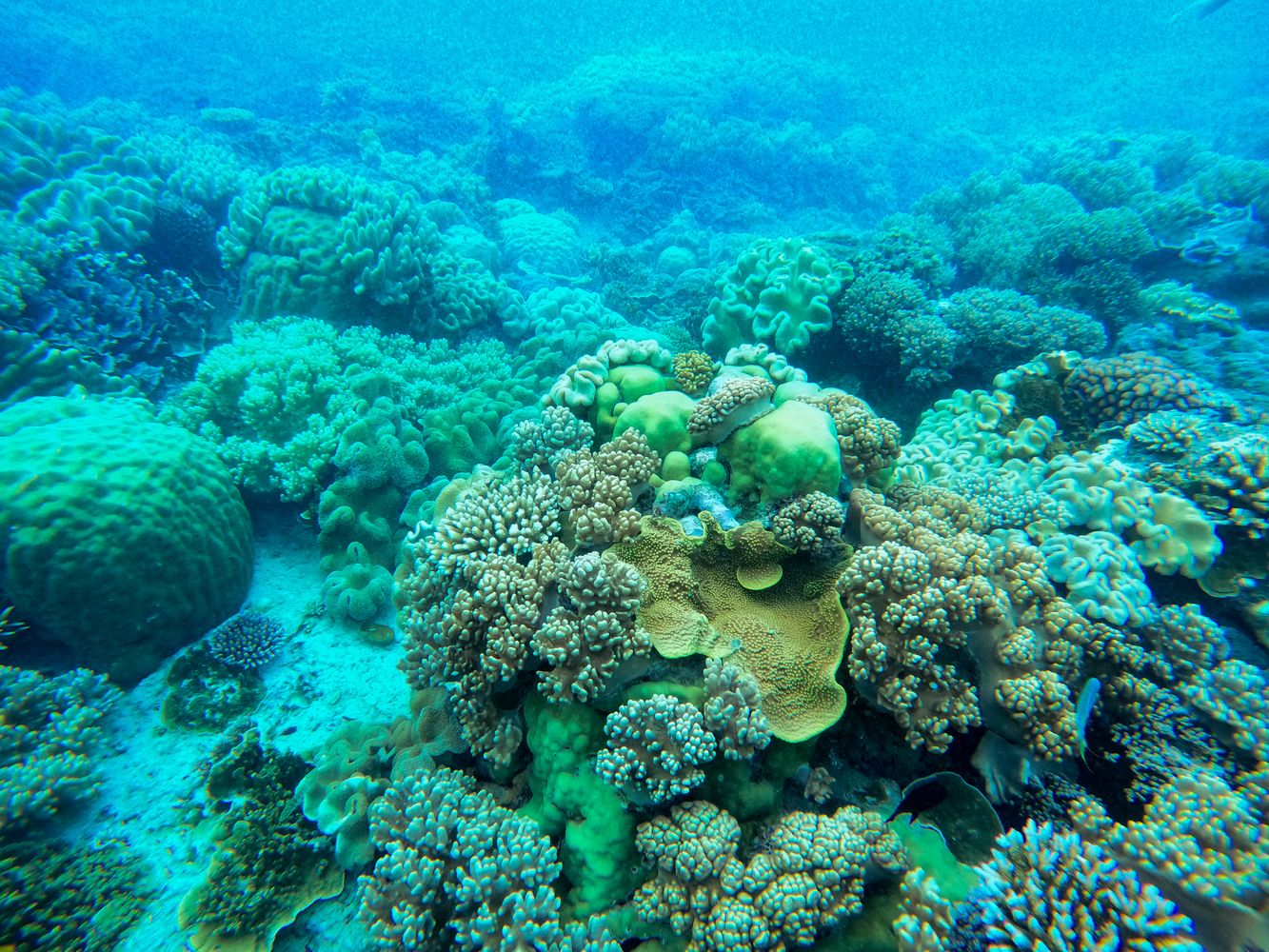
Not every coral bleaches the same way in the same heatwave, and that stubborn fact just became the reef world’s best hope. A team of marine biologists working in Palau has shown, for the first time in adult, reproductively mature coral colonies, that heat tolerance can be passed down from parent to offspring, and that breeding for it actually works.
The idea has been floating around science for years, but nobody had tested it on grown-up corals. Marine heatwaves are hitting reefs more often, for longer, and with less time to recover between events. Scientists have proposed “assisted evolution,” selectively breeding corals the same way farmers breed drought-resistant wheat or cold-hardy spruce, as one tool to help reefs keep up. Whether it could work depended on one unanswered question: is heat tolerance actually heritable in corals, or is it mostly luck and local conditions?
To find out, researchers at the Palau International Coral Reef Center tested Acropora digitifera, a common reef-building coral, for its response to two kinds of simulated marine heatwave: a sharp one-week spike of 3.5°C above normal, and a longer, gentler one-month rise of 2.5°C. They ranked colonies by how well they survived, then paired the toughest with the toughest and the most fragile with the most fragile, seven parent colonies to a group, and raised the offspring for three to four years until they were adults themselves.
The gamble paid off. Offspring of two heat-tolerant parents withstood roughly one extra degree-week of heat stress compared to offspring of two heat-sensitive parents, a small but real edge. The narrow-sense heritability of heat tolerance, essentially how much of the trait’s variation is passed genetically from parent to offspring, came out at 0.29 for short heatwaves and 0.23 for long ones. In plain terms, somewhere between a quarter and a third of a coral’s ability to survive a heatwave traces back to its parents, not just to chance or its particular patch of reef.
There is a catch, and it matters. Breeding corals to survive a short, sharp heat spike did not make their offspring any better at surviving a long, drawn-out heatwave. The two traits showed no meaningful genetic correlation, meaning a coral bred to shrug off one week of extreme heat could still die in a month-long marine heatwave, the kind that actually devastates reefs in the real world. That matters because short heat-stress tests are the fast, cheap way to screen corals in a lab, while the long, month-scale tests that matter most for real reefs are expensive and hard to scale.
The researchers are candid about the limits of what they found, too. Because breeding and rearing corals to reproductive maturity takes years, they could not repeat the experiment across multiple generations or populations, so they cannot completely rule out that some of the difference between groups came down to random genetic drift rather than selection itself. And the size of the improvement they measured, about one degree-week, is modest next to the pace of ocean warming projected for the coming decades.
None of that makes the finding a disappointment. It is the first solid evidence that adult coral heat tolerance is heritable enough for selective breeding to be worth pursuing at scale, not just in theory. The authors are careful to frame it as one tool among several, not a fix. As they put it, any real payoff from breeding tougher corals only holds up if reef managers also tackle local stressors like pollution and overfishing, and if the world cuts carbon emissions fast enough that reefs are not asked to out-breed a warming ocean.
Study: Humanes A, Lachs L, Beauchamp E, et al. “Selective breeding enhances coral heat tolerance to marine heatwaves.” Nature Communications, 2024. DOI: 10.1038/s41467-024-52895-1.