 Editorial NexoScience
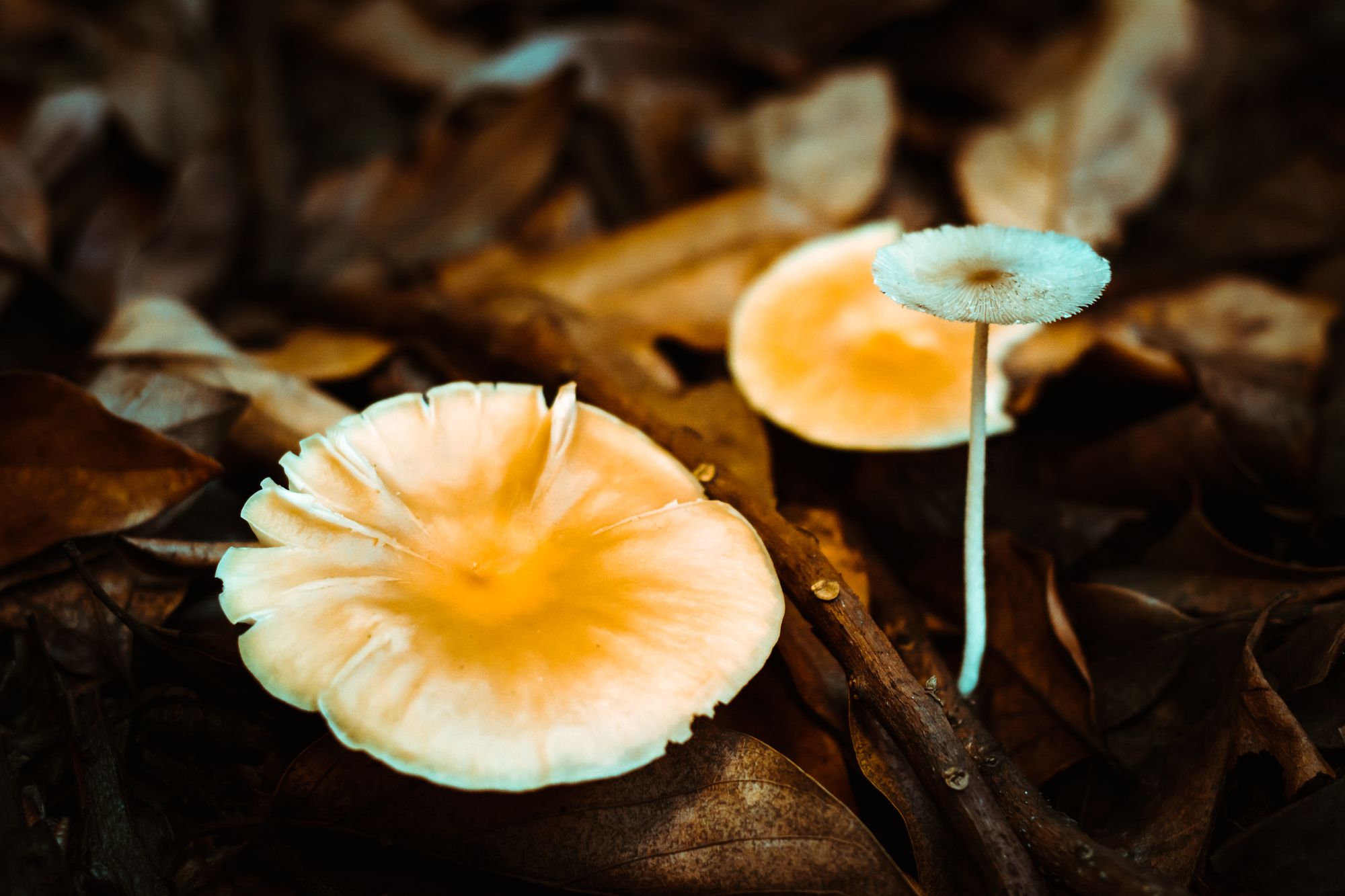
Some farmers in southwestern China found a strange yellow growth sprouting from the roots of dying trees, and a few of them took a bite. Then they did the sensible thing. They sent photos to scientists and asked whether it was safe to eat. The scientists still can’t answer that question. What they can say is that nobody had ever named the thing.
The giant fungus is now called Dianjunus rex, or D. rex. Its upright fruiting bodies reach about 20 inches (50 centimeters) tall, and the heaviest the team weighed came to about 4.9 pounds (2.2 kilograms). It’s so different from its relatives that it gets a new genus and a whole new family, Dianjunaceae. And its DNA holds the dinosaur link: a genetic clock puts the family’s origin at about 65 million years ago, right after the asteroid impact that wiped out the non-bird dinosaurs. The work, by a team at the Kunming Institute of Botany and partner institutions, was published Sept. 28 in the journal Frontiers in Fungal Biology.
It’s a sac fungus, and that’s what makes the size so odd. D. rex belongs to the Ascomycota, the sac fungi, a huge group that includes morels, truffles and many molds. They make their spores inside tiny sacs. The part you can see above ground is the fruiting body, the structure that carries those spores while the rest of the fungus stays hidden in soil or wood. In most sac fungi, that fruiting body is small. Picture a fingertip, not a pineapple.
How big the giant fungus D. rex gets
Taller than a bowling pin. The fruiting bodies grow 8 to 20 inches (20 to 50 cm) tall in total. Only the top 4 to 8 inches (10 to 20 cm) makes spores. Below that, a black, smooth stalk can run 8 to 12 inches (20 to 30 cm) into the soil. The shapes vary a lot. Young ones often have a bulb-like tip. Older ones split into finger-like or palm-like branches, coated in a powdery, fibrous fuzz that starts whitish and turns dark yellow with age. Inside, the flesh is spongy and off-white to yellow. It has no strong smell or taste, the authors note, and it dries out fast once picked.
Three forests, one fungus. The team first collected D. rex in August 2024 near Kunming, in Yunnan Province, growing from the roots of Chinese cork oak (Quercus variabilis). In July 2025 they found more in a tropical rainforest in Xishuangbanna, on the trunk and roots of a decaying tree, and in Lufeng, again on oak roots. The rainforest specimens were bigger than the subtropical ones. In every case, the fungus showed up after its host plant had died or was dying.
Its closest look-alikes are tiny. D. rex sits in the order Xylariales, next to fungi with spooky common names. Candlesnuff fungus (Xylaria hypoxylon) and dead man’s fingers (Xylaria polymorpha) make dark, club-shaped fruiting bodies about 2 to 3 inches (5 to 8 cm) tall. D. rex is pale, less branched and many times larger. Think of a family of house cats with one cousin the size of a big dog.
The largest fungus species and where D. rex fits
Biggest depends on what you measure. If you search for the biggest fungus, you’ll meet the “humongous fungus” of Oregon, a honey fungus (Armillaria ostoyae) whose threads spread underground across nearly 4 square miles (about 10 square kilometers). That’s a record for a single organism’s spread, and almost all of it is invisible. D. rex claims something else: the largest fruiting body ever documented among the sac fungi. Honey fungus doesn’t compete here, because it belongs to the other big group, the mushroom-forming club fungi.
The record comes with a footnote. The paper itself mentions a rival. A bamboo fungus from Kenya, Engleromyces goetzei, once formed a two-lobed mass about a foot (30 cm) across that weighed roughly 7 pounds (3.2 kg), heavier than any D. rex the team weighed. The authors still rank D. rex’s fruiting bodies as the largest in the group, and its height and upright shape set it apart. But “largest” here is a judgment about size and form, not a clean win on the scale.
A fungus family born after the dinosaurs died
Genes placed it on a branch of its own. The team read four standard marker genes from five collections and compared them with about 200 other fungal strains. Then they sequenced the full genomes of three fruiting bodies and built a family tree from 302 genes shared across 66 fungi. Every method gave the same answer. D. rex forms its own branch, a sister to a family called Graphostromataceae, with maximum statistical support. The name nods to the ancient Dian Kingdom of Yunnan and to “jūn,” a Chinese word for fungus. The “rex,” Latin for king, is for its size.
The clock stops near the asteroid. Using known fossil-calibrated dates as anchors, the researchers estimated when the D. rex lineage split from its relatives: about 65 million years ago, with a range of 50 to 80 million. That lands near the end-Cretaceous extinction, when an estimated three quarters of plant and animal species vanished. “During the dark, cold, postimpact years after the mass extinction, fungi that decompose dead organic matter could keep functioning better than light-dependent photosynthesizers,” Indunil Chinthani Senanayake, a mycologist at the Kunming Institute of Botany and one of the study’s taxonomists, told Science News. A world full of dead wood was, in a grim way, a fungal buffet.
Its genome travels light. Fungi break down plant matter with enzymes that cut up sugars and fibers. Typical wood-rotting relatives such as Xylaria carry roughly 420 to 640 genes for these enzymes. D. rex has about 220, less than half. It has almost no genes for pectin lyases, the enzymes that pry apart plant cell walls (zero or one, against 7 to 19 in close relatives). Instead, a large share of its kit builds the fungus’s own cell walls.
A quiet lodger, then a builder. The authors offer a working hypothesis. D. rex may live for years inside living roots without harming them, the way many fungi in this order do. When the tree dies, it switches to feeding on the remains and pours that carbon into its huge fruiting bodies. Here’s the twist: a fungus that doesn’t wreck walls makes a polite houseguest, and that politeness may be what lets it grow so big at the end.
What scientists still don’t know about the giant mushroom from China
Five collections can only say so much. The whole description rests on five specimens from three sites in one Chinese province. Nobody knows yet how widespread D. rex is or how big it can really get. The age estimate has a 30-million-year spread, and molecular clocks depend on the dates used to calibrate them. Timing also isn’t cause. That the family appeared near the extinction is a coincidence in the data; the authors suggest it “may reflect” an adaptive burst into empty niches, which is an idea, not a finding. The lifestyle story comes from what’s missing in the genome, not from watching the fungus inside a living root.
And the farmers’ question is still open. The paper reports no tests of whether D. rex is edible or toxic. Truth is, that’s normal for a species described weeks ago, and it’s a good reason not to try it. Yunnan is a fungal hotspot, with more than 6,000 species recorded and perhaps over 100,000 still out there, according to estimates the authors cite. Some of those hidden species are tiny. Others, apparently, reach knee height and were growing in plain sight. Microbes keep surprising scientists in other ways too, like the fire amoeba that survives heat no complex cell was thought to handle. The authors’ own conclusion is simple: the forests of East Asia are far from fully explored.
Source: Song, J., Yan, Z., Pérez-Moreno, J., Zhang, F., Yang, S., Xie, T., et al. “Unearthing a fungal giant: Dianjunaceae fam. nov., a novel Paleocene lineage of Xylariales harboring Dianjunus rex gen. et sp. nov.” Frontiers in Fungal Biology (2026). DOI: 10.3389/ffunb.2026.1940464