Editorial NexoScience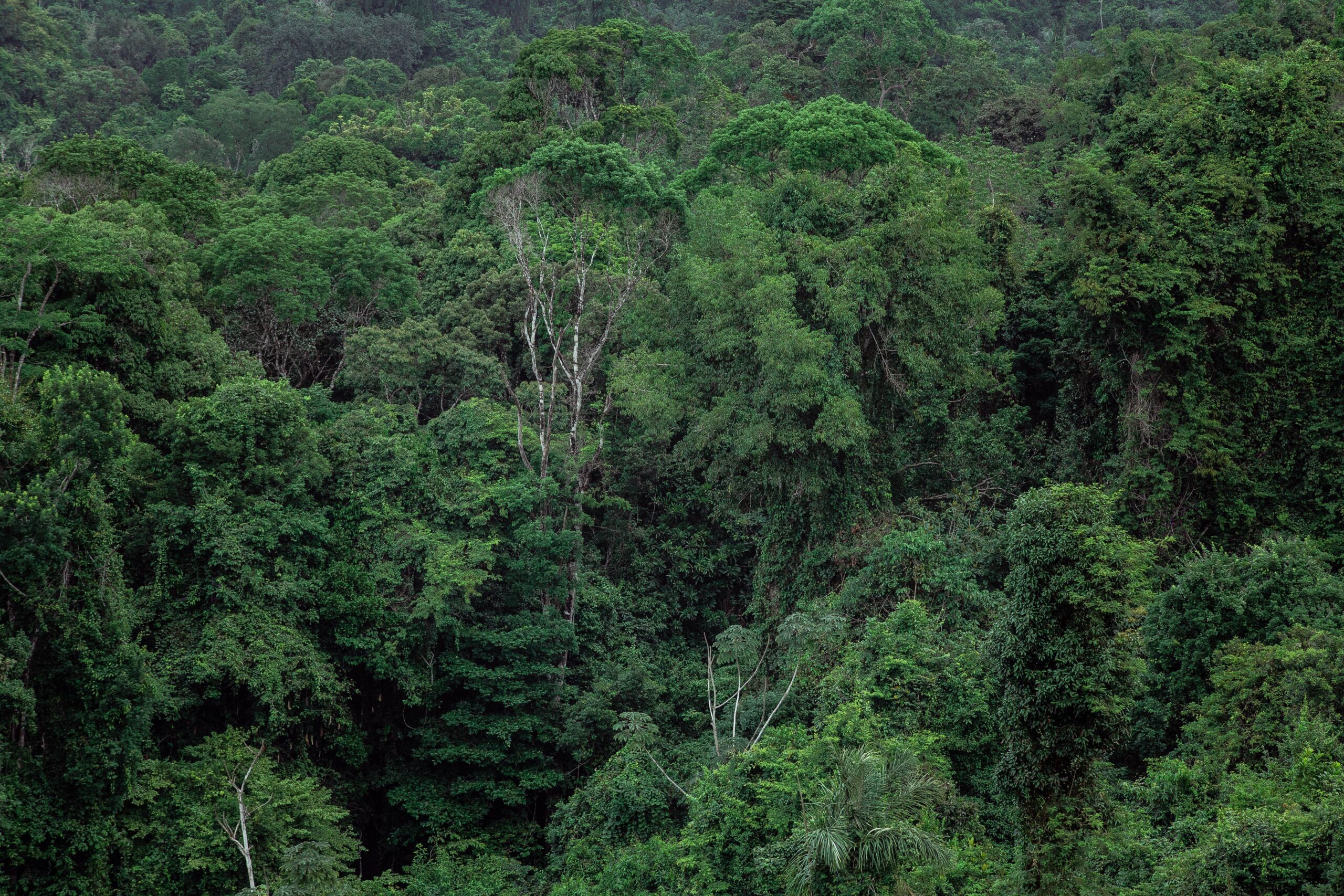
In 1982, an entomologist counted the beetles living in the canopies of 19 trees of a single Panamanian species and extrapolated from that handful to the whole planet, arriving at a startling figure: perhaps 30 million invertebrate species in tropical forests. Six years later, E.O. Wilson’s book Biodiversity cited that work to declare that tropical rainforests contain more than half of the world’s living things. The sentence escaped into the scientific literature and never came back.
That near mantra has been repeated for more than 30 years without anyone testing it properly. A team of ecologists has now done so for the animals we know best, and the claim holds up. Tropical forests are home to 62% of the world’s land vertebrate species, more than twice as many as any other biome on Earth, the researchers reported in the journal Frontiers in Ecology and the Environment. They manage that while covering less than a fifth of the planet’s land surface.
The count came from maps, not from new expeditions. The team took the established geographic range maps of every known species of land mammal, bird, reptile and amphibian, close to 34,000 in all, and laid them over maps of the tropical forest biome, the band of moist and dry forests that straddles the equator. To avoid counting animals that merely pass through, they cross-checked every overlap against the International Union for Conservation of Nature (IUCN) Red List, keeping only species actually reported to inhabit tropical forest habitats rather than species whose mapped range happens to clip the biome.
Reptiles are the only group that breaks the pattern. Fewer than half of the world’s reptile species occur in tropical forests, while roughly three-quarters of amphibians do. The authors are careful with that result: reptiles remain one of the most understudied groups of land vertebrates, and the habitat needs of nearly a third of the reptiles whose ranges overlap tropical forests have never been documented at all. That figure, they noted, almost certainly undercounts the real total.
Almost a third of land vertebrates live in tropical forests and nowhere else. Picture every land vertebrate on Earth standing in a single line: close to two in three would be inside a tropical forest, and up to 29% of the line would have nowhere else on the planet to go. Amphibians are the extreme case, with as many as four in ten of the world’s species confined to these forests. That exclusivity comes with a bill. In every group, at least a fifth of those endemic species are already threatened with extinction, and among endemic amphibians the share climbs to roughly four in ten.
The wet forests and the Americas do most of the heavy lifting. Of the roughly 21,000 vertebrate species that live in tropical forests, more than nine in ten turn up at least partly in the humid tropics, the drenched forests most people picture when they hear the word rainforest. The Neotropics, the American tropics, hold nearly half of all tropical forest vertebrates on their own, and more than half of the tropical forest amphibians. The forests also serve as a winter address: of the 643 migratory bird species that winter there, more than 200 were found to be highly dependent on them.
The answer still covers only a sliver of life on Earth. The authors acknowledged that their conclusions stop at terrestrial vertebrates, the best studied animals on the planet. Of an estimated 8.7 million species on Earth, barely more than one in a hundred has been comprehensively assessed, and among land species only mammals, birds, amphibians and reptiles have their ranges properly described. The insects and other invertebrates that inspired the original claim remain uncounted. A revised estimate puts tropical arthropods at 6.1 million species, most of them assumed to live in humid tropical forests, but the authors write that assumptions like that demand rigorous testing as comparable data become available.
The study says where species are, not why they are there. This is a mapping exercise built on range maps and habitat records, so it describes distribution rather than the ecological and evolutionary machinery that piles up life near the equator, and its precision depends on how good those maps are. The authors also warned against reading the result as permission to write off other biomes. Earlier work found that places where tropical forest and grassland meet can hold comparable vertebrate richness, and every biome contains irreplaceable habitats and species of its own.
The harder question is the one Erwin was actually asking. Amphibian declines and the knock-on collapses that follow them have hit hardest in the tropics, and the continued clearing of humid forest for farming and timber, with losses accelerating in the Amazon, points toward extinctions among precisely the animals this study counted. Whether the beetles, ants and moths that started the whole argument follow the same pattern is still unknown, and will stay unknown until somebody maps them the way vertebrates have now been mapped.
Study: Rajeev Pillay, Michelle Venter, José Aragón-Osejo, Pamela González-del-Pliego, Andrew J. Hansen, James Watson and Oscar Venter, “Tropical forests are home to over half of the world’s vertebrate species”, published in Frontiers in Ecology and the Environment (2021). DOI: 10.1002/fee.2420.