 Editorial NexoScience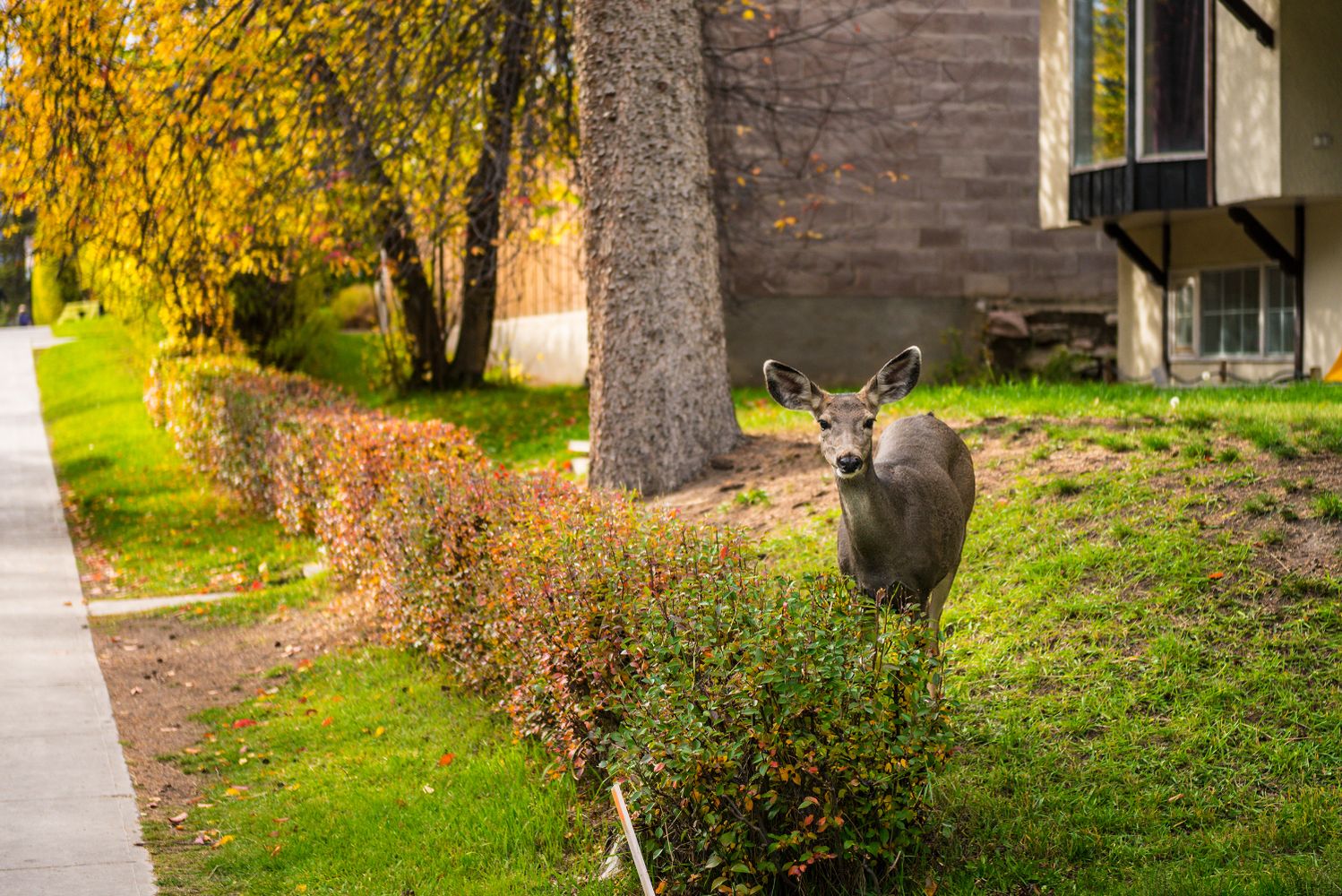
In 1900, roughly 1.6 billion people lived on Earth. Today there are more than 8 billion, and almost none of that growth happened in empty space. It happened on land that wild animals already called home.
A sweeping new global analysis just measured exactly how much that shared space is about to grow. Published in Science Advances, the study combined spatial data on human population density with the projected ranges of 22,374 species of terrestrial amphibians, birds, mammals, and reptiles, then modeled how much the two would overlap by 2070 under 15 different combinations of population growth and climate change scenarios.
The headline number is stark. Human-wildlife overlap is projected to increase across 56.6% of the Earth’s land surface by 2070, while it will shrink across only 11.8%. Nearly half of all land on the planet, 46.5%, is on track to see that overlap literally double. Only 6.1% will see it cut in half.
It would be easy to assume climate change is the main culprit, pushing animals into new territory where people already live. The data says otherwise. In 65.1% of the areas where overlap is rising, the real driver is that human population density is climbing while local species richness is actually falling. Climate driven shifts in wildlife ranges played a much smaller role. In other words, it is not that animals are moving toward us. It is that we keep spreading toward them.
The regional picture is uneven. Africa and South America will feel it the most. About 70.6% of Africa’s land area and 66.5% of South America’s are projected to see rising overlap by 2070, compared with 38.5% of North America and 25.9% of Oceania. Europe stands out in the opposite direction, with the largest share of land, 21.4%, actually seeing overlap decline. Overall, 178 countries are expected to see overlap grow over the next 50 years.
Forests carry some of the heaviest costs. In Africa alone, an estimated 9.36 million square kilometers of forest are projected to gain overlap, against just 918,000 square kilometers losing it. But those same forests are where wildlife richness is expected to fall the most: mammal richness down by a median of 33.4% in South American forests and 21.3% in African forests, amphibians down 45.4% and reptiles down 40% in South America, birds down 36.8% in South America and 26.1% in Africa. More people are moving in just as fewer species are able to stay.
Farmland tells a similar story with a practical twist. Croplands gaining overlap are losing the birds that protect them. Among croplands projected to see rising overlap, 70.2% are also expected to lose insect eating bird species, the same birds that naturally keep crop pests in check. Grasslands show a parallel pattern with large carnivores, the species that sometimes prey on livestock: 56.3% of grasslands with growing overlap are projected to lose carnivore richness rather than gain it.
Cities are not exempt either. Urban overlap is set to rise almost everywhere, too, largely because human density in newly urbanized areas is expected to grow by about 1.9 times by 2070, easily outpacing any drop in local species richness. That matters for more than aesthetics. Urban predators and scavengers help suppress diseases like rabies, anthrax, and bovine tuberculosis in the environments where people actually live, so losing them is not a neutral trade.
It is worth being clear about what a projection like this can and cannot promise. The model is built on climate driven range shifts and population forecasts across 15 combined scenarios, not a single guaranteed future, and it does not account for factors that are hard to forecast at a global scale, like habitat destruction, hunting pressure, disease outbreaks, or the expansion of protected areas. The researchers frame their numbers as hot spots and cold spots worth watching, not a fixed prophecy.
The takeaway is less about any single number and more about timing. Setting aside protected land often clashes with the needs of the people living nearby, but knowing in advance where overlap is about to surge, whether in an African forest, an Asian cropland, or a fast growing city, gives conservation planners and local communities a rare chance to prepare for coexistence before the crowding actually arrives.
About this article
This piece is based on the peer reviewed study “Global expansion of human-wildlife overlap in the 21st century,” by Deqiang Ma, Briana Abrahms, Jacob Allgeier, Tim Newbold, Brian C. Weeks, and Neil H. Carter, published in 2024 in Science Advances, open access under a CC BY license. DOI: 10.1126/sciadv.adp7706.