 Editorial NexoScience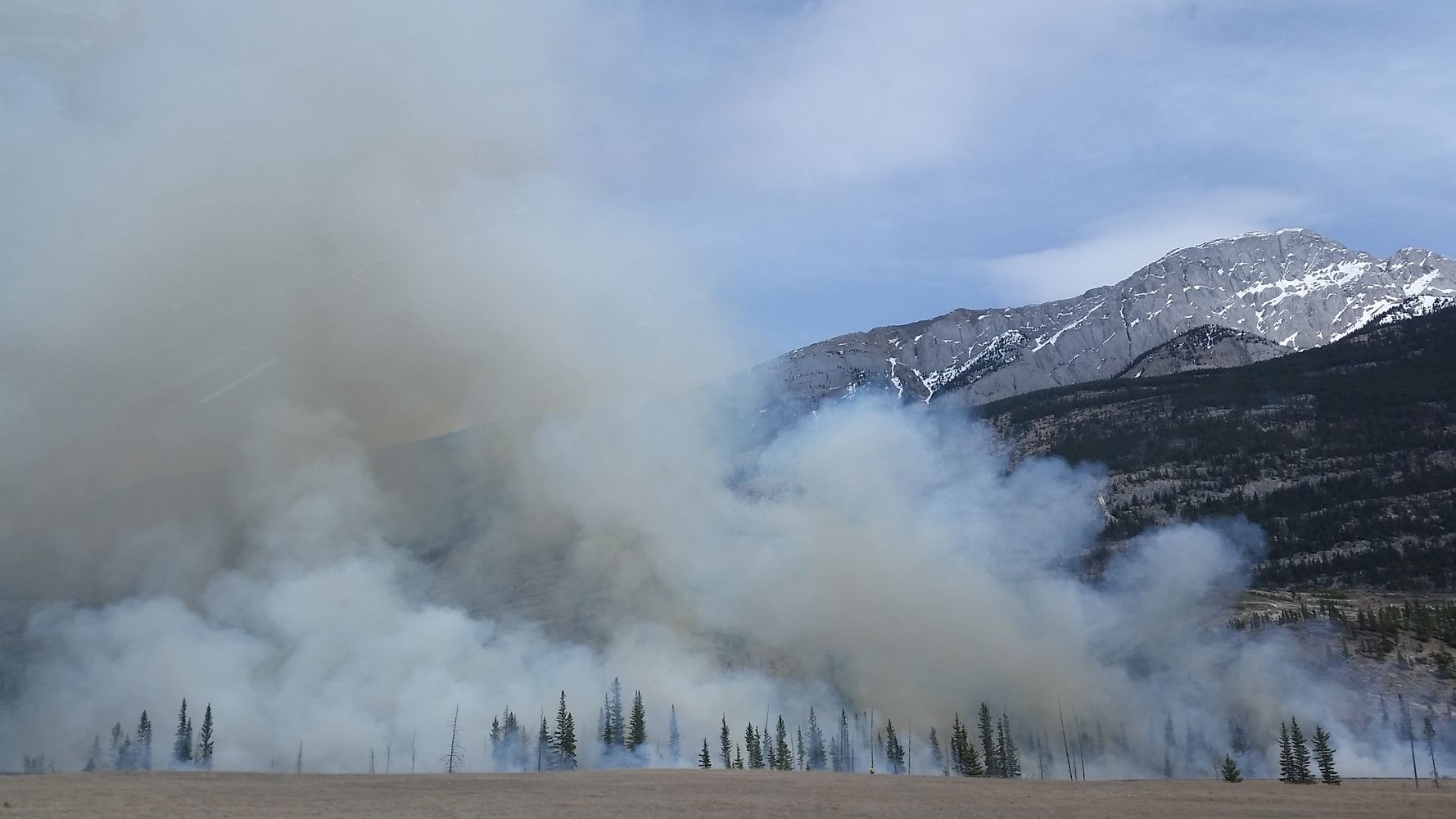
Smoke thick enough to blot out the sun over cities a thousand kilometers from the nearest flame, with haze that eventually drifted as far as western Europe. That was Canada’s summer of 2023, and a team of fire scientists at Natural Resources Canada has now put hard numbers on just how extreme that season really was, drawing on satellite fire mapping, weather reanalysis and national evacuation records rather than anecdote.
The area burned shattered every record on the books. Roughly 15 million hectares of forest went up in flames between mid April and late October, more than double the previous record of 6.7 million hectares set in 1989 and about seven times the historical annual average. Quebec, the Northwest Territories, British Columbia and Alberta each posted their worst fire year ever recorded, and a single fire complex burned through more than a million hectares on its own, the largest since 1950.
Heat and drought set the stage months before the first spark. Much of the country lost its snow cover unusually early, and the mean temperature across the May to October fire season came in 2.2 degrees Celsius above the 1991 to 2020 average, a gap researchers note is already close to what climate models project as a typical summer around 2050 under a high emissions scenario. Lightning still caused most of the burning, starting fewer fires than a typical year but landing on ground so dry that a larger share of them grew out of control.
The paper itself is a descriptive accounting of the season rather than a formal attribution study, and its authors are careful about that distinction. But it leans on separate research that already ran the numbers on specific events: one analysis found that human caused climate change made the 2021 heat dome that primed British Columbia for fire roughly 150 times more likely, and another traced a direct line from global warming to the extreme fire activity that hit Quebec in 2023. Combined with a season long pattern of record heat and stalled weather systems, the case for climate change as the dominant driver is considerably stronger than a single hot summer would suggest on its own.
Firefighting capacity buckled under the strain. Canada declared its highest national preparedness alert, signaling that domestic resources were no longer enough, and kept it in place for a record 120 straight days. More than 5500 firefighters from a dozen countries and the European Union flew in to help, on top of over 1700 personnel redeployed within Canada itself.
The human cost was just as extreme as the fire numbers. Around 232000 people were evacuated across 282 separate events, the most of any fire season since national records began in 1980, and some towns were forced out of their homes twice in the same year. Eight firefighters lost their lives. Environment and Climate Change Canada issued roughly 5000 air quality alerts in 2023 alone, compared with an average of about 1300 a year over the previous five years, and some regions spent more than 60 days breathing air that failed national health standards.
The forest itself may take decades to recover in places. More than a million hectares of young forest, stands too immature to have built up a seed bank, burned in 2023, and researchers estimate that hundreds of thousands of hectares of Quebec’s commercial forest alone could fail to regenerate naturally as a result. Combined with logging history, drought and insect outbreaks, that kind of failure can push boreal forest toward open grassland or shrubland instead of growing back as forest at all.
The study, “Drivers and Impacts of the Record-Breaking 2023 Wildfire Season in Canada,” was led by Piyush Jain and colleagues at Natural Resources Canada and published in Nature Communications in 2024 (DOI: 10.1038/s41467-024-51154-7).