 Editorial NexoScience
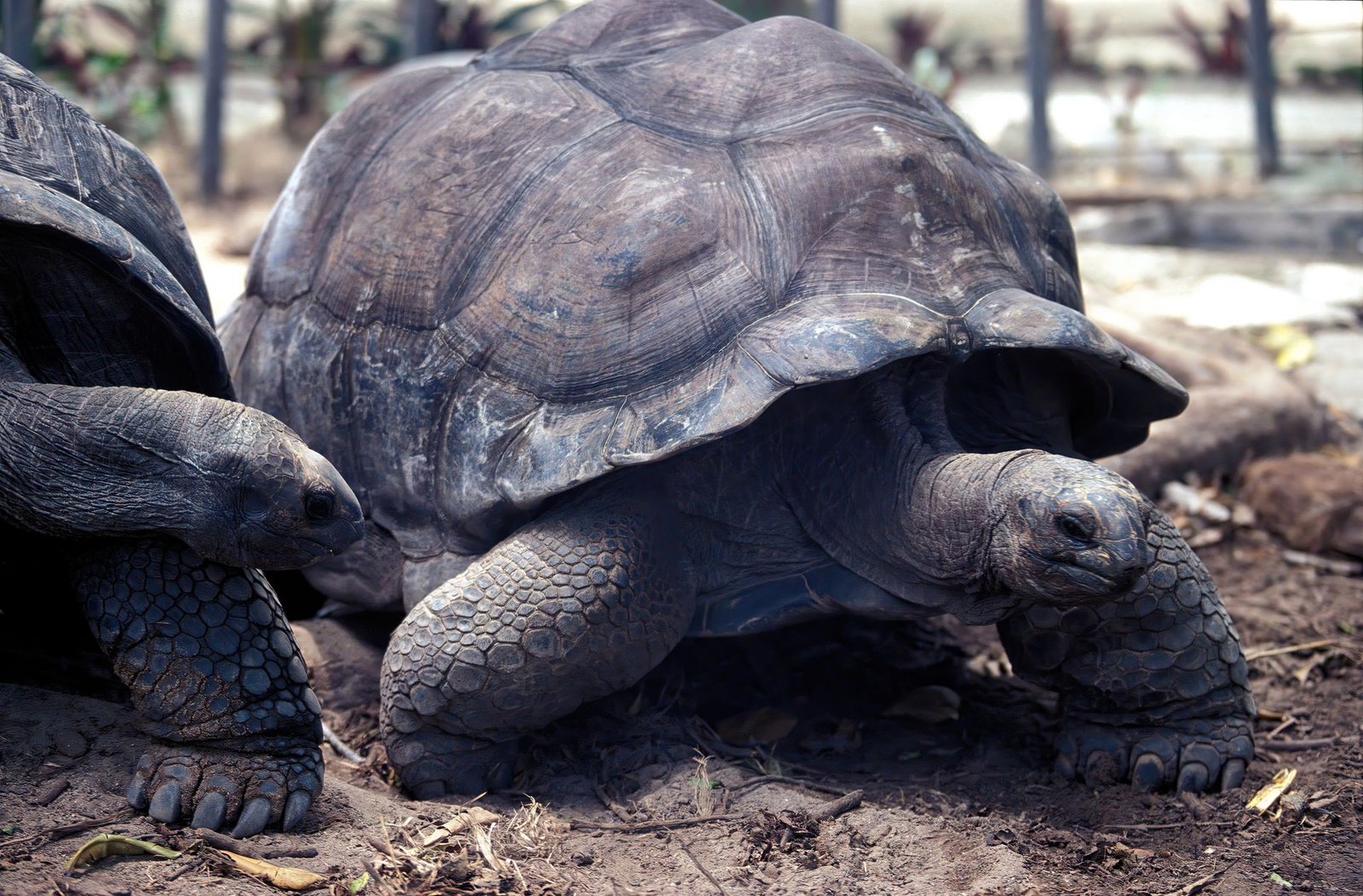
Fewer than a thousand. That’s roughly how many giant tortoises were left on Aldabra Atoll, in the western Indian Ocean, after heavy exploitation in the 1800s. For a reptile that can outlive the people who study it and breeds slowly, it was a brush with the edge.
Today the Aldabra giant tortoise population stands at about 180,000, the highest estimate ever made for the atoll. Researchers working with the Seychelles Islands Foundation, which manages Aldabra, and the University of Exeter in the U.K. reported the count in September 2026 in the journal Ecology and Evolution. The number held fairly steady across four survey seasons, from 2018 to 2021. The last big estimate, from the 1990s, put the herd at around 100,000. But the team argues that comparison is shakier than it looks, because older counts likely missed many tortoises.
The atoll is a fortress for a slow animal. Aldabra is one of the world’s largest raised coral atolls, a ring of four main islands with about 155 square kilometers (60 square miles) of land in the outer Seychelles. Its tortoises (Aldabrachelys gigantea) are one of only two giant tortoise lineages still alive, alongside the Galápagos giant tortoises. The atoll became a strict nature reserve in 1981 and a UNESCO World Heritage Site in 1982, and the Seychelles Islands Foundation has run research there since 1979.
How scientists count Aldabra giant tortoises they can’t see
Big animals still hide. You’d think counting reptiles this big would be simple. It isn’t. Aldabra is covered in dense scrub, mangroves and sharp, pitted limestone, and tortoises tuck into shade as soon as the day heats up. So observers walked 17 fixed routes across the atoll, split into 50-meter (165-foot) sections, between sunrise and 9 a.m., once per wet season. For every tortoise they saw, they noted how far it sat from the line.
Distance turns sightings into a census. That measurement is the trick. Picture looking for friends in a crowded park: the ones by the path are easy to spot, the ones under the far trees aren’t. If you know how fast your chances of spotting someone fall with distance, you can work out roughly how many you missed. Ecologists call this distance sampling. The team built a Bayesian model, a statistical approach that updates its estimates as data come in, which also let detection change by habitat. A tortoise is easy to see on open grass and easy to miss in thick bush. The model then added in the animals that were probably there but went unrecorded, and scaled the result up from the strips walked, a bit over 1% of the atoll each season, to the whole island chain.
Where Aldabra giant tortoises live on the atoll
The tortoises mow their own lawns. The highest numbers turned up on “tortoise turf,” a short grassland named for the animals that graze it. Exposed rocky ground and open scrub came next. Mangroves and dense Pemphis scrub had fewer tortoises, though the estimates there were also the least certain, since those habitats were sampled less. The authors stress these are patterns, not proof of preference. And because every survey ended by 9 a.m., they describe where tortoises spend the night and early morning, not the full day.
The wet season gives the clearest picture. In the dry months, counts dropped. The tortoises didn’t leave, since they can’t swim off a remote atoll, and they don’t die off seasonally. Instead, many seem to vanish into deep shade or gather around temporary pools far from the survey routes. That’s why the main estimate uses wet season counts, from November to April, when the most animals are out in the open.
Why older tortoise counts likely fell short
Earlier numbers weren’t built to catch hiders. Past estimates ranged from about 33,000 in a 1973 study to roughly 150,000 in 1978 and around 100,000 in the late 1990s. None of them modeled the tortoises that observers failed to spot. One was mainly a test of marking methods; another scaled up raw counts from small plots. So the jump to about 180,000 is partly real recovery and partly better counting, and the paper doesn’t claim to separate the two. What it does say is that there’s no sign of decline, and that a long-held idea, that the herd had hit the atoll’s limit in the late 20th century, looks wrong. The limit itself may have shifted as vegetation recovered and feral goats, which stripped shade and food, were removed in 2012.
One season had to be thrown out. The 2022 wet season produced an even higher number. The team set it aside. Only about half the usual sections were walked that year, and the ones that were tended to be tortoise hot spots, which pushes the estimate up. The authors also note that young tortoises are mostly invisible to these surveys, so the figure mainly covers adults and older juveniles. It’s a careful baseline, not a final headcount.
The threats haven’t gone anywhere. Honestly, the good news comes with a list. Feral cats and black rats still roam much of the atoll and eat tortoise eggs and hatchlings, a reminder that invasive animals can reshape whole ecosystems, as the menu of Florida’s invasive tegus shows. Aldabra also sits only about 8 meters (26 feet) above sea level on average, so rising seas are a risk. Droughts there are getting more frequent, and long dry spells cut the shade and forage tortoises depend on. Press coverage framed the result as tortoises now outnumbering the people of the Seychelles. The paper itself makes no such comparison; its focus is the count and how to keep it reliable.
The next count needs more than adults. The researchers recommend wet season surveys every year or two, covering at least 1% of the land, plus dry season checks every few years. They also call for tracking individual animals and the survival of hatchlings, since adults that live for many decades can mask trouble among the young. A planned removal of the remaining invasive mammals could help even more tortoises make it to adulthood. That matters beyond Aldabra: its tortoises are being moved to islands such as Mauritius to stand in for extinct giants, where they have already helped spread the seeds of a critically endangered ebony tree.
The study at a glance
- Journal: Ecology and Evolution, September 2026
- Type of study: Statistical analysis of five years of walking surveys, with a model that corrects for tortoises that were missed
- Sample: Tortoise sightings along 17 routes split into 50-meter sections across Aldabra Atoll, Seychelles, in the wet seasons of 2018 to 2022
- Main finding: About 180,000 adult and sub-adult tortoises lived on Aldabra from 2018 to 2021, a stable population and the highest estimate so far.
- Limits: Older counts used other methods, so the rise since the 1990s can’t be measured exactly, and young tortoises are mostly missed.
Source: Hillyard, L. B., Bunbury, N., Kaiser-Bunbury, C. N., Hodgson, D., A’Bear, L., Sanchez, C. L., Jones, C. W., Burt, A., Fleischer-Dogley, F., and Hudson, D. W. “Inferring the Abundance of an Island Megaherbivore From Semi-Structured Distance Sampling.” Ecology and Evolution 16(9): e74282 (2026). DOI: 10.1002/ece3.74282