 Equipo NexoScience
In January 1999, the Hubble Space Telescope spent about an hour staring at a small, faint star in the constellation Cetus. The light it collected held about a hundred dark lines that nobody could match to any known element. The data went into the archive. For a quarter of a century, the puzzle just sat there.
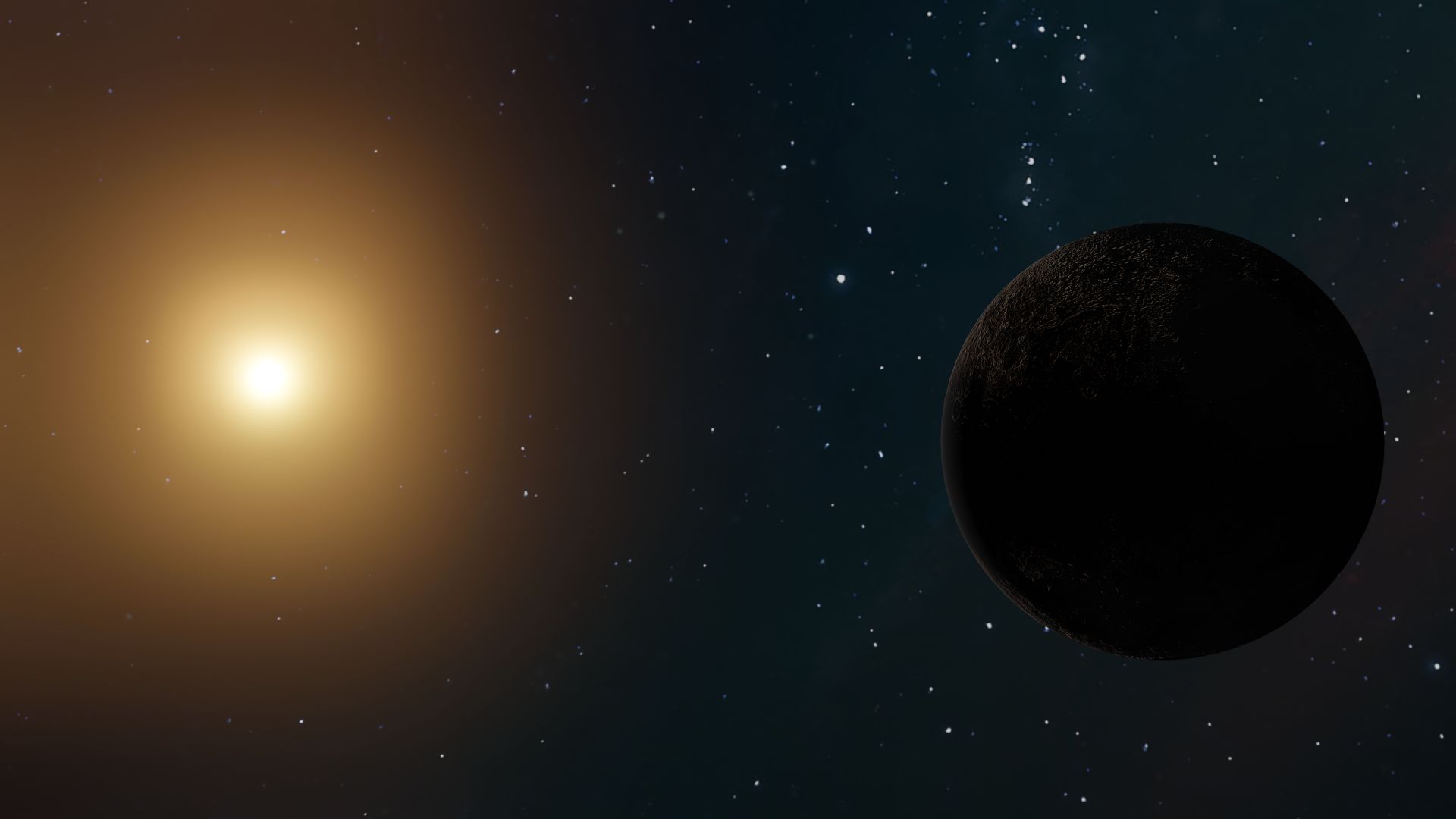
Those lines turned out to be copper and niobium, and they point to something astronomers had never caught before: a possible second-generation planet. The star, a white dwarf called HS 0209+0832, is swallowing material with a chemistry unlike anything in our solar system. The best match is a giant planet that formed late, from the gas its own star threw off while dying, and that is now slowly evaporating onto it. The world itself hasn’t been seen, so it remains a candidate. The research, led by astronomer Jamie T. Williams of the University of Warwick in England, was published in the journal Nature Astronomy.
Planets are supposed to be born only once. The standard story goes like this: a young star is wrapped in a disc of gas and dust, and planets clump together inside it. That’s how Earth formed. A white dwarf is a dead star, the hot, dense core left behind when a star like the sun runs out of fuel and sheds its outer layers. HS 0209+0832 packs more than half the sun’s mass into a ball only a little wider than Earth. It sits about 270 light-years away, and it’s young for a corpse, at roughly 5 million years since its death.
What a second-generation planet is made of
Recycled stardust, with a signature. Before a sun-like star becomes a white dwarf, it swells into a bloated giant, known as an asymptotic giant branch (AGB) star, and blows much of its mass into space. These stars are also element factories. They make most of the universe’s supply of elements built by the “s-process,” slow neutron capture, in which atoms absorb neutrons one at a time and creep up the periodic table. Niobium is one of those products. So a second-generation planet, one built from that ejected gas, should carry an s-process fingerprint that a planet from the original disc would not.
It probably needed a partner. A lone star shedding gas evenly in all directions is unlikely to build a new planet-forming disc, the authors noted. A close companion changes that. If a small partner orbited inside the swollen giant, the pair would have shared one envelope of gas, and ejecting it could leave a disc rich in s-process elements. A giant planet could then collapse out of that disc close to the white dwarf. Another option the team raised is a rocky first-generation planet that later grabbed a thick new atmosphere from the fresh material.
How a white dwarf’s atmosphere shows what it swallows
A white dwarf wipes its own slate clean. Its gravity is so strong that anything heavier than hydrogen sinks out of sight fast. Metals in this star vanish in days. Helium goes in months. Think of the surface as a whiteboard that gets erased every few days: whatever is written on it was written recently. Since HS 0209+0832 shows helium and a long list of metals, something must be feeding it right now. Around many other white dwarfs, that food has turned out to be shattered asteroids and other rocky debris.
The leftover lines finally got names. Williams and his colleagues reanalyzed the old Hubble data together with spectra from NASA’s FUSE ultraviolet telescope and the European Southern Observatory’s Very Large Telescope in Chile. With updated atomic data, most of the mystery lines matched copper and niobium, with 62 separate niobium lines. To check whether this was normal, the team went through archived spectra of 33 other metal-rich white dwarfs. None showed niobium.
The recipe looks nothing like Earth. Silicon and iron together make up nearly half of our planet’s mass. This star shows only a trace of silicon and no iron at all. Nickel, usually a minor partner of iron, outnumbers it at least two to one, against roughly one nickel atom per twenty iron atoms in Earth and in primitive meteorites. And niobium, compared with calcium, is more than a thousand times more abundant than in the sun. That’s not an asteroid. It isn’t an icy comet either: nitrogen, oxygen, phosphorus and sulfur are all scarce. Carbon, which AGB stars also churn out, appears to be enriched.
Here’s the thing. Each of those clues alone could have another explanation. Helium, missing rock, extra carbon and a pile of s-process metals all at once point to a source that formed somewhere very different from a normal planetary nursery.
White dwarf star planets that survive the end
The star flickers on a slow beat. In data from NASA’s TESS satellite, the team found a faint brightness wobble that repeats every 4.4 days, with an amplitude of about 0.12%. Most white dwarfs spin about once a day. In one survey with the Kepler telescope, only one of 20 rotated slower than four days. A giant planet about 0.04 astronomical units out, around 3.7 million miles (6 million kilometers), or roughly ten times closer than Mercury is to the sun, would fit that period. Its glowing day side swinging in and out of view could make the wobble. So could a comet-like tail of gas trailing from an evaporating planet.
The planet is slowly being boiled away. A star this hot floods its surroundings with ultraviolet and X-ray light, which can strip the atmosphere off a nearby giant. The team calculated that such a planet would lose gas faster than the star is taking it in. The white dwarf is still collecting about 430 metric tons of material every second, roughly the weight of a fully loaded jumbo jet. Measurements from the 1990s also showed the star’s helium level changing by a factor of two to three, which a patchy stream of gas crossing our line of sight could explain.
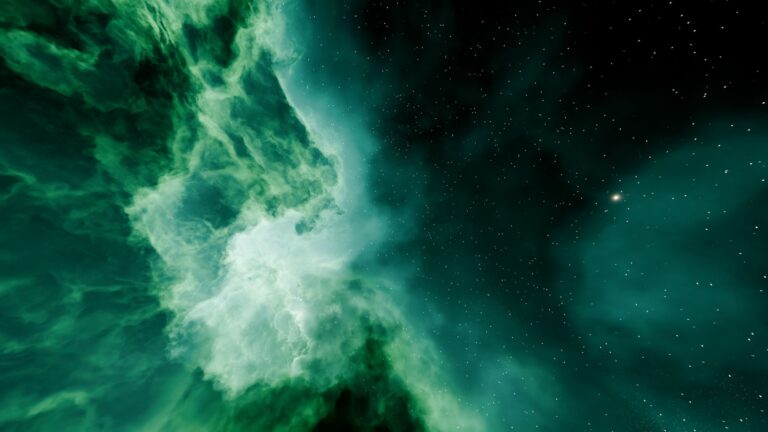
Dead stars have kept planets before. In 2019, a team that included Boris Gänsicke, a co-author of the new paper, reported a white dwarf feeding on the atmosphere of a giant planet. A year later, astronomers spotted a giant planet candidate passing in front of a white dwarf. Dead stars hold other surprises, too: some white dwarfs can even look green. Planets around pulsars, the spinning remains of exploded stars, are also thought to be second generation. But no such planet had been identified around a white dwarf, and in those earlier cases the material looked ordinary.
Nobody has seen the planet yet. The authors are careful to call it a candidate. The brightness signal is weak and showed up clearly in only two of four observing stretches, though the team’s tests suggest it would be missed about 60% of the time even if it’s there. Strontium, an element that should travel with niobium, wasn’t detected. Some abundances depend on how radiation holds elements up in the star’s atmosphere, a process the authors admit isn’t fully understood at this temperature. And the formation story is tight: a planet would have to form, migrate inward and settle into a close orbit within the 5 million years since the star died.
Honestly, that’s a lot of steps. Still, the authors wrote that their analysis “unambiguously demonstrates” the star is accreting material from a second-generation planet candidate. Their next move is a hunt for more. High carbon and s-process metals leave strong marks in the ultraviolet light of hot white dwarfs, so archives already hold spectra worth a second look. “Establishing a sizeable sample of such systems will open a window on second-generation planet formation,” the researchers wrote.
The study at a glance
- Journal: Nature Astronomy, 2026 (accepted August 2026)
- Type of study: Reanalysis of ultraviolet and optical spectra from Hubble, FUSE and the Very Large Telescope, plus brightness data from TESS
- Sample: One hot, young white dwarf, HS 0209+0832, about 270 light-years away, compared with 33 other metal-rich white dwarfs
- Main finding: The star is eating material rich in niobium, copper and zinc but poor in silicon and iron, which best fits a giant planet formed from gas the star shed while dying
- Limits: The planet has not been seen directly; its 4.4-day signal is faint and some abundances depend on uncertain atmosphere physics
The study “Discovery of a second-generation planet candidate accreting onto a white dwarf,” by Jamie T. Williams, Boris T. Gänsicke, Nicholas C. Stone, Detlev Koester, Benjamin D. R. Davies, Christopher Tong and colleagues, was published in Nature Astronomy in 2026. DOI: 10.1038/s41550-026-02983-7.