 Editorial NexoScience
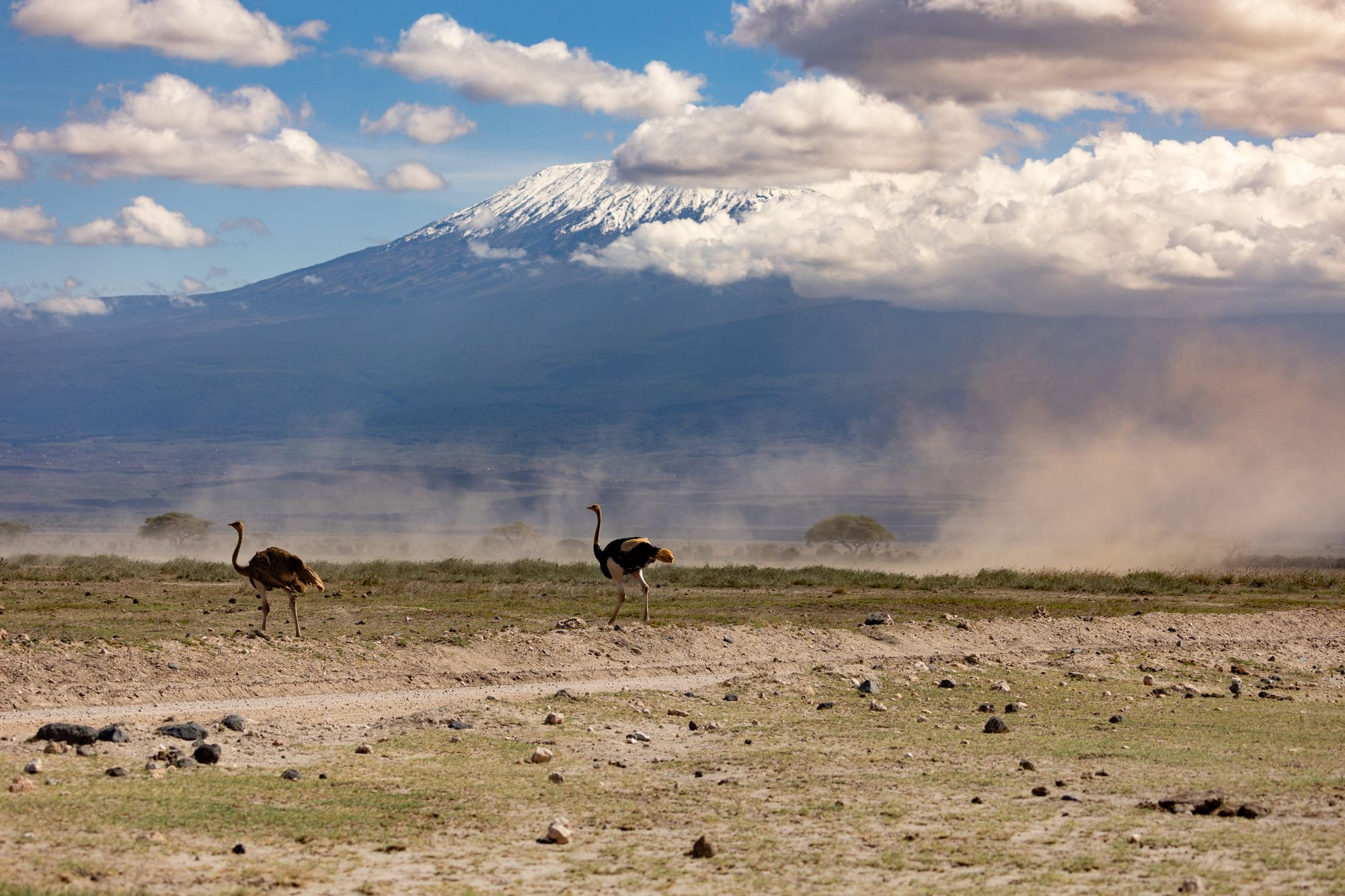
On a plateau in southern Zambia, far from any volcano, hot water wells out of the ground and fizzes. The bubbles look like nothing special. Most of the gas is nitrogen. But mixed into it is a trace of helium with an unusual recipe, and that recipe points somewhere no drill has ever reached.
Is Africa splitting in two along this line? Not in any way you could see today. But helium in the gas from hot springs in Zambia’s Kafue Rift carries a chemical fingerprint of Earth’s mantle, the hot rock layer below the crust. Springs just outside the rift show none. That suggests the rift’s faults are active and reach very deep, which is what an early tear in a continent would look like. It doesn’t prove a split is coming. The study, led by geochemist Rūta Karolytė of the University of Oxford, was published May 12 in the journal Frontiers in Earth Science.
Every ocean started as a crack. A rift is a place where the crust is being stretched and pulled apart, so the ground sinks between faults. Give it millions of years and the right forces, and a rift can open into a new ocean, the way the Atlantic once split the Americas from Africa and Europe. But most rifts never get there. “A rift may become a plate boundary, but commonly a rift’s activity ceases before the point of lithospheric break-up and plate boundary formation,” Michael Daly, a geologist at Oxford and a study co-author, said in remarks quoted by ScienceAlert. That caveat sits under everything that follows.
Africa splitting into two continents, and where Zambia fits
The famous rift runs down the east. When people ask whether Africa is splitting into two continents, they usually mean the East African Rift. There, the Somali Plate is slowly pulling away from the rest of Africa, from the Afar region near the Red Sea down toward Mozambique. It’s not quiet. In 2005, a fissure dozens of miles long tore open in Ethiopia’s Afar region within days. Earth’s crust can move fast when it finally gives, as it did when the Hunga Tonga caldera caved in and drove a huge tsunami.
A second line cuts across the middle. The Kafue Rift belongs to a different and much less famous zone. It runs about 1,550 miles (2,500 kilometers) on a diagonal from Tanzania through Zambia to Botswana and Namibia, and it may link to the Mid-Atlantic Ridge through an undersea chain called the Walvis Ridge. Daly and colleagues proposed in 2020 that this “Southwestern Rift of Africa” could be a young plate boundary, separating the Nubian Plate from a newly proposed San Plate in the south. The case rested on fault scarps, high heat flow, weak gravity signals and small earthquakes. What it lacked, the authors write, was direct chemical evidence that the faults reach the mantle.
How helium in hot springs reveals the mantle
Helium comes in two flavors. Helium-3 is mostly primordial, left over from when Earth formed, and it’s stored in the mantle. Helium-4 is made all the time in the crust, as uranium and thorium in rocks decay. So the ratio between the two works like a return address. Gas from the mantle carries about 8 units on the scale geochemists use, measured against air. Gas from old continental crust carries about 0.02. That’s a gap of roughly 400 times.
The team sampled gas straight from the bubbles. They collected free gas at eight sites, sealing it in copper tubes so nothing could leak. Six were geothermal wells and fault-fed springs inside the Kafue Rift, including the Bwengwa and Gwisho springs. Two were control springs in the old rock outside it: Mosali, about 31 miles (50 km) to the southwest, and Lubungu, about 93 miles (150 km) to the north-northwest. The helium was measured at Oxford.
Inside the rift, the numbers shifted. The rift springs all landed between 0.14 and 0.17, about eight times the pure crustal value. The two outside springs sat at about 0.02, crust and nothing else. Air can’t explain it, because the samples hold almost no atmospheric neon, a tracer for air. A simple mixing estimate (ours, not the authors’) puts the mantle share of the rift’s helium at only a percent or two. Think of a few drops of dye in a bucket of water. Faint, but you can’t get it from the bucket alone.
Carbon told the same story, once. The rift gas also held 1.5% to 15% carbon dioxide, while the outside springs had too little to detect. In one sample, from the Bwengwa springs, the team measured the carbon’s isotopes, a second fingerprint. It came out at minus 3.9 parts per thousand, close to the range typical of mantle carbon. Two independent tracers, pointing the same way, are why the authors call the mantle helium “unambiguous.”
What the helium can and can’t show about Africa splitting apart
The springs look like an early rift. The team compared their gas with dozens of samples from the East African Rift. Zambia’s springs most resemble two young segments in Tanzania, the Rukwa Rift and the North Tanzanian Divergence, where nitrogen and helium dominate and mantle gas is just starting to seep in. Older, more volcanic segments, like the area around Lake Kivu, are rich in carbon dioxide instead. Kafue has no volcanoes and only small earthquakes, the pattern of the rift’s western branch. The authors’ own wording is careful: the data are “consistent with early stages of active lithospheric rifting.”
The limits are real, and the authors list them. This is one segment of a 1,550-mile zone, sampled at eight sites, with only two controls. The carbon fingerprint comes from a single sample. Mantle helium also turns up along active faults that have no magma at all, so it shows a deep, open plumbing system, not that a continent will break. And as Daly himself noted, rifts often stall. Even if this one keeps going, any split would take millions of years. One more detail worth knowing: co-author Peter Vivian-Neal works for Kalahari GeoEnergy, a geothermal company that gave the team access to its wells. The research funding came from UK Research and Innovation and the Canadian Institute for Advanced Research.
Helium, hydrogen and heat along the Zambian rift
The gas is valuable in its own right. Helium made up 0.4% to 2.3% of the rift gas, among the highest levels measured in hot spring fluids anywhere in the East African Rift. That matters, because helium cools MRI scanners and is in short supply. The ground is hot too. The area warms by more than roughly 350 degrees Fahrenheit per mile of depth (120 degrees Celsius per kilometer), several times the usual rate for continental crust. The authors also see promise for natural hydrogen, which tends to collect in old, stable rock and survive in rifts that are still quiet.
The real test lies farther along the line. You know what would settle much of this? More bubbles. The authors want the same measurements in the Luano and Luangwa rifts to the northeast and the Okavango and Eiseb rifts to the southwest. If those springs carry mantle helium too, they write, it would provide “further compelling evidence for an emerging plate boundary capable of continental separation.” If they don’t, Kafue may turn out to be one deep crack in a continent that stays whole.
Source: Karolytė, R., Daly, M. C., Vivian-Neal, P., Hillegonds, D., Li, L., Sherwood Lollar, B., and Ballentine, C. J. “The Southwestern Rift of Africa: isotopic evidence of early-stage continental rifting.” Frontiers in Earth Science (2026). DOI: 10.3389/feart.2026.1799564