 Editorial NexoScience
Two fingertip-size sprigs of coral sit glued side by side on a ceramic plug in a lab tank. One is a healthy brown. The other is bone white and starving, the kind of fragment that on a real reef would likely be smothered by algae within weeks. Then, along the narrow seam where the two pieces touch, brown starts to creep into the white.
That creeping color is the finding. A healthy coral pressed against a bleached piece from the same colony fuses with it and hands over the algae it needs to live, and a single week of contact is enough to set off full recovery from coral bleaching, researchers reported in the journal Science Advances. Daniel Collins and his colleagues ran the experiments at Hopkins Marine Station in Pacific Grove, California, using cauliflower coral (Pocillopora damicornis), a common reef builder across the Indo-Pacific. Bleached corals usually die because their recovery is slow, often dragging on for months. Here, it took weeks.
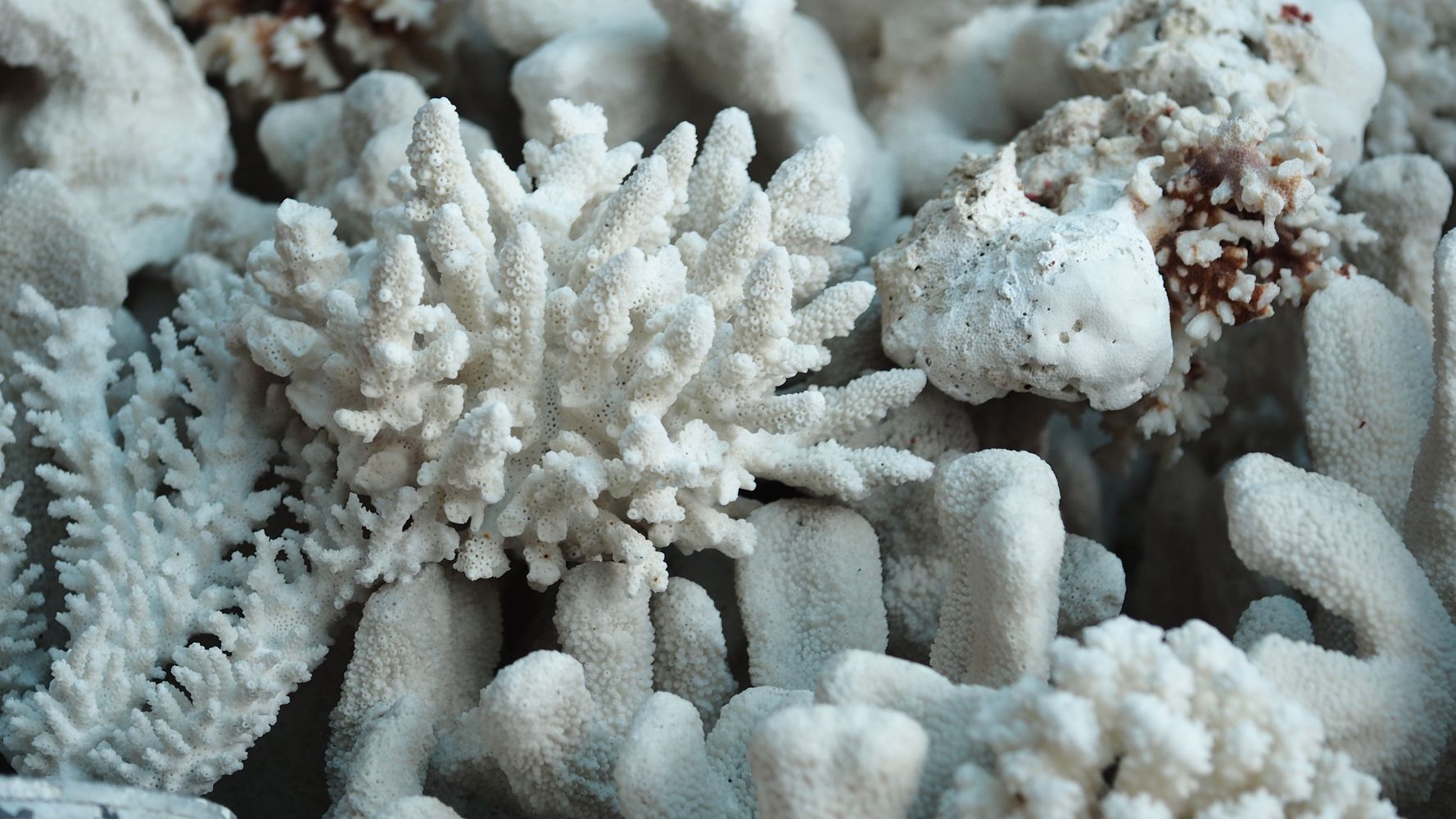
Bleaching is a breakup, not instant death. Reef-building corals carry single-celled algae called dinoflagellates (family Symbiodiniaceae) inside their tissues. Those partners photosynthesize and supply most of the coral’s food. When the water gets too hot, the partnership breaks down and the coral expels its algae, leaving the white skeleton showing through clear tissue. A bleached coral isn’t dead yet, but it’s running on empty, and filamentous algae move in fast to cover it. Some corals bounce back once the heat eases, either by regrowing a few leftover symbionts or by picking new ones up from the water. The trouble is supply. The authors note that free-living symbionts in reef sediments and seawater are several orders of magnitude scarcer than inside coral tissue, which helps explain why natural recovery is so slow and why so many bleached colonies die during severe events. Most conservation research, they wrote, aims to prevent bleaching. Far less has gone into rescuing corals that have already lost their algae.
The team bleached its own corals first. Branches from aquarium colonies went into a tank that was heated each day to about 94 degrees Fahrenheit (34.5 degrees Celsius), held there for four hours, then cooled again. After 12 to 16 days, every visible trace of color was gone. Under a confocal microscope, the bleached polyps held about 7 algal cells per square millimeter, against more than 6,700 in healthy polyps. Think of a busy city emptied down to a handful of residents. Any real rebound would have to come from outside.
Touching made all the difference. The researchers paired bleached fragments, each less than an inch long (1 to 1.5 centimeters), with healthy fragments of the same genet, meaning genetic clones cut from one parent colony. Five pairs touched. Five more sat just 5 to 7 millimeters apart, about the width of a pencil. Every touching fragment recovered completely within eight weeks, and one got there in four. Color always appeared first at the contact point and then spread across the bleached piece. Honestly, the other group is hard to look at. The separated fragments stayed white for weeks, then filled with red and green filamentous algae and diatoms. By week nine, two of the five had died and the other three were at least 87% covered in algae. At week 20, the rescued fragments were sprouting new branches like their healthy partners.
One week of contact was enough. To see whether the healthy coral had to stay attached, the team pulled pairs apart after contact periods ranging from one day to three weeks. Every bleached fragment that had touched a healthy one for a week or longer went on to recover fully within seven weeks on its own, at the same pace as fragments that never let go. Three days of contact started a transfer, but the algae eventually won. One day did nothing visible. That result says something about where the recovery comes from. Once separated, the bleached coral had no new supply, so the extra algae had to be multiplying inside it. In the second week, the symbiont population doubled roughly every four days. On the Great Barrier Reef, by comparison, algal loads in recovering Acropora corals took about three months to double, according to earlier work the authors cite.
The two corals grow a living bridge. The transfer didn’t happen evenly along the seam. It began at one or two spots, and the algae spread outward from there, top down, bottom up or both ways at once depending on where it started. When the team separated 12 recovering pairs, both fragments showed matching tears in the tissue at exactly the transfer sites, with bare skeleton showing through. Pairs pulled apart after a single day had no such tears. The researchers concluded that the two corals had fused, growing tissue bridges that ripped when the pieces were split. Tracking the first three days in finer detail, they saw a trickle of algae within hours and then a surge between about 36 and 60 hours, matching the timing of fusion. From there, the authors suggest, the coral’s gastrovascular network, a system of internal canals that circulates fluid through the colony, carried the algae through the fragment.
Strangers fight instead of sharing. The lab had two genotypes of the same species, told apart by color under blue light: one glows red, the other green. When a bleached coral of one genotype touched a healthy coral of the other, the result was war. Within hours, the corals pushed out mesenterial filaments, threads loaded with stinging cells, along the contact line. None of the six bleached fragments in these mixed pairs recovered, and the healthy coral grew over them, fully engulfing four by week nine. Even two healthy corals of different genotypes kept a strip of algae-free tissue between them. Corals run a self-versus-nonself recognition system, and here it decided the outcome almost at once.
A slower back door stays open. Here’s the thing, though. Even in the hostile mixed pairs, some algae did cross over within hours of contact. The healthy coral appeared to release symbionts that nearby bleached polyps then took in, much like corals acquire algae from seawater. That route showed up in matched and mismatched pairs alike, but on its own it was far too weak to rescue a colony. To the authors, this means the barrier sits with the coral host rather than the algae. Making that uptake more efficient, or switching off the hostile response, could in principle let one genotype or even one species rescue another.
It’s still a result from a fish tank. The authors are clear about the limits. All the corals came from aquarium colonies bought from suppliers, with no record of where they were originally collected. The work used one species and two genotypes, small fragments and small groups, often five or fewer pairs per condition. The corals were fed more than they would be on a natural reef. Recovery depended on same-genet pairs held in sustained contact, and nobody yet knows how far across a colony a single contact point can push recovery. The researchers can’t say for sure why the transferred algae multiply so fast. They suggest the algae may have escaped heat damage, or that nutrients crossed the bridge along with them. They also note their microscope counts read only the tissue surface and may undercount symbionts. Whether any of this works on wild reefs, at the scale of real bleaching events, is untested.
The next idea is to send in tougher algae. The authors point out that the same contact route could deliver heat-tolerant symbionts, such as those of the genus Durusdinium, instead of the coral’s original partners. An earlier attempt to move heat-tolerant algae through open water managed only traces in 5 of 45 recipient fragments after 55 days. Contact, by this study’s measure, works far faster. The researchers frame it as the start of a new kind of rescue: treatments applied after a bleaching event rather than before it, aimed at getting white corals brown again before the algae close in.
Source: Collins, D. S., Sipkova, J., Mollica, N. R., Rolander, T., Klepac, C., Calistro, G. F., et al. “Rapid coral bleaching recovery via symbiont transfer from healthy corals.” Science Advances (2026). DOI: 10.1126/sciadv.aeh1580