 Editorial NexoScience
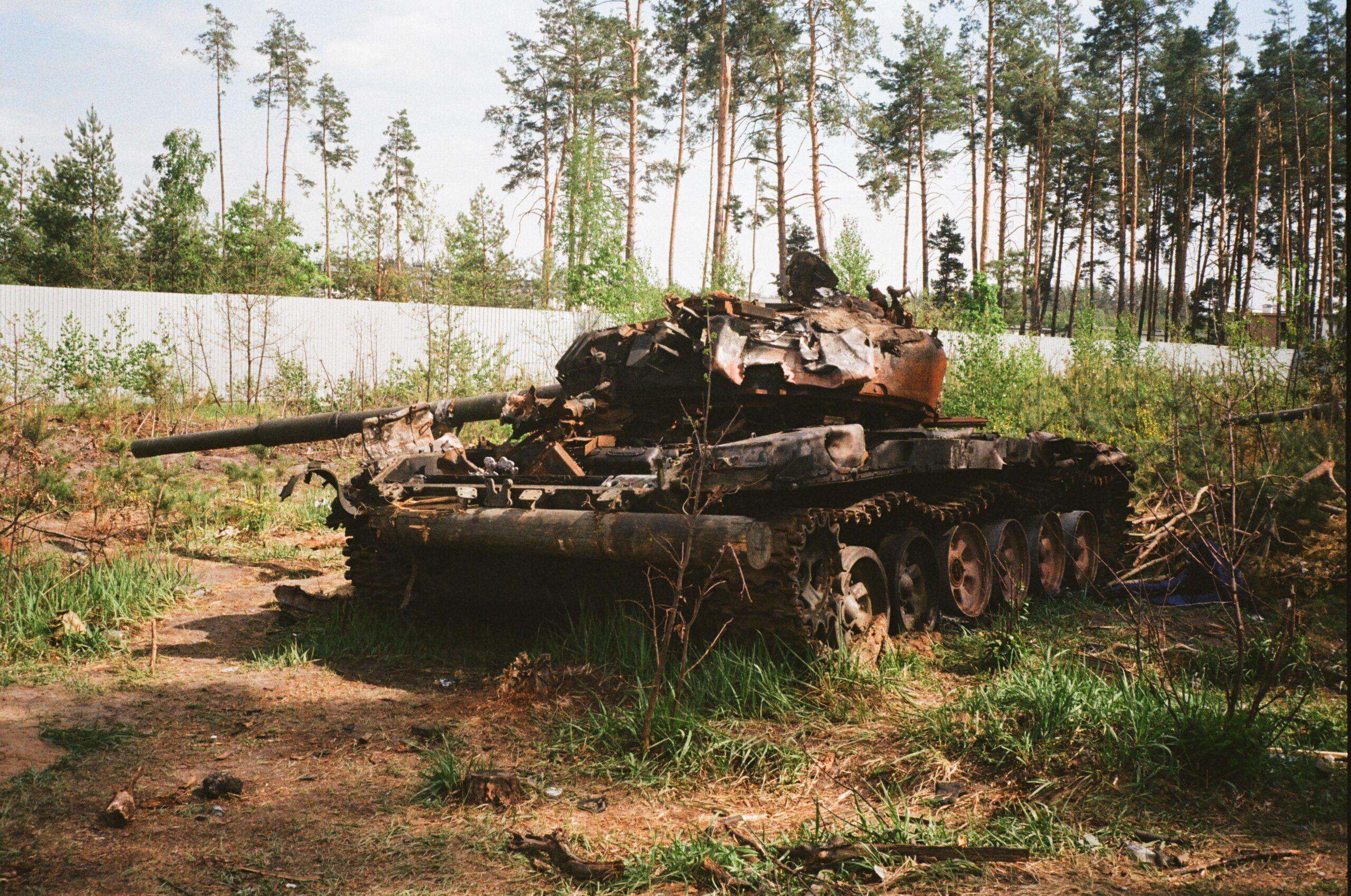
A scorched tank hull sitting in a field in eastern Ukraine, a full year after the explosion that destroyed it. The ground around the wreck had changed color, its structure had gone loose and it smelled wrong. That ring of altered earth is where a team of Ukrainian and Slovak soil scientists decided to start digging, with permission and protection from the Ukrainian Armed Forces, in a region where fighting was still going on.
The team sampled the soil directly under the remains of three vehicles abandoned in Bohodukhivskyi district, Kharkiv Oblast: a T-72B3 tank, a T-80 tank and a TOS-1 “Solntsepek” thermobaric rocket launcher. Control samples came from untouched ground no more than 165 feet (50 meters) from each wreck, in the same deep black soils that make the region some of the best farmland in Europe. The results were published Oct. 4, 2024, in the journal Land.
The lead readings were the worst part. In the soil scraped from under the belly of the T-72B3, lead ran at almost 39 times the maximum concentration Ukrainian regulations allow, and cadmium and zinc were also above the legal ceiling rather than merely elevated. Ranked by how heavily each wreck loaded the ground, lead came first, then zinc, then cadmium, then copper. Mobile sulfur, which the authors link to the heat of the burn and to compounds in tank fuel, climbed steeply at every site without crossing its own legal threshold, a reserve they warn could tip over it later.
The clearest evidence of harm came from things that were alive. When compost worms (Eisenia fetida) were placed in soil taken from the epicenter, 94.9% of them were dead within five days, while not a single worm died in the control soil. Seeds told the same story: radish (Raphanus sativus) and garden cress (Lepidium sativum) failed to germinate at all in the epicenter samples, and the survivors sown two meters out came up stunted, with wasted root systems.
The dead zone is brutal but tight. Toxicity was total within about 5 feet (1.5 meters) of the impact point, pioneer weeds had begun to creep back between roughly 5 and 15 feet, and past about 16 feet (5 meters) the researchers found no phytotoxicity at all and a normal mix of vegetation. In other words, each burned vehicle sterilizes a patch of farmland roughly the footprint of a small bedroom, and leaves the field beyond it visibly intact.
The type of engine changed the outcome. The two diesel powered machines, the T-72B3 and the TOS-1 launcher, did the most chemical damage, while the T-80, which runs on a gas turbine, left a comparatively lighter mark. The launcher also produced the strangest reading of the survey, an organic matter content the authors say is practically never found in Ukrainian soils under natural conditions, which points to the chemical nature of whatever was on board when it went up.
Underground, the microbial community rearranged itself around the wreckage. Micromycetes, the microscopic soil fungi that thrive on hydrocarbons, multiplied sharply at the epicenter while overall microbial diversity collapsed compared with nearby fallow land. Bacteria that adapt to stress increased, nitrogen mineralizing bacteria fell away, and carbon dioxide coming out of the burned ground stopped tracking microbial biomass the way it does in healthy soil, which suggests much of that gas is no longer the signature of ordinary microbial life.
The picture comes from a handful of craters, not from a whole war. Three wrecked vehicles in one district is a small, unreplicated sample, and the design compares poisoned spots with nearby clean ones rather than proving which compound caused which effect. The authors are blunt about the gap they are working in: the behavior of most of these substances in Ukrainian soils is inadequately researched, and for several of them no regulatory limit has been set at all, which makes some of these numbers hard to judge against any standard.
What worries the authors most is bookkeeping. Wreckage is gradually being cleared from the battlefields without anyone recording where each vehicle burned, so the hot spots are being erased from view while the metals stay in the ground, on land that is mostly farmland. Their recommendation is that these sites be mapped and monitored before anyone plants on them again.
Source: “Soil Degradation and Contamination Due to Armed Conflict in Ukraine,” published in Land on 4 October 2024. DOI: 10.3390/land13101614