 Editorial NexoScience
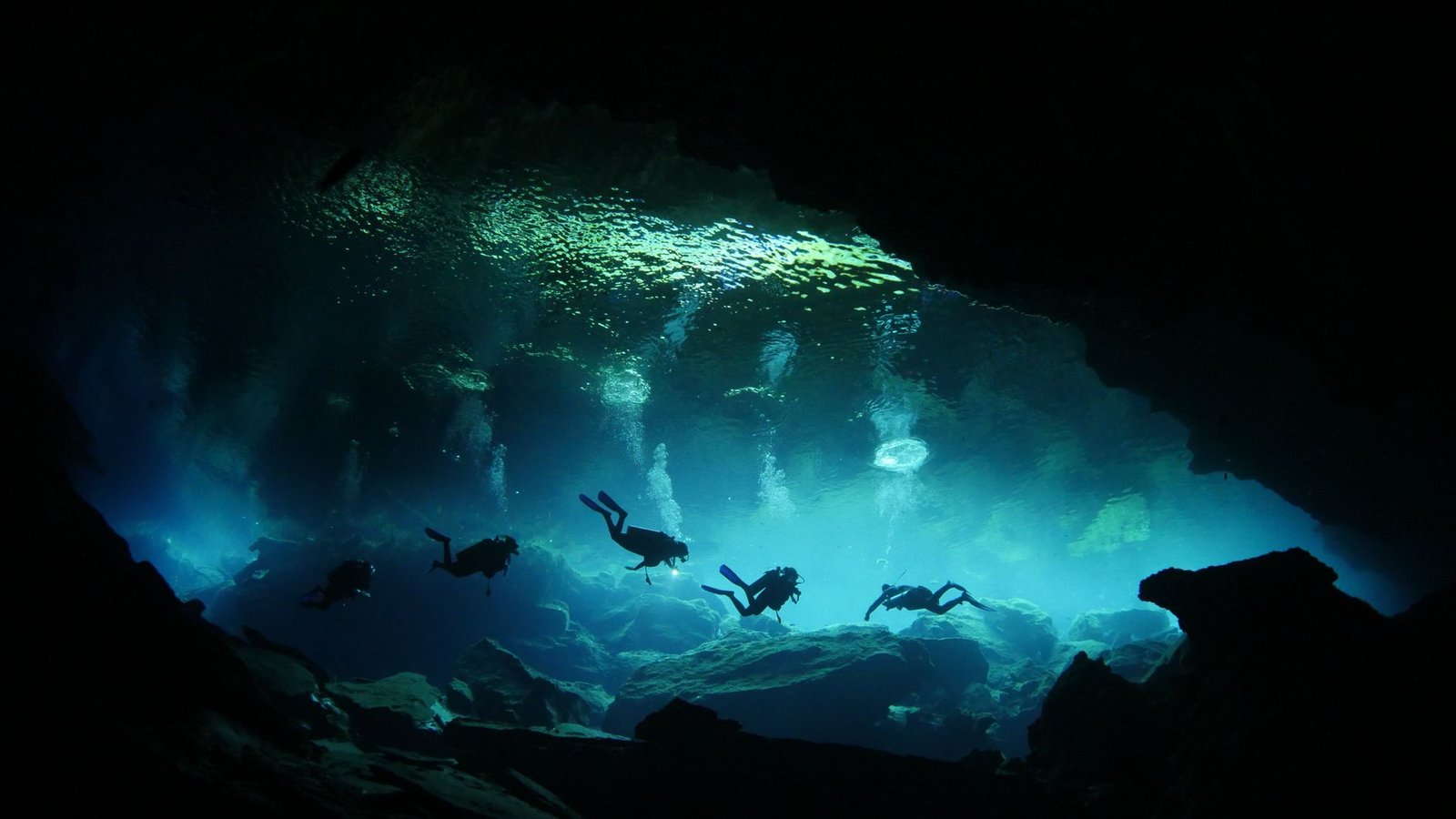
Look at a beach on the Gulf of Mexico today and you’d struggle to picture 2010. The sand is clean and the tourists are back. But the Deepwater Horizon oil spill never really belonged to the shoreline. It started at a wellhead about 4,900 feet (1,500 meters) down, and most of the animals it reached live in the dark, where nobody takes pictures.
That’s where a team of scientists went looking for a Deepwater Horizon oil spill recovery, and they didn’t find one. Fish, krill, shrimp and small squid in the deep open Gulf fell by roughly 60% between 2011 and the years that followed, and they stayed down through 2023. Total fish numbers dropped 63.5%. The study was published in 2026 in the Proceedings of the National Academy of Sciences (PNAS). “We saw this big decline,” lead author Tracey Sutton, an oceanographer at Nova Southeastern University, told The Associated Press.
The nets went down thousands of times. The researchers analyzed more than 2,000 net samples taken from the surface to 4,900 feet over 13 years, which they call the largest effort of its kind in the history of oceanography. The first round came in 2011, a nine-month campaign that began shortly after the well was sealed. The second, a program called DEEPEND, ran nine surveys between 2015 and 2023. Both used the same kind of net, in fact the same physical net, fished the same way, with the catch sorted by the same people.
What happened after Deepwater Horizon in the deep Gulf
The drop was a cliff, not a slope. The counts didn’t drift lower year by year. They fell sometime between 2011 and 2015, then flattened at the new low with no sign of climbing back. Crustaceans such as krill and deep-sea shrimp fell 62.0% and small squid and their relatives fell 59.7%. For those two groups, part of the drop was already visible by August 2011. For fish, every catch from 2011 was significantly higher than the catches that came later, and the raw numbers barely overlapped.
Scale helps here. The change in fish abundance over that three-and-a-half-year gap was larger than any change recorded over 60 years in the California Current, off the U.S. West Coast. That’s the only other long-running record of midwater fish that the authors could compare against.
The crowds vanished too. The ocean’s deep middle is mostly empty water, and predators survive by finding dense swarms of prey, which ecologists call “patches.” After the decline, those swarms almost stopped turning up. Out of 134 full-depth net hauls, only once did the best catch after the crash beat the worst catch of 2011. Think of a supermarket that stays open but never restocks more than one item per shelf. You can still walk in. You just can’t fill a cart.
The 2011 numbers weren’t a lucky high. To rule that out, the team compared them with older counts from the 1980s and 1990s, taken at a site in the eastern Gulf known as Standard Station. The historical numbers sat much closer to 2011 than to anything after 2015. So the recent years are the outlier. A ship’s echosounder, a scientific sonar that bounces sound off animals in the water, told the same story on its own: at night, in the upper 650 feet (200 meters), the echo from living things fell by 40%.
Deepwater Horizon effects on the ocean’s food web
The worst losses hit the animals everyone else eats. Krill dropped 72.8%. Lanternfishes (family Myctophidae), small fish dotted with light organs, dropped 62.9%. Bristlemouths of the genus Cyclothone fell 69.0%, and those finger-sized fish may be the most numerous vertebrates on Earth. Lanternfishes feed tunas, sharks, dolphins and seabirds. Krill feed many of the deep fish and shrimp themselves.
These animals belong to what biologists call nekton, the swimmers of the open sea, as opposed to plankton that drift. Every night they make the largest animal migration on the planet, rising from as deep as 3,900 feet (1,200 meters) to 330 feet (100 meters) or less to feed, then sinking back at dawn. That daily trip works like an elevator for carbon, carrying it from the surface into deep water where it stays locked away. “Less nekton equals less cycling,” the authors wrote.
Whales may already feel it. The study points to earlier counts showing steep, unexplained drops in Gulf whales and dolphins after the spill, worst for the deepest feeders. Gervais’ beaked whale (Mesoplodon europaeus) fell 83.4%, a loss bigger than recovery models had predicted. Researchers aboard ships have recently reported “thin” whales, and tagged sperm whales (Physeter macrocephalus) are roaming widely instead of feeding in their usual patterns. The authors connect this to the missing prey swarms, though the whale counts come from other work and the link isn’t directly tested here.
Even the genes thinned out. In two of three lanternfish species studied, genetic diversity fell after the crash, a classic sign of a population squeezed through a bottleneck. In one species, Diaphus dumerilii, a key measure of diversity was about 13% lower in 2016 than in 2011, before partly bouncing back. The authors call it the longest genetic time series for any deep-sea species, at 12 years.
Why natural causes don’t explain the deep sea decline
The usual suspects had alibis. Let me explain how the team worked through them. Method first: same net, same crew, same analysis, so a change in sampling can’t account for the drop. Heat next: water temperature between 650 and 2,000 feet (200 to 600 meters) stayed remarkably steady across all years, and the deep Gulf stayed well oxygenated. Then food: the tiny zooplankton these animals eat didn’t decline, and in 2013, right in the middle of the slump, it was above average. The team also used only samples from the Gulf’s main body of water, leaving out the warm, nutrient-poor Loop Current and its eddies.
“None of those vary with the decline. The event that did was the oil spill,” Sutton told The Associated Press. The blowout began on April 20, 2010. Over 87 days, the well released 4.0 million to 4.9 million barrels of oil. From May 15 to July 15, crews also injected 770,000 gallons (2.9 million liters) of the chemical dispersant Corexit 9500A straight into the oil at the wellhead. The authors frame the cause as the spill together with that cleanup response, not the oil alone.
Deepwater Horizon sea floor oil and the Exxon Valdez warning
The oil spread wider than satellites showed. Later work found an “invisible toxic footprint” that covered nearly the eastern half of the Gulf, far beyond the slick seen from space. Oil residues also settled on the sea floor, and currents and slumping sediment can stir them back into the water years later. At least six years after the spill, other studies found high levels of polycyclic aromatic hydrocarbons, or PAHs, the toxic compounds in crude oil, in the eggs of deep-sea fish and in squid tissue.
Smell may be part of the story. Males of most deep-sea fish have oversized nasal organs, likely for tracking down females in the dark by scent, and oil is known to blunt the sense of smell in Gulf damselfish and stingrays. Fewer meetings mean fewer young. Here’s where a concept called the Allee effect comes in: when a population gets sparse enough, each animal reproduces less, so the group keeps shrinking instead of rebounding. That would explain how a one-time crash becomes a lasting low.
Alaska has seen this before. Prince William Sound herring (Clupea pallasii) collapsed in 1993, four years after the 1989 Exxon Valdez spill, and still haven’t recovered. Local orcas declined alongside them. That kind of lag fits the Gulf, where fish numbers seem to have held up through 2011 and fallen afterward. If you follow how environmental damage builds up over time, this pattern of slow, delayed fallout will look familiar.
The case against the spill is strong, not airtight. This is an observational study, so it shows that the decline lined up with the spill and that other causes don’t fit, not that oil was proven to kill these animals. Nobody sampled the deep Gulf the same way before 2010, and the 2011 baseline was collected months after the spill ended. The authors also note there’s been no direct testing of oil on deep-sea fish eggs, and the effects of oil and dispersant can’t be pulled apart. Honestly, with a single disaster in a single sea, that’s about as close as the evidence can get.
What comes next is the harder question. The authors say the deep Gulf now meets the criteria for an ecological regime shift, a stable new state, and they write that its recovery time, “if even possible, remains unknown.” They expect the losses to ripple through the system from top to bottom.
The study at a glance
- Journal: Proceedings of the National Academy of Sciences (PNAS), 2026
- Type of study: Long-term field survey with deep-sea nets, sonar and genetic sampling in the Gulf of Mexico
- Sample: More than 2,000 net samples from the surface to 1,500 meters, taken in 2011 and from 2015 to 2023
- Main finding: Deep-sea fish fell 63.5%, crustaceans 62.0% and small squid 59.7% after 2011, with no sign of recovery through 2023.
- Limits: No matching samples exist from before the spill, and the study links the decline to the spill without proving it directly.
Source: Tracey Sutton, Rosanna Milligan, April B. Cook, Kevin M. Boswell, Heather D. Bracken-Grissom, Tamara M. Frank and colleagues, “Immense but not immutable: A sudden and sustained decline in deep-pelagic life in a large oceanic ecosystem,” Proceedings of the National Academy of Sciences (2026). DOI: 10.1073/pnas.2616554123