 Editorial NexoScience
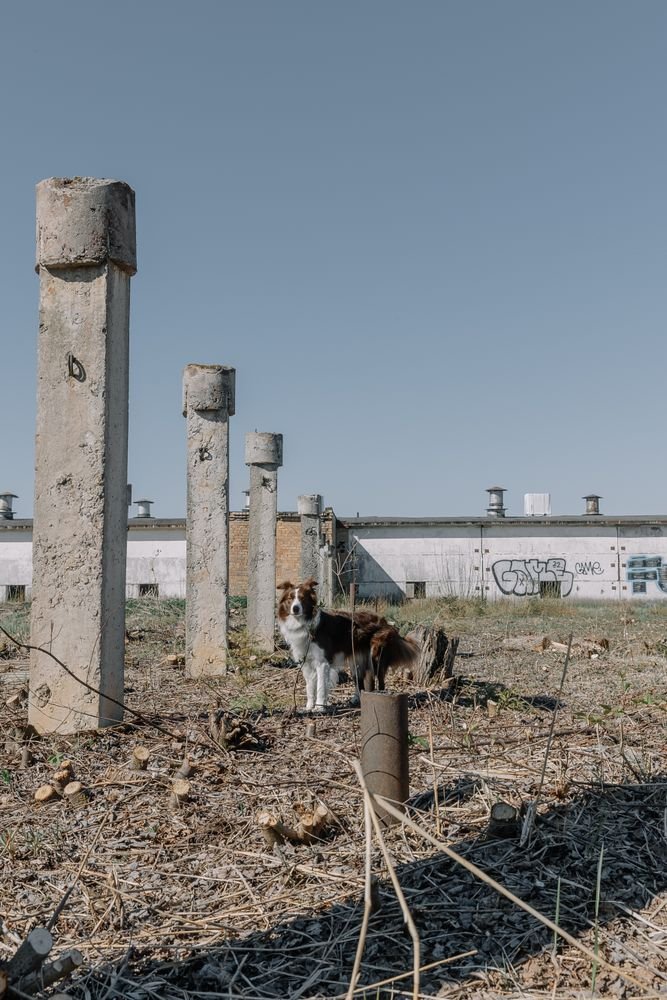
Two packs of stray dogs live about 10 miles (16 kilometers) apart in northern Ukraine. One roams the grounds of the Chernobyl Nuclear Power Plant, the site of the worst nuclear accident in history. The other hangs around Chornobyl City, the old town that gave the plant its name. By the usual rules of dog genetics, two groups that close should look almost like cousins. They don’t.
The Chernobyl dogs at the power plant are more genetically distinct from their neighbors in town than dogs in Poland are from dogs in Russia. A new analysis of their whole genomes now argues that chance alone can’t explain that gap. Instead, the DNA carries patterns that look like natural selection, concentrated near genes tied to cancer, DNA repair and the immune system. Megan Dillon, a population geneticist at North Carolina State University, and her colleagues published the work in October in the journal Genes.
Pets left behind, a population that stayed. When the reactor exploded on April 26, 1986, residents were evacuated fast and most pets stayed behind. Crews of so-called liquidators were later sent in to kill the remaining animals and livestock. Not all of them were caught. Several hundred free-breeding dogs now live in the Chornobyl Exclusion Zone, the sealed area of about 1,000 square miles (2,600 square km) around the plant, and they likely descend at least in part from those abandoned pets. That’s more than 30 dog generations of life in a place laced with radiation, heavy metals, pesticides, asbestos and other leftovers of the cleanup.
How Chernobyl dogs are genetically different
The gap was found first, the reason came later. In 2023, members of the same team reported that the power plant dogs and the city dogs formed two clearly separate genetic groups. The obvious guess was mutation: radiation damages DNA, so maybe the plant dogs had piled up new changes. A follow-up study in 2024 found no sign of that. Here’s the thing, though. If new mutations weren’t driving the split, something else had to be. That left two classic suspects in evolution. One is genetic drift, the random shuffling of gene variants that happens in any small, cut-off group. The other is selection, where variants that help an animal survive and breed become more common over generations.
Drift and selection leave different fingerprints. Think of drift like dust settling in an empty house. It lands more or less everywhere at once. Selection is more like footprints worn into the floor in front of one door. So the team looked at how the differences were spread across the genome. They worked with whole genome data from 106 dogs sampled in 2018 and 2019, 58 from the plant and 48 from the city. After removing close relatives and dogs that genetically belonged to the other group, they kept 33 plant dogs and 30 city dogs for the main analyses.
The differences pile up on a few chromosomes. In comparisons with the plant dogs, the level of difference swung far more from one chromosome to the next than it did in any other pairing. On average it shifted by about four times as much. Chromosomes 8, 14, 26 and 27 stood out again and again. That uneven pattern is hard to square with drift, which should touch neutral stretches of DNA at similar rates. The plant dogs also hadn’t lost overall genetic diversity, another thing drift in a shrinking group tends to cause.
Why isolation alone doesn’t explain the Chernobyl dogs
Island dogs made the best control group. To test whether isolation alone could explain the split, the researchers brought in dogs from the Galápagos Islands. Those dogs have a similar history of little contact with outsiders and an attempt to cull them about 30 years ago, but no nuclear disaster. If isolation were the whole story, the Galápagos dogs should look as distinct as the plant dogs. They didn’t. The island dogs were genetically closer to the dogs of Chornobyl City and to village dogs across Eastern Europe than to the dogs living by the reactor. In the team’s cluster analysis, one group was made up of plant dogs and nobody else.
Population size didn’t explain it either. A very small breeding group can drift fast. But the estimated number of breeding dogs was not significantly different between the plant and the city. A separate look back in time did pick up a drop in the plant population that began roughly 35 to 40 generations ago, which lines up with the 1986 accident and the culling that followed. The authors note that a crash like that fits a bottleneck, early deaths from acute exposure, or strong selection acting at the time. “Genetic drift alone is insufficient to explain the distinctive genomic differentiation” of the plant dogs, the researchers wrote in the study.
How Chernobyl dogs may have survived the fallout
The hot spots sit near survival genes. Out of about 4.8 million genetic markers the team compared, 1,138 stood out as unusual in the plant dogs. Most of them clustered tightly together, the kind of grouping expected when selection sweeps through a region. Around those spots sat 247 genes. Many are linked to cancer, DNA replication and repair, cell death and survival, inflammation and immune defense. One marker landed inside a gene for part of the T-cell receptor, a key piece of the immune system. The team checked the regions with several other methods, and 111 of them held up under at least three separate tests.
Old variants, not new mutations. Honestly, this is the part that’s easy to get wrong. The study doesn’t say Chernobyl turned the dogs into mutants. Its leading idea is the opposite of a sci-fi plot. The first dogs of the zone were probably former pets from Pripyat, the workers’ town about 2 miles (3 km) from the plant, and they carried the normal genetic variety of an unrelated mix of dogs. Some of them may have already carried versions of genes that helped them resist early cancers, mount a stronger immune response or survive toxic exposure. Those dogs left more puppies, and the useful variants grew more common. Matthew Breen, a geneticist at North Carolina State University and the study’s senior author, has made the same point: the dogs that made it may simply have had the right variants already. Similar hints have turned up in other Chernobyl wildlife, from birds coping with oxidative stress to wolves whose genes for DNA damage and immunity behave differently.
Suggestive is the honest word. The authors are careful about what their numbers can carry. Signals like these can also come from shifts in population history, which is why they stacked several methods on top of each other, but none of those methods proves selection on its own. “Further work is required to validate these outliers,” they wrote. They also can’t say which part of the zone’s toxic mix, if any, did the selecting. There are no stored samples from the dogs of the 1980s, and no measurements of what each animal was exposed to. The link between the genes and the contamination is plausible, not demonstrated. Gene activity studies, which show whether those regions actually behave differently, would be the next test.
Dogs as early warnings for people. Dogs share our homes, our food and often our pollution, which makes them good sentinels for human exposure. That’s why the team frames the work beyond Ukraine. Contamination isn’t limited to nuclear sites, and other places scarred by pollution show how slowly ecosystems recover, as studies of how deep-sea life is recovering from the Deepwater Horizon spill have found. The authors point to a world building more nuclear power and releasing thousands of new chemicals. Knowing how a mammal’s genome responds after decades in a poisoned landscape is a question they argue will only get more urgent.
The study at a glance
- Journal: Genes, October 2026
- Type of study: Whole genome scans for signs of selection, with comparisons to island and European village dogs
- Sample: Free-breeding dogs from the Chernobyl power plant and Chornobyl City, about 10 miles apart, sampled in 2018 and 2019
- Main finding: Power plant dogs carry clustered genetic differences near cancer, DNA repair and immune genes that random drift alone does not explain
- Limits: The signals are consistent with selection but not proof of it, and no exposure data link them to specific contaminants
Source: Dillon, M. N., Roberts, R. B., Betz, J. A., Mousseau, T. A., Kleiman, N. J., Breen, M. “Evidence of Selective Response in the Free-Breeding Dog Population in Chornobyl.” Genes (2026). DOI: 10.3390/genes17101195