 Editorial NexoScience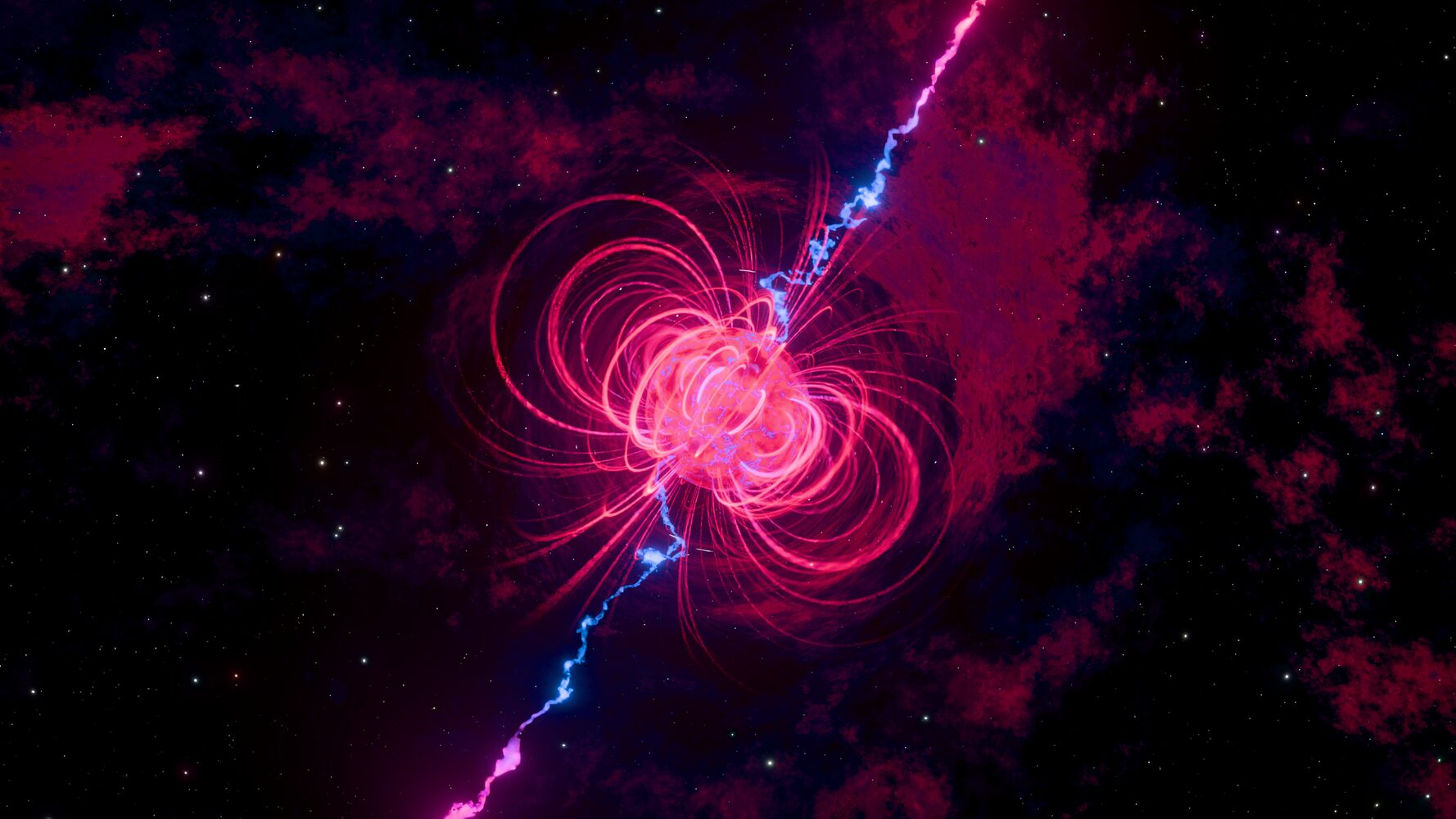
Picture two invisible ropes of magnetic field, stretched taut on either side of a boundary in space, suddenly snapping and reconnecting into a new shape. That snap releases a burst of energy and flings charged particles outward like a slingshot. It happens constantly around the Sun, and now a team from Boston University, Princeton, the University of Iowa, UC Berkeley and several other institutions has caught it happening for the first time right next to Mars.
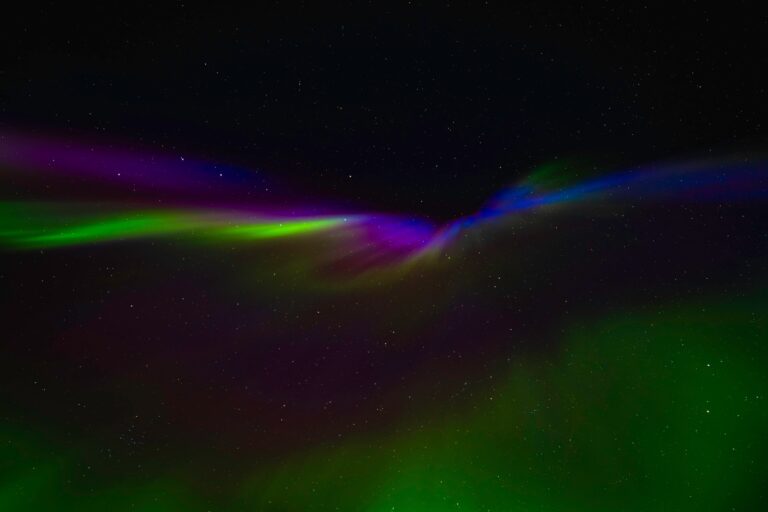
This snapping process, called magnetic reconnection, is one of the most important engines in space physics. It powers solar flares, coronal mass ejections and the auroras that light up polar skies on Earth. It happens wherever a current sheet forms, a thin boundary separating regions of plasma with differently oriented magnetic fields. The solar wind, the constant stream of charged particles blasting out from the Sun, is full of these boundaries, which makes it a natural laboratory for studying reconnection far from any planet’s surface.
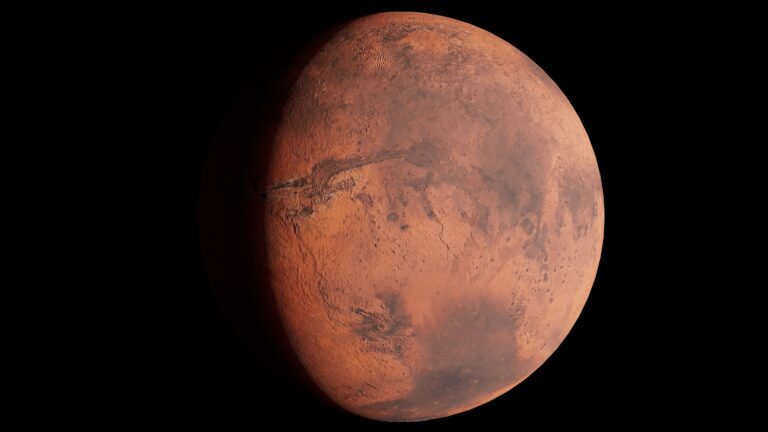
Mars had never offered a direct look at this happening in its own backyard. Researchers had detected plenty of current sheets in the solar wind near Mars before, but all of them looked static, just boundaries sitting there without anything crossing them. Whether reconnection was actually firing inside those boundaries near the Red Planet was an open question, one made more interesting by the fact that Mars, unlike Earth, has no global magnetic field of its own. It relies on a weaker, induced magnetosphere generated by the solar wind interacting directly with its upper atmosphere, a genuinely different plasma environment from anything found near Earth.
Using data from NASA’s MAVEN spacecraft, which has been orbiting Mars since 2014, the team combed through magnetic field, ion and electron measurements looking for the telltale fingerprints of reconnection. They found two clear cases, one from June 2025 and another from January 2015. In both, the magnetic field flipped direction across a thin boundary while ion beams shot outward at close to the Alfven speed, the characteristic velocity at which disturbances travel through a magnetized plasma. That combination, a split magnetic field paired with fast, aligned particle jets, is the classic signature of what physicists call a Petschek-type reconnection exhaust.
The numbers back up the interpretation. In the June 2025 event, ion speeds shifted from roughly 270 to 242 kilometers per second on either side of the boundary, tracking closely with the Alfven speed calculated from the local magnetic field and plasma density. A statistical test of how well the plasma velocity matched the Alfven velocity, the Walen test, returned a correlation of 0.82, a strong match. The January 2015 event showed the same pattern with a correlation of 0.77. Ion temperatures also rose slightly inside the exhaust region in both cases, consistent with the heating expected when magnetic energy converts into particle motion.
The size of these exhaust regions is what genuinely surprised the researchers. Current sheets near Mars are typically just one to two Mars radii thick, roughly 3,400 to 6,800 kilometers. The two reconnection events measured here stretched across 17.2 and 6.6 Mars radii respectively, meaning the first one alone spanned close to 60,000 kilometers, about a seventh of the distance from Earth to the Moon. That scale suggests reconnection does not just flip the magnetic field locally, it can dramatically stretch and reshape the boundary as the exhaust plasma flows outward.
For the June 2025 event, the team got an unexpected assist. China’s Tianwen-1 orbiter happened to be flying through the Martian magnetosheath at the same time, about 4.5 Mars radii away from MAVEN. Tianwen-1 recorded the same magnetic field rotation independently, confirming that the disturbance genuinely extended across that entire distance rather than being a fluke reading from a single instrument. Two spacecraft built by two different space programs, sampling the same invisible event from different points in space, is about as solid a confirmation as this kind of measurement gets.
It is worth being precise about what this does and does not show. The team analyzed two individual events in detail, not a large statistical sample, so this is best read as proof that Martian reconnection happens and looks physically similar to what is seen near Earth and the Sun, rather than a complete map of how often it occurs or exactly how much it matters for the planet overall. The measured effects on the surrounding solar wind were also fairly modest: dynamic pressure inside the exhaust regions rose by about 9.5 and 18.4 percent compared to the surrounding plasma in the two events, not the kind of dramatic swing that would reshape Mars’s atmosphere on its own.
Even modest effects add up when they are happening constantly across a planet with no global magnetic shield. Mars lost most of its atmosphere over billions of years partly because it lacks the protective magnetic bubble Earth has, leaving it more exposed to whatever the solar wind throws at it. Confirming that reconnection is an active, ongoing process in that exposed environment gives researchers a missing piece for modeling how the Martian plasma environment behaves today, which matters both for understanding the planet’s history and for planning future missions that will have to operate inside that same unshielded space weather.
The study, “Direct Observations of Magnetic Reconnection in the Solar Wind Current Sheets near Mars,” was carried out by Chi Zhang, Chuanfei Dong and colleagues at Boston University, Princeton’s Institute for Advanced Study, the University of Iowa, UC Berkeley and other institutions, and published in The Astrophysical Journal Letters in June 2026 (DOI: 10.3847/2041-8213/ae78dc). It is openly available under a Creative Commons Attribution license.