 Editorial NexoScience
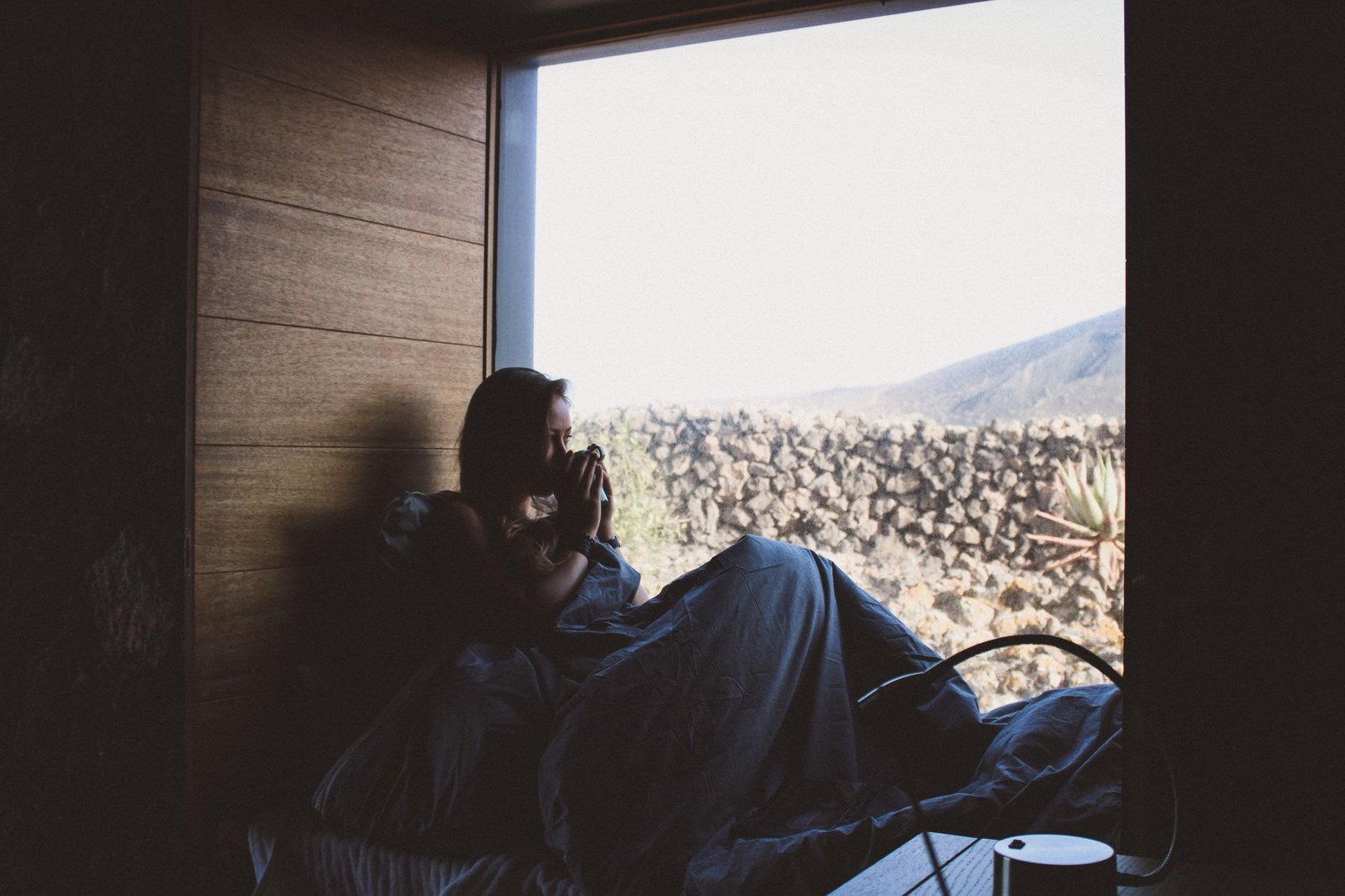
Wide awake at 2 a.m. on a Saturday. Still asleep at noon on Sunday. Dragging through Monday morning as if you’d flown in from another time zone. For some people with depression, that pattern isn’t a side note to the illness. It may be close to its core.
That’s the idea behind circadian depression, a proposed subtype of depression driven by a body clock that runs out of step with the day. A study of 11,380 Australian adults with depression, published in 2026 in The British Journal of Psychiatry, put the idea to a large test. About one in four participants, 2,604 people or 23%, met at least three of six markers of a disrupted body clock. Compared with everyone else, they got sick younger, reported more severe symptoms, rated common antidepressants as less helpful and carried a different genetic profile.
The team started from a long-standing frustration. Depression looks similar from the outside in many people, but it probably has several different engines underneath. Treatment guidelines still mostly sort patients by how severe or persistent their illness is, the authors wrote, and that often leads to “repeated trial-and-error prescribing” of the same few drugs. A subtype that pointed to a specific cause could, in theory, point to a better first treatment.
What circadian depression looks like in the data
Six clues to a clock running late. The researchers, led by Emiliana Tonini at the University of Sydney’s Brain and Mind Centre, used survey data from the Australian Genetics of Depression Study, a nationwide cohort of people diagnosed with depression at some point in their lives. They picked six features linked to the body clock:
- Seasonality, meaning mood, sleep, appetite or energy that shift clearly with the seasons
- A late sleep midpoint, the halfway point between falling asleep and waking up on free days
- Social jetlag, a big gap between sleep timing on workdays and days off
- An evening chronotype, people who describe themselves as “definitely an evening type”
- Morning tiredness, feeling “very tired” in the first half hour after waking
- Hypersomnia, sleeping much more than usual during the worst depressive episode
Anyone who met three or more was placed in the circadian group. Hypersomnia was the most common feature in that group, at 84%, followed closely by morning tiredness at 83%. The most frequent combination was hypersomnia, morning tiredness and an evening chronotype together.
The circadian group got sick earlier and harder. On average, their depression began at about 18.7 years of age, compared with 23.2 years in the rest of the sample. More than half of them, 52%, reported ten or more depressive episodes, against 36% of the non-circadian group. They also scored higher on manic-like and psychotic-like experiences, suicidal thoughts, psychological distress and physical complaints. Weight gain during episodes was more common too, at 41% versus 31%. They were younger and more often women.
Think of social jetlag as flying to Paris every Friday and back every Monday without ever leaving home. The body clock keeps one schedule. Work and family keep another. In this group, that mismatch wasn’t an occasional bad week but a habit that showed up across several measures at once.
How circadian rhythm disruption shows up in the genes
The DNA told a matching story. Participants gave saliva samples, and the team calculated polygenic risk scores, a single number that adds up many small genetic variants tied to a trait or condition. People in the circadian group had higher genetic scores for ADHD, major depression, anxiety and bipolar disorder. They also scored higher for insomnia, later sleep timing and body mass index, and for blood fats called triglycerides, insulin resistance and interleukin-6, a marker of inflammation.
The strongest genetic link was with chronotype itself. The circadian group was clearly more likely to carry the genetic leaning toward being an evening person, the biggest effect among all 28 scores tested. Let me explain why that matters. If late sleep were only a symptom of feeling depressed, you wouldn’t expect it to line up with inherited sleep timing. The authors argue that this overlap is “suggestive evidence” the subtype captures a real biological group, rather than a side effect of being unwell.
Bipolar disorder sat close by, but not on top. Twelve percent of the circadian group said they had been diagnosed with bipolar disorder, against 9% of the others. Around 700 people with bipolar diagnoses still landed outside the circadian group. The overlap with atypical depression, another proposed subtype that also includes oversleeping, was larger, yet about 1,400 people with atypical depression didn’t meet the circadian criteria. The authors read that as two related but separable profiles.
Circadian depression and antidepressant response
The usual pills seemed to work less well. Participants rated how well ten of Australia’s most prescribed antidepressants had worked for them. People in the circadian group gave lower ratings to SSRIs (selective serotonin reuptake inhibitors, such as sertraline and escitalopram) and to SNRIs (serotonin and noradrenaline reuptake inhibitors, such as venlafaxine). The gap was modest. There was no clear difference for mirtazapine or amitriptyline. The circadian group also reported more side effects across a long list, from drowsiness and dry mouth to headaches and weight gain.
That runs against a common expectation. More severe depression is usually seen as a sign that a person will respond better to antidepressants, the authors noted, so finding the opposite here hints that something different may be going on in this group. It also fits earlier work by the same team, which found that people with depression who are evening types reported poorer results with SSRIs.
Treatments aimed at the clock are a proposal, not a result. The authors suggest that people with this profile might benefit more from chronotherapies, treatments that target the body clock directly. They point to growing evidence for daytime light exposure, less light at night, regular sleep and wake times, and melatonin or drugs that act on melatonin receptors. This study didn’t test any of them. And nothing in it tells anyone to change or stop a medication. That’s a conversation for a doctor who knows the person’s history. If you’re curious how sleep itself ties into health more broadly, here’s what wrist trackers show about REM sleep and disease risk.
Why this study can’t show the body clock causes depression
The authors list a long set of limits. Everything came from a one-time online survey, so it captures a single snapshot and leans on people’s memory of past episodes and past drugs. Because the data are cross-sectional, the study can’t say whether a disrupted body clock causes depression, follows from it, or both share a third cause. Nobody’s internal clock was measured directly, with hormones or body temperature, for example. All participants had European ancestry. And the cohort skews toward severe, recurring illness: only 4% reported a single episode.
The six criteria themselves are provisional. Each one counted equally, and the cut-off of three was chosen partly to make the groups big enough to study. When the team left out people who didn’t fully meet standard criteria for major depression, three of the genetic links and one of the treatment links lost statistical significance, although the overall pattern held. The thing is, the authors don’t oversell this. They call their work “an initial exploration” and write that, “pending independent replication,” the biology and predictive value of the subtype still need checking.
The next step is to see whether the same group turns up in other countries and other samples, whether it predicts how someone’s illness will unfold, and whether treatments built around the body clock actually help these patients more. If they do, a few plain questions about sleep timing could one day help guide the first treatment someone is offered.
The study at a glance
- Journal: The British Journal of Psychiatry, 2026
- Type of study: Cross-sectional analysis of survey answers and genetic data from a national depression cohort
- Sample: 11,380 adults with a lifetime diagnosis of depression in the Australian Genetics of Depression Study
- Main finding: About 23% met at least three of six body clock markers, and this group had earlier onset, more severe symptoms, lower rated benefit from SSRIs and SNRIs, and higher genetic scores for evening chronotype.
- Limits: Self-reported, single time point and European ancestry only, so it cannot show that body clock disruption causes depression.
Source: Emiliana Tonini, Jacob J. Crouse, Mirim Shin, Joanne S. Carpenter, Brittany L. Mitchell, Enda M. Byrne, Ian B. Hickie and colleagues, “Clinical and genetic correlates of a circadian subtype of depression in the Australian Genetics of Depression Study,” The British Journal of Psychiatry (2026). DOI: 10.1192/bjp.2026.10798
This article summarizes published scientific research for general information. It is not medical advice and does not replace consultation with a qualified health professional.