 Editorial NexoScience
Somewhere along the way, most of us picked up a tidy rule: the brain finishes growing up at twenty-five. It gets repeated at dinner tables, in car insurance jokes and in late-night arguments about who counts as a real adult. It is a neat number. The brain, it turns out, doesn’t care much for neat numbers.
So when is the brain fully developed? A map of brain wiring built from scans of 3,802 people, aged from newborn to 90, suggests the long stretch of youthful rewiring doesn’t wrap up in the mid-twenties. The way the brain’s connections are organized keeps moving in the same direction from about age 9 to about age 32, and only then swings into a new, adult pattern. Researchers at the University of Cambridge reported the result in the journal Nature Communications in late 2025.
There’s an important catch hiding in the word “adolescence.” The study does not say a 30-year-old thinks or behaves like a teenager. It describes an epoch, a single long phase in which the brain’s network of connections reorganizes along one steady path. The authors labeled that phase “adolescence” because it starts around puberty, but it is a statement about wiring, not about maturity, judgment or anything you’d see on a driving test.
Brain development stages by age, as seen in the wiring
Five eras, four hinges. The team, led by neuroscientist Alexa Mousley of the MRC Cognition and Brain Sciences Unit at Cambridge, found four major turning points across the lifespan, at roughly 9, 32, 66 and 83 years old. Those hinges split life into five eras. The first runs from birth to about 9. The second, the long “adolescent” one, runs from 9 to 32. Adulthood follows and lasts more than three decades, until about 66. Then come an early aging phase up to about 83 and a late aging phase after that.
The eras are defined by direction, not by size. Each one is a period in which the brain’s organization keeps changing along the same trajectory. At a turning point, that trajectory bends. Think of it like a car on a long road trip. The car never stops moving, but now and then it takes an exit and heads somewhere new. The turning points are the exits.
How the scientists mapped brain wiring across a lifetime
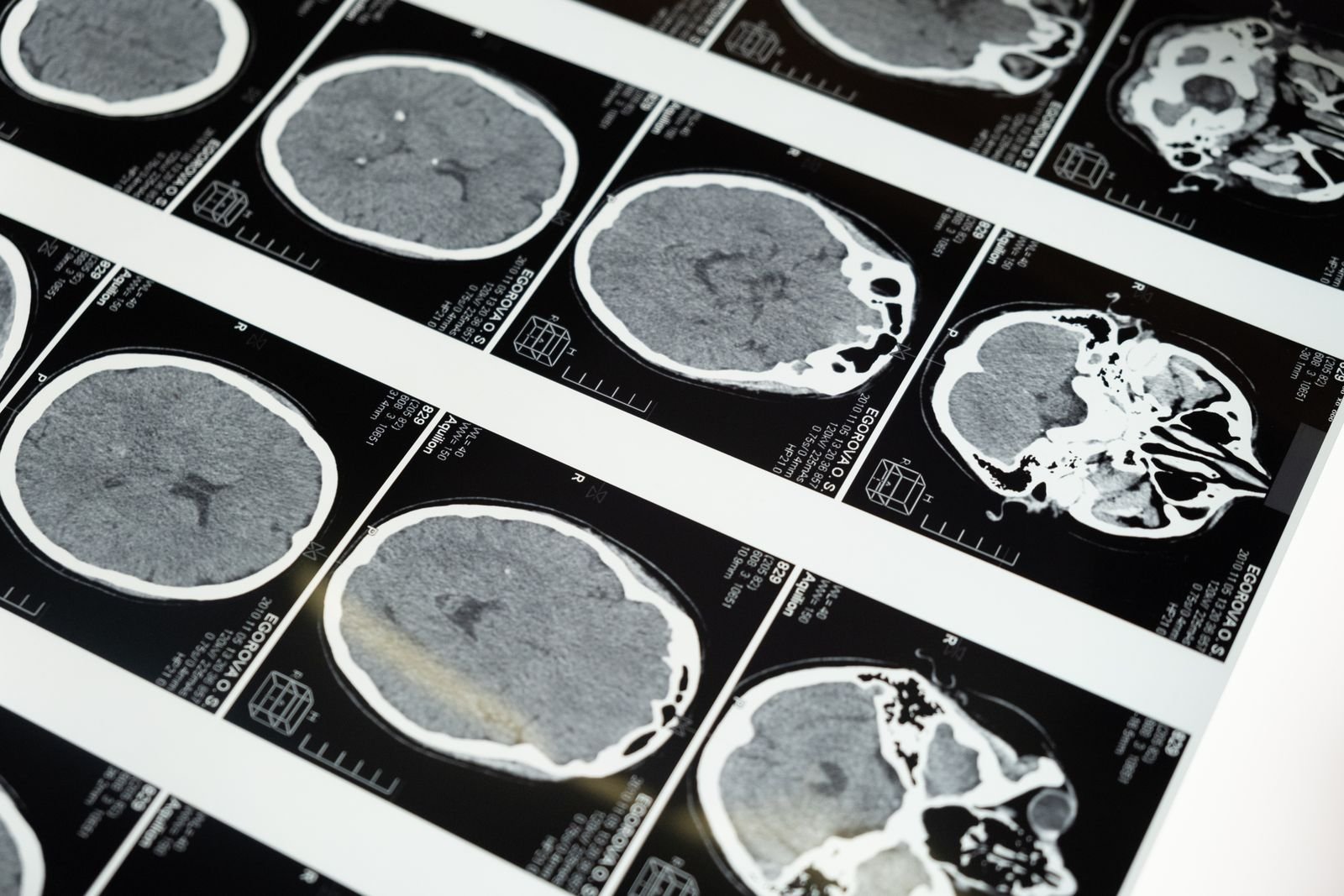
Water gives the wiring away. The researchers pooled diffusion MRI scans from nine existing datasets in the United Kingdom and the United States. Diffusion MRI tracks how water moves through brain tissue. Water slides more easily along the long bundles of nerve fibers, the white matter, than across them, so the scans reveal which brain regions are linked and how strongly.
From scans to a road map. For each person, the team turned the scan into a network: 90 brain regions as the towns, the fiber bundles between them as the roads. Then they measured that network in 12 different ways. Some measures capture integration, how easily a signal can travel across the whole brain using short routes. Others capture segregation, how much the brain splits into tight local neighborhoods that handle their own business. A few track centrality, meaning how much traffic depends on a handful of key hubs.
Letting the data draw the borders. Here’s the thing: twelve measures of the same brain are hard to read at once. So the team squeezed them into a simpler three-dimensional picture with a technique called UMAP, which compresses complex data while keeping its overall shape. Because the result depends on how you set the tool, they ran it 968 times with different settings and looked for the ages that kept showing up as bends. Age 9 turned up most often. Age 32 came out as the biggest shift of all.
Why the brain development myth of twenty-five falls short
The strongest turn comes in the early thirties. Of the four turning points, age 32 had the most changes in direction. Before it, the brain’s global efficiency kept rising, meaning signals had more short paths across the network. After it, efficiency began a slow decline, and the network started to split into more separate, specialized modules. Global efficiency peaked at about 29 years old in the team’s analysis, then dropped steadily all the way to a low at 90.
Only one era gets more efficient. That rising integration belongs to the 9 to 32 stretch alone. In early childhood, global integration actually falls as the brain prunes away a huge surplus of early connections. In adulthood and old age, it falls again. “Neural efficiency is as you might imagine, well connected by short paths, and the adolescent era is the only one in which this efficiency is increasing,” Mousley said in a statement from the University of Cambridge.
The rule of twenty-five was never this precise. Honestly, the end of adolescence has always been blurry. The authors point out that older definitions ended it before 20, while more recent ones stretch it into the mid-twenties, and that the move to adulthood depends heavily on culture and history, not just biology. Their wiring data simply add a biological marker that lands later than either. It also fits with earlier findings that white matter volume peaks around age 29 and that several network measures hit their highs or lows at the start of the fourth decade of life.
After 32, things calm down. The adult era is the longest and the most stable, with no major turning point for more than three decades. The authors note that this quiet stretch lines up with what other research describes as a plateau in intelligence and personality. The turn near 66 is subtler, a reshuffle rather than a reversal, and it arrives at an age when conditions such as high blood pressure and dementia start to become more common. After 83, the network leans more on a few local hubs, though the data there are thin.
What age brain development stops, and what the study can’t say
Brain development doesn’t stop at 32. The study doesn’t claim it does, either. The brain keeps changing for life. What ends around the early thirties is one particular direction of change, the climb toward a more efficient, more integrated network. Calling it the end of brain development would be like saying a river stops flowing because it changes course.
The limits are real, and the authors name them. Every person was scanned once, so the study compares different people at different ages rather than following anyone through life. That design can’t show how a single brain changes over time, or prove what causes the turning points. The data come from Western countries, the UK and the US, and may not hold elsewhere. The team didn’t split the analysis by sex because of sample size. The oldest group, those over 83, had only 93 people, so the last turning point rests on weak statistical power, and the researchers suspect their older volunteers were healthier than typical people their age. Many processing choices, such as how the curves were fitted, also shift exactly where the turning points land.
The next question is about timing and risk. If the brain’s wiring has a few big hinges rather than a smooth ramp, those hinges could be moments of extra vulnerability, from learning difficulties in childhood to dementia later on. Testing that will take studies that follow the same people for years, ideally from many countries. For now, the rule of twenty-five looks less like a finish line and more like a rough guess about a road that keeps going. If you’re curious how other brain studies stack up, our guide to what the evidence says about brain health collects them in one place.
The study at a glance
- Journal: Nature Communications, 2025
- Type of study: Cross-sectional analysis of diffusion MRI brain scans pooled from nine datasets
- Sample: 3,802 neurotypical people aged from newborn to 90 in the UK and US
- Main finding: Brain wiring shifts direction at four turning points, around ages 9, 32, 66 and 83, and the strongest one is at 32.
- Limits: Each person was scanned once, so it can’t track one brain over time or show what causes the shifts.
Source: Mousley, A., Bethlehem, R. A. I., Yeh, F.-C. F., and Astle, D. E. “Topological turning points across the human lifespan.” Nature Communications (2025). DOI: 10.1038/s41467-025-65974-8
This article summarizes published scientific research for general information. It is not medical advice and does not replace consultation with a qualified health professional.