 Editorial NexoScience
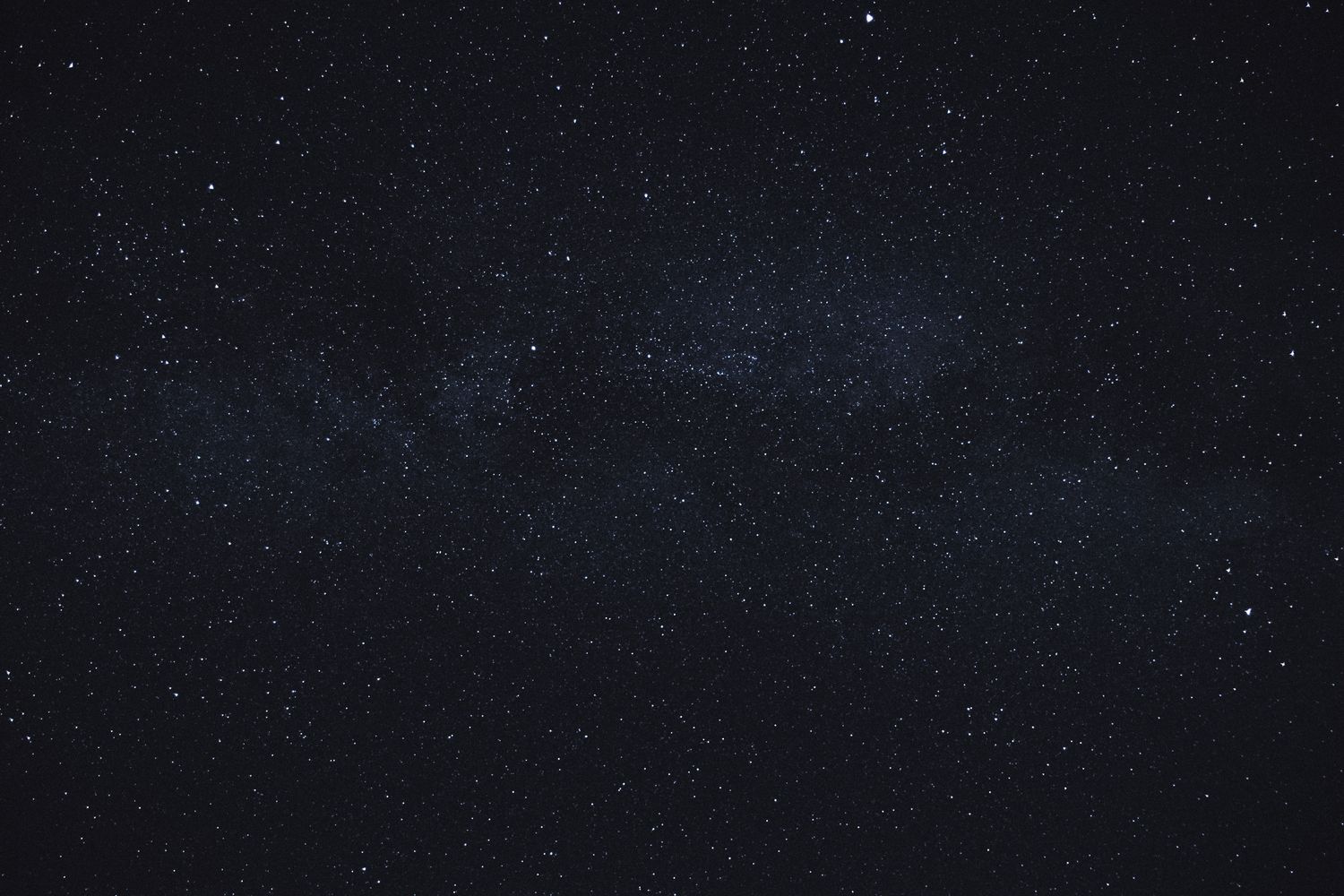
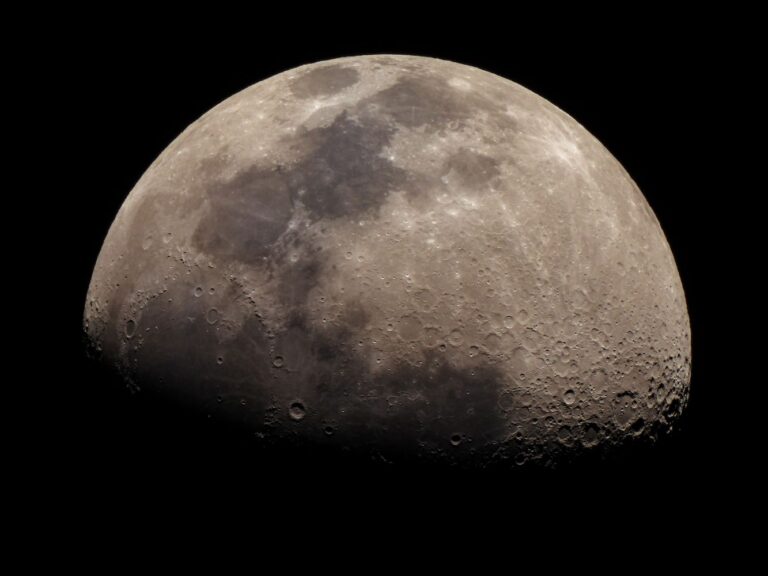
A little before three in the morning on July 22, 1889, three bright things hung low in the eastern sky over Saint-Rémy-de-Provence, in southern France. A thin waning Moon. Venus, blazing just above the hills. And between them, a small sideways V of stars in the constellation Taurus. A new analysis argues that this is the sky Vincent van Gogh put into The Starry Night.
The work, led by Elijah Jeong-hyun Kim of Kyung Hee University’s School of Space Research and the company SLLAB Inc. in Yongin, South Korea, was published Thursday (Oct. 22) in the journal Scientific Reports. It tackles an old question: does The Starry Night show a real sky, or one Van Gogh dreamed up? The team’s answer is that the stars, the Moon and Venus on the canvas line up with a specific dawn, about a month later than art historians have long placed the painting.
The June date never fit the Moon. The usual dating rests on a letter of June 18, 1889, in which Van Gogh told his brother Theo he had “a new study of a starry sky.” In the 1980s, two astronomers tried to match the painting to mid-June skies. One proposed the dawn of June 19, with the curl of stars at the center being the constellation Aries. The other rejected that date and called the sky a composite. Their conclusions clashed, and the idea that the painting showed a real sky drifted to the margins. The biggest problem was the Moon. On June 19 it was about 63% lit, already past half. The Moon in the painting is a sharp crescent, and Van Gogh clearly knew the difference: in another drawing he rendered a half Moon with a ruler-straight edge.
The method was tried first on paintings with known answers. The team used Procrustes analysis, a statistical tool that slides, rotates and resizes one set of points over another without bending it, then measures what’s left over as a percentage of the pattern’s size. A painting by Adam Elsheimer from 1609 failed early: its Big Dipper sits at an angle to the Milky Way that no real sky can produce. A starry night by Jean-François Millet passed, with eight stars of Orion and Canis Major matched at an average error of under 4%. Two Van Gogh night scenes from 1888, painted at sites that still exist, set the benchmark. Starry Night over the Rhône, with its unmistakable Big Dipper, came out at about 6.5%. Café Terrace at Night, where the authors identified the Summer Triangle, scored about 5.5%. That range is what “faithfully copied from the sky” looks like for this painter.
Van Gogh saw that village through a narrow window. To guess how much sky The Starry Night covers, the researchers used an earlier drawing of the same landscape, catalogued as F1541v. On field trips to Saint-Rémy in June and July 2019, they found a ridge southwest of the asylum where the view matches the drawing, and overlaid it on photographs. The drawing’s frame works out to the view of a 134 mm telephoto lens, about 18 degrees from corner to corner. That’s a little less than the span of your outstretched hand at arm’s length. For comparison, the sky in Starry Night over the Rhône covers roughly 75 degrees, a wide-angle view about four times broader. The authors then asked which dawns of 1889 would squeeze the Moon and Venus into that narrow frame.
Only a handful of dawns pass the test. In the painting the Moon sits above Venus. Across June and July 1889, only three dawns put both inside the frame: June 23, July 22 and July 23. The July dates also bring in Aldebaran, a first-magnitude star, and on July 22 the Hyades land near the middle. The day-by-day changes are tight. At 3 a.m. local time on July 21, the Moon and Venus were about 30 degrees apart, too far for the frame. On July 22 they were 18.6 degrees apart, almost exactly the frame’s diagonal, and the Moon was a crescent about 28% lit. By July 24 the two had closed to about 3 degrees, a pairing that looks nothing like the canvas.
The V at the center looks like the Hyades. The Hyades are a star cluster in Taurus whose brightest members trace a sideways V, with Aldebaran at one tip. The team picked five points on the canvas to match the cluster’s five skeleton stars before running any fit. The match came out at about 8%, and when the researchers tried all 120 possible ways of pairing those five painted stars with the five real ones, the correct anatomical pairing was the single best. The tilt fits too. In the painting, the arm of the V leans 33.13 degrees from the horizon. In the real sky that morning, between Venus clearing the hills at 1:53 a.m. and the brightening of twilight at 3:20 a.m., the same arm leaned between 32.6 and 35.1 degrees.
A later copy got the stars even closer. Van Gogh made a black-and-white drawing of The Starry Night, known as F1540. Its V matches the Hyades better than the oil does, about 6.6% against 8.2%. Honestly, it’s the strangest detail in the paper. A copy made by rote should inherit the original’s mistakes, not fix them, the authors argue, so the drawing hints that Van Gogh had the real shape in mind. An earlier examination of the canvas also found that he left blank spots for the stars before painting in the blue, so their layout was planned from the start rather than dabbed in at the end.
Here’s the thing: a good shape match proves little on its own. The authors are upfront about this. Three stars of Andromeda fit a trio of painted stars better than the Hyades fit theirs, at under 1.5%, simply because any three points make a triangle. A patch of Lyra matched at about 4%, but the painting has no star where Vega, Lyra’s brightest, should be, and Lyra was in the western sky. A larger Auriga fit came within 0.6 points of the Hyades, but only by treating Venus as a star. The selection rests on the Moon, Venus and the narrow frame. The shape fit is a check that nothing contradicts it.
A seizure stood in the way, until the letters were reread. Historians have placed a severe seizure in mid-July 1889, which would have kept Van Gogh from painting a late-July sky. The team points to a letter from early August in which the asylum doctor’s report describes the illness lasting “a day or two.” In another letter, Van Gogh said the attack hit him in the fields on a windy day, and weather records show a strong mistral at three stations from July 27 to 29. In September he recalled his seclusion as six weeks, which counts back to about July 25 or 26. His sister-in-law Jo van Gogh-Bonger later wrote that the illness struck in August.
Cicadas and heat point to July as well. In a letter of September 20, Van Gogh grouped The Starry Night with a painting of olive trees, which he said tried to capture the hour when green beetles and cicadas fly in the heat. Avignon’s records show only four days in June 1889 at or above 86 degrees Fahrenheit (30 degrees Celsius), and none during June 16 to 19. July had eighteen, including fifteen days in a row between 86 and 93 F (30 and 34 C). The authors treat this as background, not proof.
Not every astronomer is convinced. Donald Olson of Texas State University, who has written about astronomy in art history, told Science News that the narrow frame clashes with the much wider view needed to take in the painting’s round hills and cliffs. He suggests a test: tell an amateur astronomer the painting shows the Hyades and ask them to find Aldebaran, the cluster’s brightest star. The authors place it to the left of the cypress, but Olson doubts many people would pick it out.
The caveats are real. No record says which night Van Gogh looked out his window. July 22 is a reconstruction, the date that best satisfies a stack of physical constraints, and the authors write that impressions from several neighboring nights may have blended, with July 22 as their center. The study says nothing about when the painting was begun or whether it was reworked. The narrow frame comes from a drawing and is an assumption checked only after the fact. The weather data predate standardized instruments and have gaps. No medical record pins down the seizure. The first author proposed the July 22 date in an earlier book, and the authors declare that SLLAB may earn money from books, exhibitions and media based on this work.
An exaggeration needs something real to exaggerate. Van Gogh himself described this group of paintings as “exaggerations from the point of view of the arrangement,” and the team reads that literally: the swirls are style laid over a sky he actually watched. The code and star coordinates are public, and the authors want the same approach turned on other old night paintings that nobody has checked. Olson’s Aldebaran challenge is a fair next step, and anyone with a print of The Starry Night and a star chart can try it.
Source: Kim, E. J.-h., Kang, S., Song, J. & Jin, H. “The actual sky of Van Gogh’s Starry Night: a multidisciplinary reconstruction.” Scientific Reports 16, 31109 (2026). DOI: 10.1038/s41598-026-73025-5