 Editorial NexoScience
A jar of yellow dye. A pinch of white plastic powder. A stir bar left spinning for ten days. By the end, the water had gone from light yellow to almost clear, and the only thing that had touched the dye was a material sold on the promise that it doesn’t react with anything.
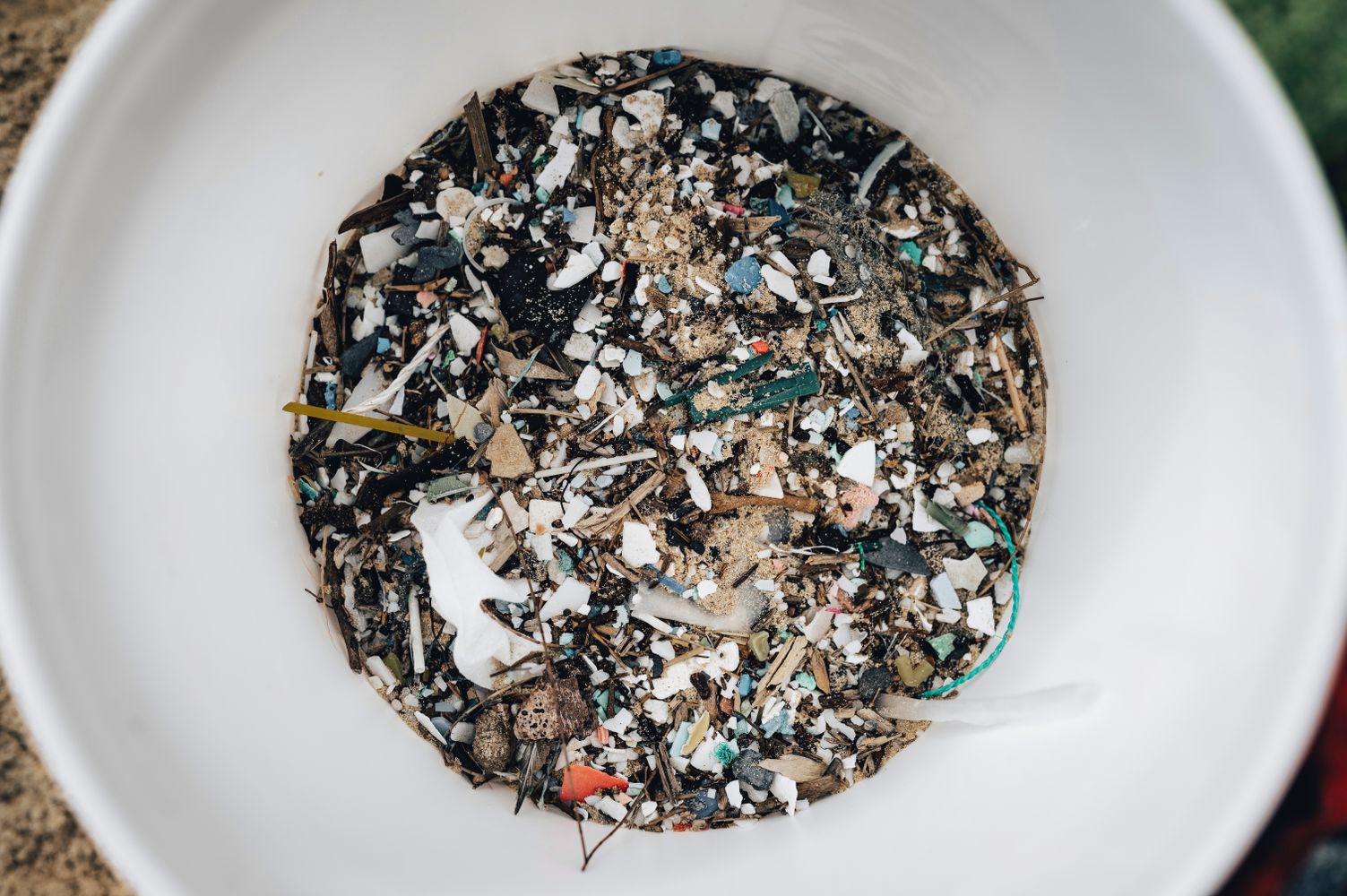
That small result opens a larger argument. In a new study in the journal Nature, Naixin Qian, the first author, and colleagues report that microplastics, the plastic fragments smaller than about 0.2 inch (5 millimeters), are chemically active in water. At the boundary where plastic meets water, they generate reactive oxygen species, a family of short-lived, oxygen-based molecules that can damage proteins and other biological material. No sunlight is needed, and no added chemicals. The authors say the finding challenges the long-held view of plastics as inert and points to a possibly overlooked way that microplastics could cause harm.
Polystyrene went first. The team started with polystyrene, the plastic behind foam cups and many disposable containers. Its surface carries nothing but a hydrocarbon backbone and ring-shaped side groups, so it shouldn’t touch methyl orange, a dye that breaks apart when reactive oxygen hits it. Yet in water, stirred with polystyrene powder, the dye lost nearly 90% of its color over ten days. Without the plastic, the dye stayed stable. And when the researchers repeated the test in methanol, ethanol and other common solvents, the plastic left the dye essentially alone. Whatever was happening needed water.
The culprit was the hydroxyl radical. To identify it, the researchers used electron spin resonance, a technique that picks up molecules with an unpaired electron, known as radicals. Mixed with polystyrene and a chemical trap, the water held a blend of radicals, with clear signs of the hydroxyl radical, one of the most reactive forms of oxygen there is. Next came a fluorescent sensor that lights up only when it meets a hydroxyl radical. Under a confocal microscope, the glow sat right on the surface of each plastic grain, and it kept getting brighter over time. Here’s the thing: the reaction wasn’t a one-off burst. It was steady, and after about 16 hours enough sensor had reacted to show up clearly in the bulk liquid too. Polystyrene bought from different suppliers did the same thing, with modest differences linked to particle shape and how oxidized the surface was.
A soapy coating switched it off. If the chemistry really lives at the plastic’s surface, smothering that surface should stop it. So the team added Triton X-100, a detergent-like surfactant that sticks to the plastic. The more surfactant they added, the fewer radicals they saw. A second change tracked the first. In water, polystyrene grains carry a strong negative charge at their surface, measured as zeta potential, and a positively charged dye piled up around them. With surfactant, that charge fell to nearly zero and the dye stopped gathering. In ethanol, where the dye had survived, the charge was weak too. Across the four surfactant levels, charge and radical production moved almost in lockstep. Water, the authors argue, is what electrifies the plastic, and the electrified surface is what makes radicals.
All six everyday plastics did it. The researchers ran the same glow test on polypropylene, polyethylene, polyvinyl chloride (PVC), polystyrene, polyethylene terephthalate (PET, the plastic of most drink bottles) and poly(methyl methacrylate) (PMMA, better known as acrylic). Every one produced radicals. They didn’t do it equally, though. The polyolefins, polyethylene and polypropylene, made of nothing but plain hydrocarbon chains, were the most active. PET and acrylic, which carry chemical groups that attract water, were the least. The ranking lined up closely with how much each plastic repels water, measured by how sharply a droplet beads up on its surface. Put simply, the more a plastic sheds water, the more radicals it makes.
Water pressed against a greasy surface runs short of partners. To explain why, the team turned to computer simulations of water sitting on polyethylene, PVC and acrylic. In ordinary water, each molecule is held in a web of hydrogen bonds with its neighbors. Ordinary water also always holds a few hydroxide ions, and turning one of them into a hydroxyl radical means ripping off an electron, which costs a lot of energy. Think of a guest at a crowded party who suddenly finds half their friends have walked off: next to a water-repellent surface, some hydroxide ions lose part of their usual hydrogen-bond partners, and the calculations show those lonely ions give up an electron far more easily. Polyethylene had the most of them. Acrylic, whose ester groups offer water something to hold on to, had almost none. Adding the negative surface charge measured in the lab lowered the energy cost further. The authors note that pulling an electron off completely still isn’t free, so nearby acceptors such as dissolved oxygen likely help close the deal.
Proteins clumped and blood cells broke apart. The team then asked whether this surface chemistry matters for living material. Charged proteins and short strands of DNA gathered on plastic surfaces, more on water-repellent polypropylene than on acrylic. Lysozyme, a common test protein, slowly clumped into aggregates on polystyrene grains. Caffeine, which mops up radicals, largely stopped the clumping, and so did the surfactant coating. In a second test, red blood cells from lab mice that bumped into polystyrene particles broke into fragments shaped a bit like helmets. Across the six plastics, the amount of hemoglobin released from damaged cells followed the radical ranking, though less tightly than the earlier links.
This isn’t the usual way plastic breaks down. Researchers have long known that sunlight and harsh chemicals can oxidize plastic in the environment. The authors stress that this is different. The activity comes from the plastic simply touching water, at room temperature, in the dark. They also saw it go beyond fresh powder and simple salt solutions, although its strength shifted with surface shape, chemical coatings and surroundings. If it holds up outside the lab, it could feed into how plastic ages, how other pollutants stuck to it change, and how microplastics interact with cells.
The study didn’t test people, or even living animals. Everything here happened in vials and dishes, mostly with clean, lab-grade plastic powders rather than the weathered fragments found in rivers, soil or food. The blood work used mouse cells outside the body, and the protein test used a single model protein. The links between radical production and protein clumping or cell damage are correlations across six plastics, moderate rather than tight, and they don’t show that microplastics cause disease in anyone. The simulations rely on simplified models of the plastic surface and of the charged layer around it. The authors frame their result as a working hypothesis for how microplastics might modify and damage biomolecules, not as a measure of real-world exposure or risk. How much this surface chemistry adds to the reactive oxygen the body already makes on its own is a question the paper leaves open.
The fix might be built into the plastic itself. If water-repellent surfaces drive the effect, the authors suggest, then how a material’s surface interacts with water should become one more design variable for safer plastics. The finding also gives chemists something they rarely get: a solid, easy-to-handle surface for studying the same odd water chemistry seen in tiny water droplets. The next step is the obvious and harder one, finding out whether any of this happens, and matters, inside a living body.
Source: Qian, N., Zhao, R., Chan, K. Y., Vuong, V. G., Gao, X., Zhao, Z., et al. “Intrinsic physicochemical activity at microplastic–water interfaces.” Nature (2026). DOI: 10.1038/s41586-026-11141-y