 Editorial NexoScience
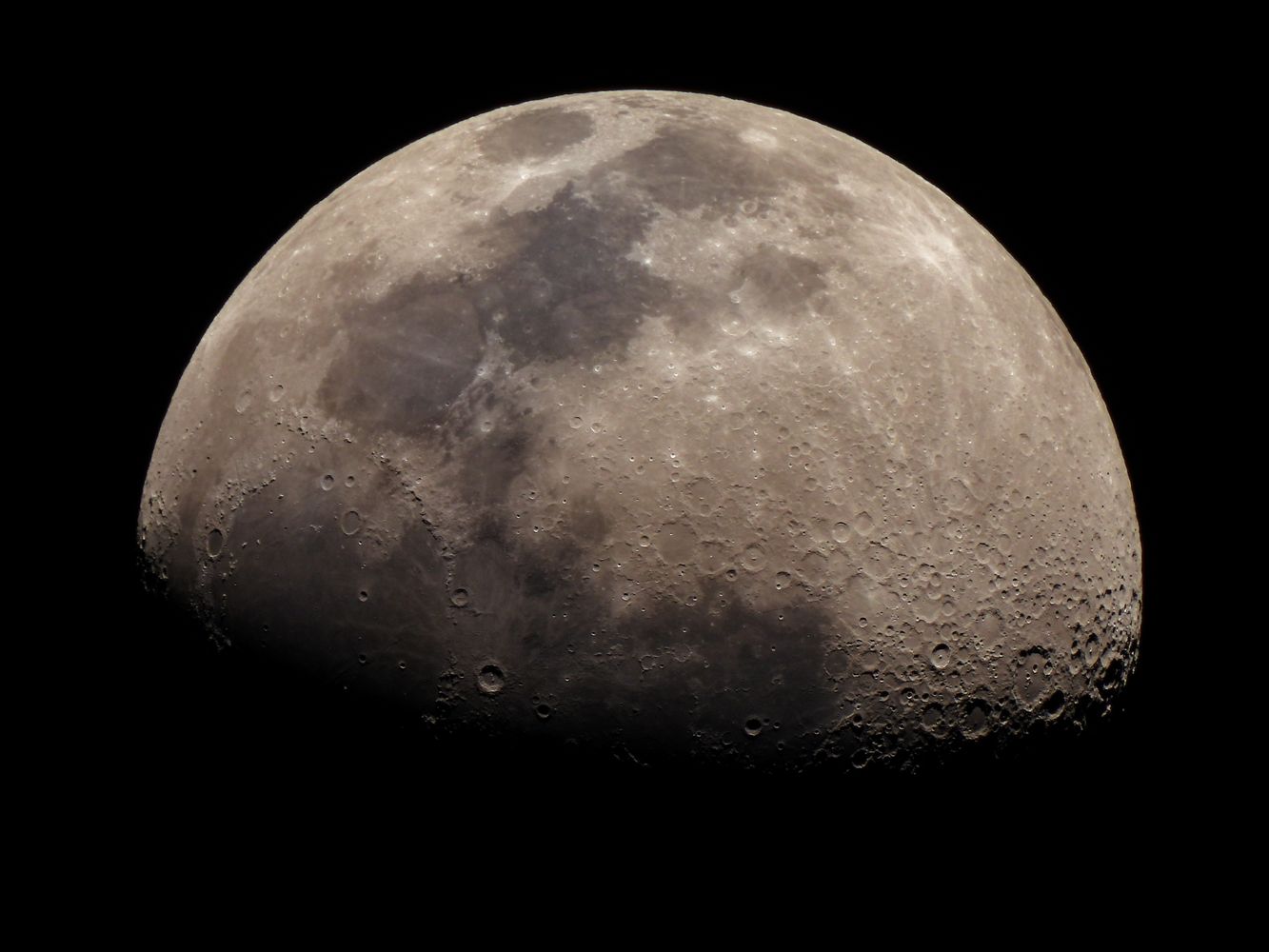
Nobody saw it happen. Sometime in the late spring of 2024, a small chunk of rock or ice struck the moon hard enough to blast out a hole wider than two football fields placed end to end. Then the scar sat there, unnoticed, for well over a year. It only turned up in the fall of 2025, during a routine comparison of before-and-after images, and it turned out to be the largest new impact crater ever found anywhere in the solar system.
The new moon crater, now named McGetchin, measures 728 feet (222 meters) across on average and 141 feet (43 meters) deep. Before this, the biggest fresh crater spotted on the moon was about 230 feet (70 meters) wide, and the event that made McGetchin released more than ten times as much energy. A team led by Mark Robinson described the crater in the journal Science Advances. According to current crater production models, an impact this size should hit the moon only about once every 132 years, which the researchers call “effectively a once-in-a-lifetime observation.”
The moon keeps its own before-and-after album. Since 2010, the Wide Angle Camera on NASA’s Lunar Reconnaissance Orbiter has photographed the entire moon every month, with each pixel covering about 330 feet (100 meters) of ground. Pick two months with similar lighting, line the images up, and software can flag anything that changed. It’s a giant game of spot-the-difference, played on a whole world. The moon is a good board for it. With no air, no liquid water and no large-scale tectonics, a fresh mark stays put, so the authors describe the moon as a natural “witness plate” for impacts in the inner solar system. Once the wide camera flagged the new spot, the orbiter’s Narrow Angle Camera zoomed in with images sharp enough to make out features about 3 feet (1 meter) across.
It landed right on a seam. McGetchin sits just inside the outer rim of the Crisium basin, an ancient impact scar on the moon’s near side. More precisely, it hit where two kinds of terrain meet. On one side is mare, the dark, flat volcanic rock that forms the moon’s “seas.” On the other is highland, the older, brighter crust. Long ago, thin lava flows spread over hummocky highland ground there, leaving a ragged border with highland islands poking through. For the researchers, that messy target is a bonus. It lets them see how a mixed surface changes the way a crater forms.
The crater isn’t quite round. Its width ranges from about 699 feet (213 meters) in one direction to 758 feet (231 meters) in another, and the rim is split into two arcs that don’t match. The western arc traces a wider circle than the eastern one. The authors think the west side dug into loose, granular soil, while the east side ran into a solid lava flow buried underneath, which held its shape better. Inside, the crater is shaped like a funnel. Its walls are steep, reaching 41 degrees in places, and a block of rock with roughly the footprint of two tennis courts has slumped down from the eastern rim.
Its floor is darker than anything nearby, and its walls brighter. The rough bottom of the crater holds some of the darkest material in the area, darker even than old, weathered mare. The team reads it as glassy impact melt, rock that liquefied in the blast and froze almost instantly, perhaps from the lava layer. Meanwhile, the brightest patches in the crater outshine every other spot in a strip of moon about 6 by 17 miles (9 by 27 kilometers). A narrow “tongue” of medium-toned debris also juts out from the northern rim. It seems to be made of loose grains, most likely ejected basalt, but the authors admit its origin “remains enigmatic.”
Boulders the size of a small house landed on the rim. The largest one, about 43 by 30 by 10 feet (13 by 9 by 3 meters), now sits perched on the southern edge of the crater. That’s a little bigger than the standard scaling rule for craters predicts, though still within its range. Most of the other big boulders came down close to home, inside the zone covered by a continuous blanket of ejecta, the debris thrown out of the crater.
The impact wiped the slate almost clean. The old surface here was heavily cratered, and the team counted those craters on images taken before the impact. Within the ejecta blanket, only five of 103 small craters, between about 20 and 40 feet (6 and 12 meters) wide, survived. Larger ones fared somewhat better, but every survivor is badly worn down. One of the biggest pre-existing craters sat right where the southern rim now rises, and no trace of it is left.
The faintest marks travel the farthest. Think about that for a second: a hole a couple of football fields wide changed the moon’s surface more than 75 miles (120 kilometers) away. Those distant changes are subtle, a shift in brightness of around 1%, too faint to see in a single photo. To find them, the team stacked hundreds of wide-angle images from before the impact and dozens from after, then compared the averages. A brighter zone reaches about 9 miles (15 kilometers) out, and a patchy darker zone stretches much farther, more than 1,000 crater radii from the impact. In places the disturbance has a delicate, lacy texture. The authors suggest that clumps of debris spread apart on their long flights and each one churned the dusty top layer where it came down, like a handful of gravel tossed across fresh snow.
A ridge should have blocked the spray, and it didn’t. Those distant zones are thought to form through “jetting,” a high-speed, very low-angle burst of material in the first instant of an impact. Conventional wisdom says jetted particles skim the surface at angles under 2 degrees. But about 5 miles (8 kilometers) west of McGetchin stands a ridge some 2,300 feet (700 meters) taller than the crater. Behind it, on the lava plain at its base, the surface is still up to 2.5% darker than before the impact, just as disturbed as other spots at the same distance. To clear that ridge, material had to fly out at steeper angles than the textbook picture allows. The researchers float several explanations: an elongated impactor, collisions with escaping gas that scattered the particles, or two separate ejection regimes. They don’t pick one.
Plenty about the impact is still unexplained. The once-every-132-years figure comes from models of how often space rocks hit the moon, not from a long record of watching. The team doesn’t know whether the impactor was a fragment of a comet or an asteroid. They searched for signs that it came in at a shallow angle, such as an oval crater or a debris-free wedge in the ejecta, and found none, even though several features line up along one direction. The tongue’s origin is unresolved, and so are small dark patches downhill from some boulders, which have at least three competing explanations. The elevation map of the site before the impact is also much coarser than the new one, so small differences far from the rim may just be noise. And the jetting story itself rests on processes that, as the authors write, are still “poorly understood.”
The researchers want someone to go and look. They argue that a rover visiting McGetchin would teach scientists a great deal about how craters form and how freshly disturbed lunar soil reflects light. It could also help explain the “cold spots” that show up around young craters, patches of ground that run colder at night than their surroundings. And because the crater’s birth date is known almost to the month, every later visit would measure how quickly the moon’s surface ages. Until then, the orbiter keeps taking its monthly pictures. The next new crater may already be out there, waiting to be noticed.
Source: Robinson, M. S., Boyd, A. K., Mahanti, P., Manheim, M. R., Speyerer, E. J., Stopar, J. D., et al. “A new 222-m diameter lunar crater.” Science Advances (2026). DOI: 10.1126/sciadv.aeh7812