 Editorial NexoScience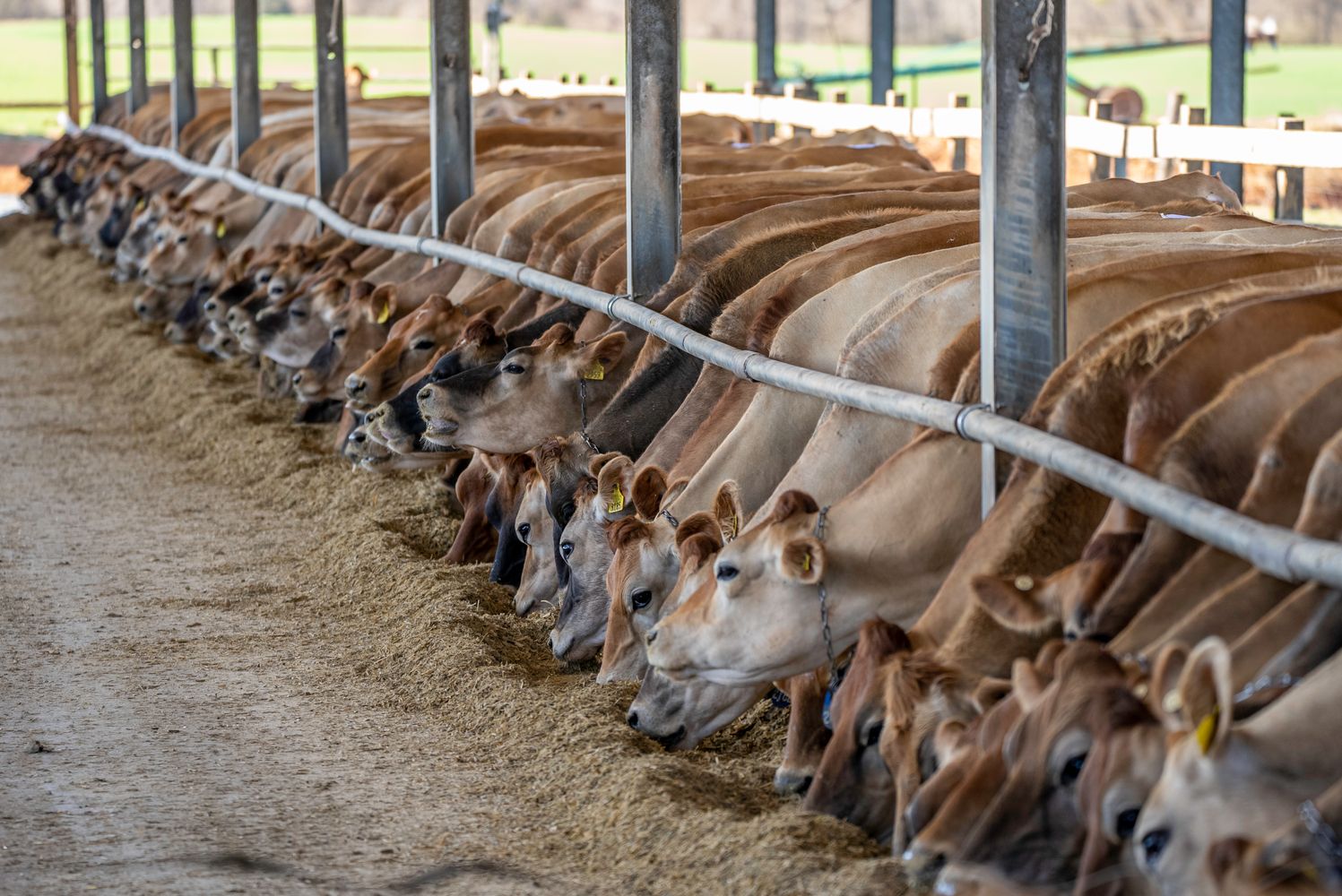
Every mouthful a dairy cow chews sets off a chain reaction inside four stomach chambers that ends, hours later, with a burp. Multiply that by roughly 270 million dairy cows worldwide and you get one of the least talked about drivers of climate change: enteric methane, the gas cattle release simply by digesting.
An analysis pooling data from 13 published trials and 48 treatment comparisons in dairy cattle has put a hard number on how much a single feed additive can cut that output. The compound is 3-nitrooxypropanol, known in the industry by its commercial name, Bovaer. Mixed into feed at an average dose of about 70 milligrams per kilogram of dry matter, it lowered methane production by 32.7%, methane yield per kilogram of feed eaten by 30.9%, and methane intensity per kilogram of milk produced by 32.6%.
The numbers matter because livestock is not a marginal player in global emissions. Cattle, sheep and other ruminants are estimated to account for around 14.5% of all human caused greenhouse gas emissions, and enteric methane alone makes up 44% of that share. The world’s ruminant population grew 66% between 1960 and 2017 and keeps climbing to meet demand for meat and milk, which means the problem is not shrinking on its own.
3-NOP works by targeting the last step of methane formation inside the rumen. It is shaped closely enough like a natural molecule involved in that process that it can slot into the active site of the enzyme responsible for releasing methane and block it. The effect is not permanent: once an animal stops eating the additive, methane output returns to its previous level within days, since the microbes that produce it are never killed off, only temporarily inhibited.
How much a cow benefits from the same dose depends heavily on what else is on the menu. The researchers found that diets higher in fiber or fat blunted the additive’s effectiveness, while diets richer in starch made it work slightly better. For every 10 grams of extra fiber per kilogram of feed above the average, the reduction in methane production dropped by roughly 0.6 to 0.9 percentage points, depending on which other nutrients were also adjusted. In practice, that means the same pinch of 3-NOP delivers a noticeably bigger climate payoff on some farms than others, purely because of ration composition.
The dose itself scales the outcome too. Every extra 10 milligrams of 3-NOP per kilogram of dry matter added close to another 2.8 percentage points of reduction in methane production, on top of the baseline effect. That dose response, combined with the diet interactions, let the team build equations that predict roughly how much methane a specific farm could expect to cut for a given feed formula, numbers precise enough to plug into carbon accounting and farm emissions tools.
It is worth being precise about what this analysis actually measured. These are controlled feeding trials that tracked methane output directly, not an observational study drawing loose associations, so the reduction figures reflect a real, repeatable effect under the tested conditions rather than a correlation that might vanish once other factors are accounted for. What the analysis does not address is anything about the additive’s effect on milk composition, animal health over years of use, or consumer product safety, those are separate questions that fall outside methane measurement and would need their own dedicated research.
Updating older versions of this same kind of analysis with newer trial data also mattered on its own: the current estimates came out somewhat stronger than a similar analysis published in 2018 based on far fewer experiments, a reminder that these mitigation numbers keep shifting as more farms and more diets get tested.
Source: Kebreab, E., Bannink, A., Pressman, E. M., Walker, N., Karagiannis, A., van Gastelen, S., & Dijkstra, J. (2023). A meta-analysis of effects of 3-nitrooxypropanol on methane production, yield, and intensity in dairy cattle. Journal of Dairy Science. DOI: 10.3168/jds.2022-22211.