 Editorial NexoScience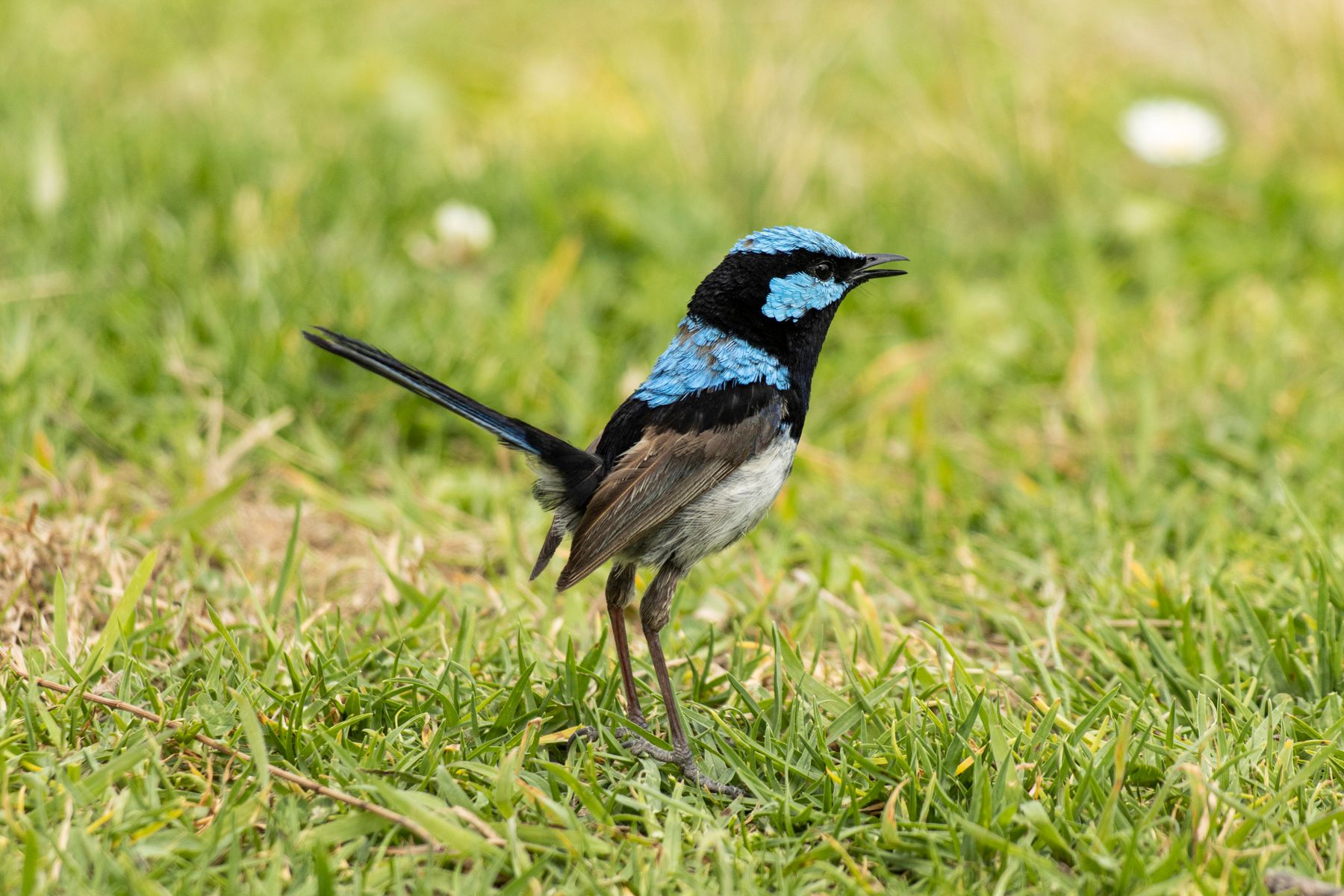
What does it take for a fiercely territorial animal to drop its guard and risk its own safety to help a rival? For the superb fairy-wren, a tiny, insect-eating songbird found across southeastern Australia, the answer appears to come down to one thing: the season.
Researchers tracked how the same birds treated their neighbors across two very different times of year. A team studying a color-banded population at Lysterfield Park near Melbourne ran a series of playback experiments, broadcasting the distress calls of fellow fairy-wrens while presenting a taxidermied kookaburra, a real predator of the species, to simulate an attack. They recorded whether nearby birds responded by singing an aggressive territorial song or by rushing in to help, sometimes performing a high-risk “rodent run” decoy display to lure the fake predator away. In total, 94 individuals across 14 breeding groups were tested through three rounds of trials, one at the start of the 2019 breeding season, one in the winter of 2020 when birds are not breeding, and one at the start of the 2020 breeding season.
Every bird helped its own group more, but that gap grew far wider in winter. Superb fairy-wrens live in a nested social system: small breeding groups that fiercely defend a shared territory year round, loosely folded into larger “communities” of several neighboring groups that only form during the non-breeding winter. Birds always responded more intensely to distress calls from their own breeding group than from other members of their winter community, but that difference became much more pronounced once winter arrived, even though breeding group membership itself never changes between seasons.
The riskiest rescue move only showed up once winter hit. The most dangerous response fairy-wrens can offer, the rodent run, in which a bird abandons cover and scurries across open ground to draw a predator attention onto itself, was recorded exclusively during the non-breeding season. Not a single bird performed it during the breeding season trials.
Territorial singing flipped in the opposite direction. Aggressive song in response to a distress call only occurred while birds were breeding and defending fixed territories, never in winter. And when birds did sing, they aimed more of it at rivals from neighboring groups in their own community than at members of their own tight-knit unit.
Day to day harshness inside winter did not explain the shift, the season itself did. To check whether birds were simply reacting to how brutal a given week happened to be, the researchers calculated a weekly mortality risk score from local temperature records for every week of the study. That week-by-week harshness did not predict how cooperative birds were being. What mattered was which season it was, tied to whether the wider community structure existed at all. Because the playback trials were controlled experiments rather than passive observation, the seasonal shift in behavior is a real, measured response rather than a guess, though the study cannot fully separate the effect of colder weather from the effect of the social restructuring that happens to occur at the same time of year.
The pattern echoes something familiar in cooperative species, including our own. The authors note that reduced aggression between groups in harsh conditions can open up access to more foraging ground, help locate scarce food and offer stronger joint defense against predators, benefits that likely outweigh the cost of tolerating former rivals. Similar links between hardship and cooperation have been documented in human hunter-gatherer communities and in other social mammals, suggesting that setting territorial disputes aside when resources get scarce may be a strategy that keeps resurfacing wherever survival depends on it.
The study, “Social restructuring during harsh environmental conditions promotes cooperative behaviour in a songbird,” was carried out by Ettore Camerlenghi, Sergio Nolazco, Damien R. Farine, Robert D. Magrath and Anne Peters, and published in Proceedings of the Royal Society B in 2024. It is available under a CC BY open access license, DOI 10.1098/rspb.2023.2427.