 Editorial NexoScience
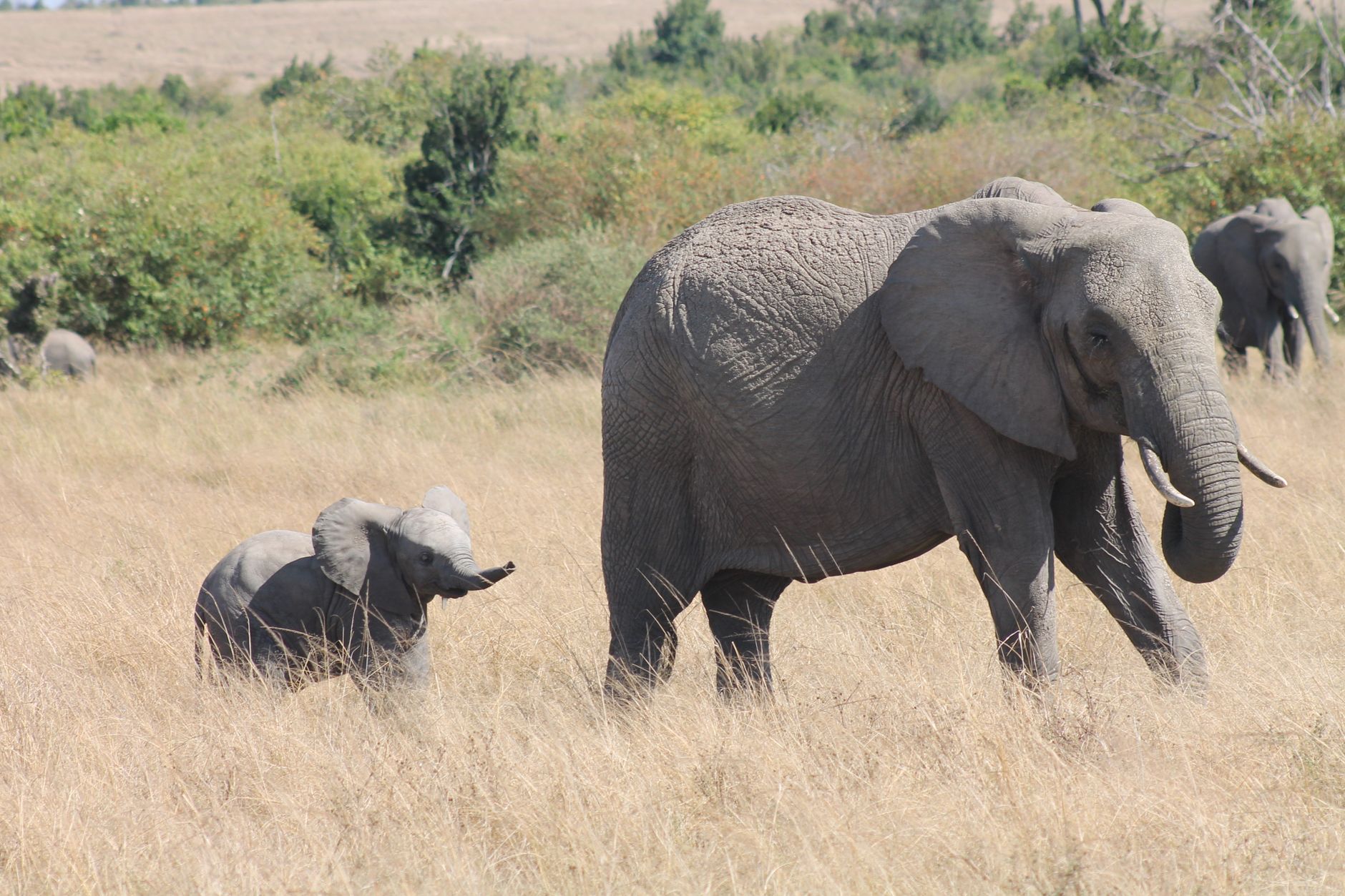
If you’ve ever hidden a bitter pill in a spoonful of jam so a child would swallow it, you already understand the trick that wildlife scouts in western Kenya say they’ve seen elephant mothers perform. According to their accounts, a mother blends the leaves of certain plants with her own milk and feeds the mix to her calf. The scouts have a name for what she’s doing. They call it “a kind of immunization.”
That story is one of dozens collected in a new study on how African elephants (genus Loxodonta) may self-medicate on the slopes of Mount Elgon, an ancient volcano on the border between Kenya and Uganda. Eight local experts named 35 plant species in the elephants’ diet, and they described 25 of them as medicine for the animals, researchers reported Sept. 24 in the journal Scientific Reports. For eight of those plants, the witnesses could say exactly what problem the elephants seemed to be treating.
The title of the paper uses a careful word: the elephants “putatively” self-medicate. That word matters. Nobody in this study ran a blood test on a sick elephant or measured what a plant did inside one. What the study offers is something else, and in its own way rarer: the organized memory of people who have spent most of their lives watching the same herds.
The witnesses have watched these herds for decades. Between October 2023 and September 2024, the team interviewed eight men from the Sabaot Indigenous community, aged 35 to 78. Four were community wildlife scouts, two were guides, and two were elders, one a retired agricultural officer and the other a former Kenya Wildlife Service ranger. Every one of them had more than 20 years of experience with the local elephants. Their combined beat covers about 133 square miles (345 square kilometers), roughly twice the size of Washington, D.C. Several of them walked the researchers through the forest to point out the plants, and botanists collected samples of each one and deposited them at the East African Herbarium in Nairobi, so every species name in the study is pinned to a real specimen.
These are already famous elephants. Mount Elgon rises to 14,177 feet (4,321 meters) and is the largest solitary volcano in East Africa. Its slopes are riddled with caves, and the local elephants walk into the dark to scrape mineral-rich rock from the walls with their tusks. Many researchers think the animals dug parts of those caves themselves, one mouthful of salty rock at a time. A population that mines its own supplements seemed a good place to ask whether it also forages for drugs.
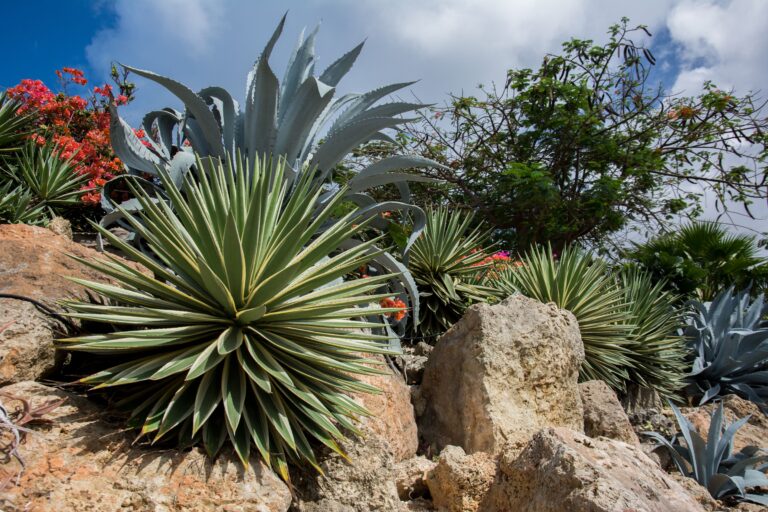
Eight plants made the strongest case. The researchers sorted every plant by how much behavioral evidence stood behind it, using a scale borrowed from the study of animal medicine, a field known as zoopharmacognosy. At the top sits what scientists call “Mode 4”: an animal that is visibly unwell and targets a specific resource for a specific problem, or one that gives that resource to another animal. Eight species cleared that bar. Female elephants reportedly feed tree aloe (Aloe arborescens) to calves to boost their appetite. Three other plants, Coleus barbatus (known locally as Angurweet), the Natal fig (Ficus natalensis) and Bersama abyssinica, are the ones said to go into the milk mixture. Three species of Dombeya, a shrub related to hibiscus, are used to aid digestion and soften droppings. And Kuloa usambarensis is sought out by elephants that look lethargic and barely move.
Below that tier, seven more plants were described as medicine for sick elephants without any named symptom, and ten were called medicinal with no mention of the animal’s health at all. The plant cited most often was the bark of Croton macrostachyus, which five of the eight interviewees said visibly ill elephants strip and eat.
The scouts read the signs in how elephants eat. A medicinal meal, according to the interviewees, looks different from an ordinary one. The elephant might eat a plant it rarely touches, or only in one season, or prepare it in an odd way, like the milk mixture. One interviewee described a beeline: “For example [if the resource] is 20 km [12 miles] away, they go straight there without eating anything to get there quickly.” Honestly, it’s the kind of detail that’s hard to make up, though the researchers point out that this quote was a general remark and not tied to one specific event.
The cave clay tells a different story. Earlier work on elephants has often proposed that eating clay and soil works as medicine, soothing the gut or binding toxins. The Elgon experts disagreed. All of them said the elephants mine the caves for minerals, salt and iron above all, and seem to enjoy it. None of them called the clay a medicine. One mentioned that red soil might matter for females’ reproductive cycles, but offered no more detail.
On the mountain, knowledge travels between species. Of the 39 plants and soils the interviewees mentioned, 34 also have traditional uses in human medicine, close to nine in every ten. That overlap runs both ways in local lore. “The grandfathers used to tell us that whatever works for elephants also works for us and so we can follow what they eat,” one interviewee said. Another described using the shrub Rhamnus prinoides as medicine while an elephant watched, and finding the next day that “the elephants had consumed the plant as well.” Two interviewees added a warning: some plants elephants eat are poisonous to people. When the team checked the scientific literature for the ten most-cited plants, nine had documented medicinal uses and known pharmacological effects.
The idea itself is old. Around the third century, the Roman author Claudius Aelianus described an elephant pierced by spears and arrows that ate olive blossoms, drank olive oil and recovered. Modern reports are thin by comparison. Asian elephants (Elephas maximus) in Thailand have been seen eating nothing but clay for days during the rainy season, and in Tanzania, an elephant with an apparent stomachache was said to soak crushed leaves in water and drink only the liquid. Science only began documenting animal self-medication in the late 1970s, and chimpanzees remain its best-studied case.
Here’s the thing: this is testimony, not proof. The sample is eight men, picked because they know the elephants well, not because they represent anyone else, and the researchers noted that their citation counts are descriptive only. The team didn’t watch these events themselves, had no health records for the animals and tested none of the plants. The authors also acknowledged a subtler problem. The interviewees know local herbal medicine well, and at times used modern ideas like immunity and digestion, so some of the therapeutic explanations may come from reading elephant behavior through human medical knowledge. And a plant that contains active compounds doesn’t show that an elephant eats it on purpose. It could simply be good food that happens to help.
The next step is to follow the elephants and test the plants. The researchers want lab work on the most-cited species to find active ingredients and their effects, along with long-term tracking of known individuals to see whether sick elephants really change what they eat. There’s a conservation angle, too. The African elephant is listed as endangered by the International Union for Conservation of Nature, and if these herds do rely on a forest pharmacy, cutting down that forest takes away more than food. It also takes away whatever medicine the elephants may have found first.
Source: Schultz, F., Clark, T. O., Powles, C., Freymann, E., Kinyanjui, R. N., Ndiema, E., et al. “African elephants putatively self-medicate with medicinal plants in the Mount Elgon region, Kenya.” Scientific Reports 16, 28904 (2026). Published September 24, 2026. DOI: 10.1038/s41598-026-53610-4